Darangen
Sign in to saveDarangen is a Maranao epic poem from the Lake Lanao region of Mindanao, Philippines. It consists of 17 cycles with 72,000 lines in iambic tetrameter or catalectic trochaic tetrameter. Each cycle pertains to a different self-contained story. The most notable of which deals with the exploits of the hero Bantugan.
Described at
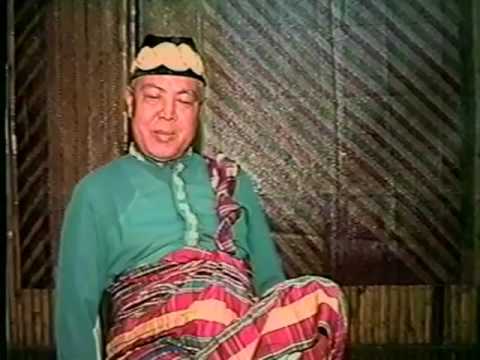
Darangen epic of the Maranao people of Lake Lanao - UNESCO Intangible Cultural Heritage
ich.unesco.org →The Darangen is an ancient epic song that encompasses a wealth of knowledge of the Maranao people who live in the Lake Lanao region of Mindanao. This southernmost island of the Philippine archipelago is the traditional homeland of the Maranao, one of the country’s three main Muslim groups. Comprising 17 cycles and a total of 72,000 lines, the Darangen celebrates episodes from Maranao history and the tribulations of mythical heroes. In addition to having a compelling narrative content, the epic explores the underlying themes of life and death, courtship, love and politics through symbol, metaphor, irony and satire. The Darangen also encodes customary law, standards of social and ethical behaviour, notions of aesthetic beauty, and social values specific to the Maranao. To this day, elders refer to this time-honoured text in the administration of customary law. Meaning literally “to narrate in song”, the Darangen existed before the Islamization of the Philippines in the fourteenth century and is part of a wider epic culture connected to early Sanskrit traditions extending through most of Mindanao. Though the Darangen has been largely transmitted orally, parts of the epic have been recorded in manuscripts using an ancient writing system based on the Arabic script. Specialized female and male performers sing the Darangen during wedding celebrations that typically last several nights. Performers must possess a prodigious memory, improvisational skills, poetic imagination, knowledge of customary law and genealogy, a flawless and elegant vocal technique, and the ability to engage an audience during long hours of performance. Music and dance sometimes accompany the chanting. Nowadays, the Darangen is less frequently performed owing in part to its rich vocabulary and archaic linguistic forms, which can only be understood by practitioners, elders and scholars. Indeed, the growing tendency to embrace mainstream Filipino lifestyles may represent a threat to the survival of this ancient epic. 1. Oral traditions and expressions (384) 2. Social practices, rituals and festive events (584)
Excerpt from a page describing this subject · 11,321 chars · not written by Vinony
Wikidata facts
- Instance of
- epic poem
- Country of origin
- Philippines
Show 2 more facts
- described at URL
- ich.unesco.org/es/RL/00159
- intangible cultural heritage status
- Masterpieces of the Oral and Intangible Heritage of Humanity
via Wikidata · CC0
~10 min read
Encyclopedic overview
12 sectionsContents
- Etymology
- Provenance
- Background
- Setting
- Summary
- Dances
- Modern adaptations
- Conservation
- See also
- Notes
- References
- External links
Darangen is a Maranao epic poem from the Lake Lanao region of Mindanao, Philippines. It consists of 17 cycles with 72,000 lines in iambic tetrameter or catalectic trochaic tetrameter. Each cycle pertains to a different self-contained story. The most notable of which deals with the exploits of the hero Bantugan.
In 2002, the Darangen was declared a National Cultural Treasure of the Philippines by the National Museum and a Provincial Treasure by the Lanao del Sur provincial government. The Darangen epic was also proclaimed as a Masterpiece of the Oral and Intangible Heritage of Humanity in 2005 by UNESCO (inscribed in 2008). It is the longest surviving epic poetry in the Philippines.
Excerpted from Wikipedia’s “Darangen” article, available under the CC BY-SA 4.0 licence.