
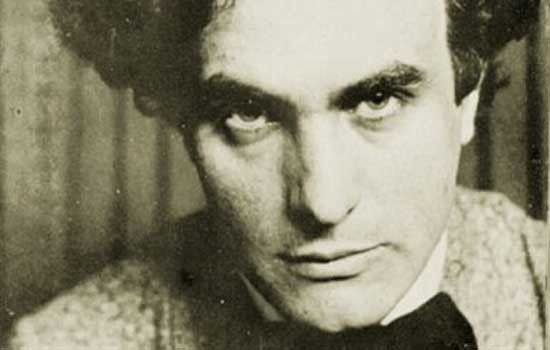
File:Edgard_Varese.gif · Wikimedia Commons · See Wikimedia Commons
Edgard Varèse
Sign in to saveAlso known as Edgar Varèse, Edgard Varese, Edgard Victor Achille Charles Varèse, Varèse
French composer (1883-1965)
OverviewAI-generated
Edgard Varèse was a French composer, musicologist, and conductor born in Paris on December 22, 1883. He was educated at the Conservatoire de Paris and the Schola Cantorum de Paris. His work is associated with the avant-garde movement and 20th-century classical music, encompassing genres such as opera and classical music. He was a member of the American Academy of Arts and Letters.
Varèse studied under Charles-Marie Widor, Albert Roussel, and Vincent d'Indy. His students included Chou Wen-chung and André Jolivet. He spoke English and French and identified as an atheist. He died in New York City on November 6, 1965. His personal library is held at the Harry Ransom Center.
Synthesized by Vinony from 30 facts across 5 sources: Wikidata, MusicBrainz, Last.fm, Europeana Sparql, TMDb. Generated from structured data (not the Wikipedia text) and checked against those facts — may still contain errors.
Film & TV
Paris, France
Edgard Varèse or Edgar Varèse (both spellings were used by the composer himself at different times in his life) was a French naturalized American composer, born December 22, 1883 in Paris and died November 6, 1965 in New York. Initially trained at the Schola Cantorum and the Paris Conservatory, Varèse found with more independent artists, such as Debussy and Busoni, the necessary encouragement…
Known for
- Zappa — Self (archive footage)2020
- Frank Zappa: Phase II - The Big Note — Self (archive footage)2002
- Frank Zappa: The Present-Day Composer Refuses To Die — Self (archive footage)2000
- Dr. Jekyll and Mr. Hyde — Policeman (uncredited)1920
- A Dark Lantern — Count Wilhelm1920
via TMDB
Music · MusicBrainz
- Type
- Person
- Gender
- Male
- Country
- France
- Active from
- 1883
- Active to
- 1965
Discography
- Varèse: Arcana / Martin: Concerto for Seven Wind Instruments, Timpani, Percussion and String Orchestra1966
- Americana1970
- Arcana / Intégrales / Ionisation1972
- Offrandes / Intégrales / Octandre / Ecuatorial1972
- The Varèse Album1972
- The Varese Record1977
- Density 21,5 / Hyperprism / Intégrales / Ionisation / Octandre / Poème Électronique1983
- Ecuatorial / Déserts / Intégrales / Hyperprism / Octandre / Offrandes / Density 21.51984
- Arcana / Amériques / Ionisation / Offrandes / Density 21,5 / Octandre / Intégrales1990
- Live 31992
via MusicBrainz · CC0
Listeners · Last.fm
- Listeners
- 81,437
- Total plays
- 525,139
Tags
Edgard Victor Achille Charles Varèse (French: [ɛdɡaːʁ viktɔːʁ aʃil ʃaʁl vaʁɛːz]; also spelled Edgar Varèse; December 22, 1883 – November 6, 1965) was a French-born composer who spent the greater part of his career in the United States. Varèse's music emphasizes timbre and rhythm and he coined the term "organized sound" in reference to his own musical aesthetic. Varèse's conception of music reflected his vision of "sound as living matter" and of "musical space as open rather than bounded". <a hr
Key facts
- Born
- ( 1883-12-22 ) December 22, 1883, Paris, France
- Died
- November 6, 1965 (1965-11-06) (aged 81), New York City, U.S.
- Occupations
- Composer music theorist
via Wikipedia infobox
Wikidata facts
- Instance of
- human
- Given name
- Edgar
- Gender
- male
- Citizenship
- France
- Place of birth
- Paris
- Place of death
- New York City
- Occupation
- conductor
- Educated at
- Schola Cantorum de Paris
- Languages spoken
- French
- Religion
- atheism
- Student of
- Albert Roussel
- Genre
- classical music
- Movement
- 20th-century classical music
- Image
- Edgar Varèse - John French Sloan.jpg
Show 8 more facts
- date of birth
- 1883-12-22
- date of death
- 1965-11-06
- student
- André Jolivet
- Commons category
- Edgar Varèse
- member of
- American Academy of Arts and Letters
- name in native language
- Edgard Varèse
- personal library at
- Harry Ransom Center
- P8168
- Herentals
Sources (2)
via Wikidata · CC0
Works in European collections
1 object attributed to Edgard Varèse, held across European museums, libraries & archives · via Europeana
~24 min read
Encyclopedic overview
Edgard Victor Achille Charles Varèse ( French: [ɛdɡaʁ viktɔʁ aʃil ʃaʁl vaʁɛz]; also spelled Edgar; December 22, 1883 – November 6, 1965) was a French and American avant-garde composer who spent the greater part of his career in the United States. Varèse's music emphasizes timbre and rhythm; he coined the term "organized sound" in reference to his own musical aesthetic. Varèse's conception of music reflected his vision of "sound as living matter" and of "musical space as open rather than bounded". He conceived the elements of his music in terms of "sound-masses", likening their organization to the natural phenomenon of crystallization. Varèse thought that "to stubbornly conditioned ears, anything new in music has always been called noise", and he posed the question, "what is music but organized noises?"
Although his complete surviving works only last about three hours, he has been recognized as an influence by several major composers of the late 20th century. Varèse saw potential in using electronic media for sound production, and his use of new instruments and electronic resources led to his being known as the "Father of Electronic Music". Writer Henry Miller described him as "The stratospheric Colossus of Sound".
Excerpted from Wikipedia’s “Edgard Varèse” article, available under the CC BY-SA 4.0 licence.