File:Πακτωλός.jpg · Wikimedia Commons · See Wikimedia Commons
electrum
Sign in to saveAlso known as green gold
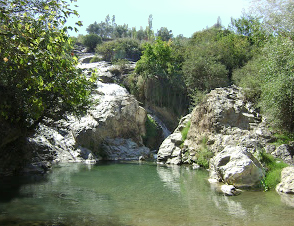
thumb|Natural electrum "wires" on quartz, historic specimen from the old Smuggler-Union Mine, Telluride, Colorado, USA thumb|The Pactolus river, from which [[Lydia obtained electrum for its early coinage]] thumb|Electrum Phoenician metal bowls|Phoenician bowl with mythological scenes, a sphinx frieze and the repre­sentation of a king vanquishing his enemies, Cypro-Archaic I, from [[Idalion, 8th–7th centuries BC (Louvre, Paris)]] thumb|Brooch with a griffin protome, from the necropolis of [[Kameiros, Rhodes, (Louvre)]]
Wikidata facts
- Image
- Electrum on quartz Telluride (cropped).jpg
Show 5 more facts
- Commons category
- Electrum
- Nickel-Strunz 9th edition (updated 2009)
- 1.AA.05
- chemical formula
- Au·Ag
- Mohs' hardness
- 2.5
- density
- 14.05
Sources (3)
via Wikidata · CC0
~6 min read
Article
7 sectionsContents
- Etymology
- Composition
- History
- Early coinage
- See also
- References
- External links
thumb|Natural electrum "wires" on quartz, historic specimen from the old Smuggler-Union Mine, Telluride, Colorado, USA thumb|The Pactolus river, from which [[Lydia obtained electrum for its early coinage]] thumb|Electrum Phoenician metal bowls|Phoenician bowl with mythological scenes, a sphinx frieze and the repre­sentation of a king vanquishing his enemies, Cypro-Archaic I, from [[Idalion, 8th–7th centuries BC (Louvre, Paris)]] thumb|Brooch with a griffin protome, from the necropolis of [[Kameiros, Rhodes, (Louvre)]]
Electrum is a naturally occurring alloy of gold and silver, with trace amounts of copper and other metals. Its color ranges from pale to bright yellow, depending on the proportions of gold and silver. It has been produced artificially and is also known as "green gold".