Encyclopedia of Life · EOL (see source)
Epsilonproteobacteria
Sign in to saveAlso known as Epsilon Proteobacteria, Campylobacteria, Nautiliia
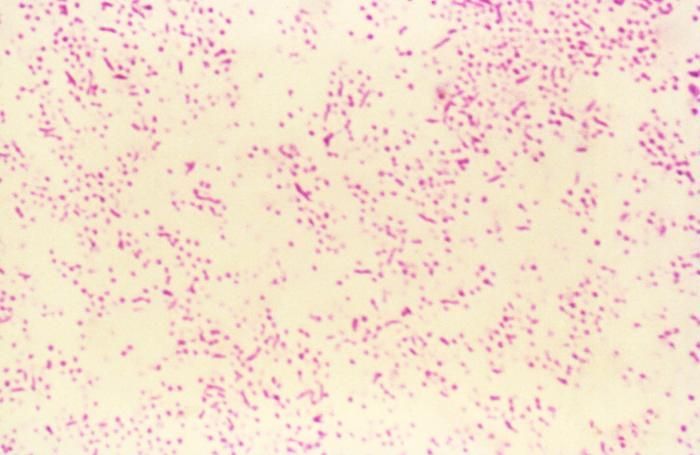
The Campylobacteria are a class of Gram-negative bacteria. It used to be known as Epsilonproteobacteria. Only a few genera have been characterized, including the curved to spirilloid Wolinella, Helicobacter, and Campylobacter.
Species
イプシロンプロテオバクテリア綱
CLASS
- KingdomBacteria
- PhylumCampylobacterota
- ClassCampylobacteria
Epsilonproteobacteria (auch ε-Proteobacteria) bezeichnet eine Klasse im phylogenetischen System der Bakterien, das auf der Grundlage der Basensequenz der ribosomalen 16S-Ribonukleinsäure (16S-rRNA) aufgestellt wurde. Das Phylum (der Stamm) Proteobacteria wird in die 5 Klassen Alphaproteobacteria bis Epsilonproteobacteria eingeteilt. In den letzten Jahren sind noch zwei weitere Klassen hinzugekommen, die Oligoflexia und die Zetaproteobacteria. Aufgrund der dünnen Mureinhülle, der eine Lipid-Membran aufgelagert ist, sind alle Vertreter dieses Stammes gramnegativ. Zu den Epsilonproteobacteria zählen nur zwei Ordnungen[1]: Campylobacterales Garrity et al. 2006 Nautiliales Miroshnichenko et al. 2004 sowie weitere, bisher nicht sicher eingeordnete Isolate. Die Ordnung Campylobacterales wiederum beinhaltet bisher nur die zwei Familien Campylobacteraceae Vandamme & De Ley 1991 mit den Gattungen Campylobacter Sebald & Véron 1963 Arcobacter Vandamme et al. 1991 und Sulfurospirillum Schumacher et al. 1993 sowie Helicobacteraceae Garrity et al. 2006 mit den Gattungen Helicobacter Goodwin et al. 1989 und Wolinella Tanner et al. 1981. Helicobacter pylori wurde aus dem menschlichen Magen
via GBIF
Research
57,488 papers- Metal homeostasis in pathogenic Epsilonproteobacteria: mechanisms of acquisition, efflux, and regulation.Metallomics : integrated biometal science · 2021
- Electron transport chains and bioenergetics of respiratory nitrogen metabolism in Wolinella succinogenes and other Epsilonproteobacteria.Biochimica et biophysica acta · 2009
- Pathogenomics.Nature reviews. Microbiology · 2003
- Epsilonproteobacteria dominate bacterial diversity at a natural tar seep.Comptes rendus biologies · 2017
- Small RNAs that target G-rich sequences are generated by diverse biogenesis pathways in Epsilonproteobacteria.Molecular microbiology · 2022
via PubMed
Wikidata facts
- Instance of
- taxon
- Image
- ARS Campylobacter jejuni.jpg
Show 9 more facts
- taxon rank
- class
- Gram staining
- gram-negative bacteria
- taxon name
- Epsilonproteobacteria
- topic's main category
- Category:Epsilon Proteobacteria
- Commons category
- Epsilon Proteobacteria
- taxon common name
- ε-變形菌綱
- taxonomic type
- Campylobacter
- taxon author citation
- Garrity et al. 2006
Sources (2)
via Wikidata · CC0
~2 min read
Encyclopedic overview
4 sectionsContents
- Phylogeny
- See also
- References
- External links
The Campylobacteria are a class of Gram-negative bacteria. It used to be known as Epsilonproteobacteria. Only a few genera have been characterized, including the curved to spirilloid Wolinella, Helicobacter, and Campylobacter.
Most of the known species inhabit the digestive tracts of animals and serve as symbionts (Wolinella spp. in cattle) or pathogens (Helicobacter spp. in the stomach, Campylobacter spp. in the duodenum). However, numerous environmental sequences and isolates of Campylobacteria have been recovered from hydrothermal vents and cold seep habitats. Examples of isolates include Sulfurimonas autotrophica, Sulfurimonas paralvinellae, Sulfurovum lithotrophicum and Nautilia profundicola. A member of the phylum Campylobacterota occurs as an endosymbiont in the large gills of the deepwater sea snail Alviniconcha hessleri.
Excerpted from Wikipedia’s “Epsilonproteobacteria” article, available under the CC BY-SA 4.0 licence.