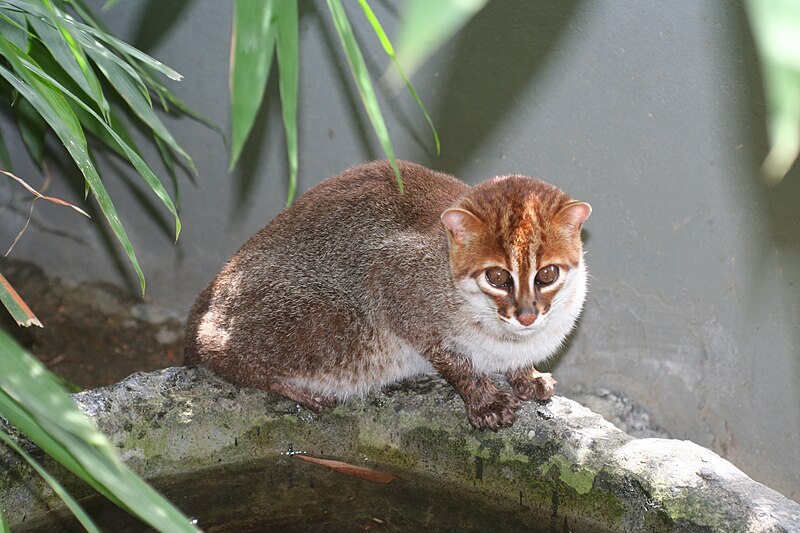
File:Flat-headed_cat_1_Jim_Sanderson.JPG · Wikimedia Commons · See Wikimedia Commons
Prionailurus planiceps
Sign in to savespecie di animali della famiglia Felidae
OverviewAI-generated
The flat-headed cat, scientifically named *Prionailurus planiceps*, is a species within the genus *Prionailurus*. It is also referred to by the common names Gato Cabeciancho and Chat à tête plate. This mammal is classified as Endangered on the IUCN Red List, a status assigned in 2015. Additionally, it is listed in Appendix I of CITES.
The longest observed lifespan for this species is 14 years. The taxon has been recorded in 22 observations on iNaturalist.
Synthesized by Vinony from 18 facts across 4 sources: Wikidata, IUCN Red List, iNaturalist, Vinony graph. Generated from structured data (not the Wikipedia text) and checked against those facts — may still contain errors.
Species
EndangeredFlat-headed Cat
species
Maximum longevity: 14 years (captivity) Observations: One wild born specimen was about 14 years old when it died in captivity (Richard Weigl 2005). Maximum longevity could be slightly underestimated, though, because similar species appear to live slightly longer.
via IUCN
Wikidata facts
- Instance of
- taxon
- Parent taxon
- Prionailurus
- Image
- Prionailurus planiceps cropped.png
Show 8 more facts
- taxon rank
- species
- IUCN conservation status
- Endangered status
- Commons category
- Prionailurus planiceps
- taxon name
- Prionailurus planiceps
- taxon common name
- ploščatoglava mačka
- longest observed lifespan
- 14
- CITES Appendix
- Appendix I of CITES
- short name
- P. planiceps
Sources (2)
via Wikidata · CC0
Article · Italiano
Il gatto a testa piatta (Prionailurus planiceps Vigors e Horsfield, 1827) è un piccolo felino selvatico diffuso in maniera discontinua nella penisola malese, nel Borneo e a Sumatra. Dal 2008 la IUCN lo classifica tra le specie in pericolo a causa della distruzione delle zone umide in cui vive. Questo felino è molto raro in cattività, dove si trovano meno di 10 esemplari - tutti in zoo dell'Asia sud-orientale - registrati dal Sistema Internazionale Informativo delle Specie (ISIS) agli inizi del 2010. Come altri piccoli felidi, in passato veniva classificato nel genere Felis, ma attualmente è considerato una delle quattro specie di Prionailurus.
Abstract from DBpedia / Wikipedia · CC BY-SA