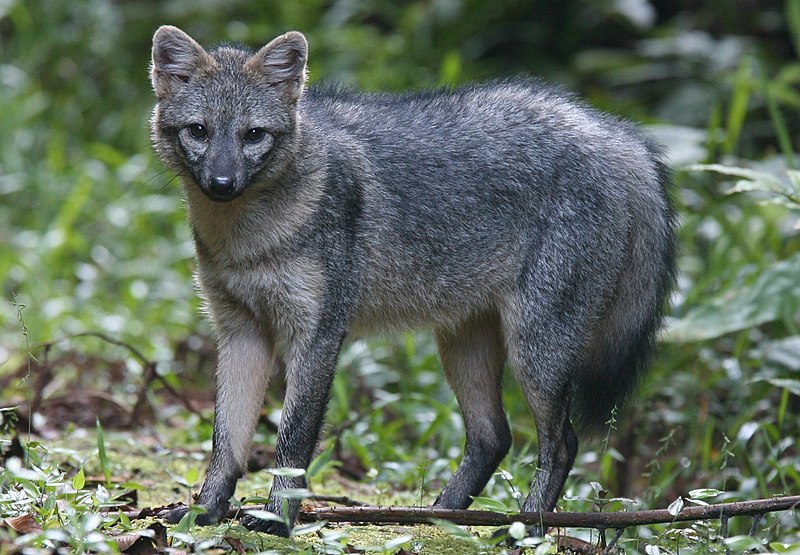
File:Crab-eating_Fox_(cropped).JPG · Wikimedia Commons · See Wikimedia Commons
crab-eating fox
Sign in to saveAlso known as Cerdocyon thous, forest fox, wood fox, common fox
species of mammal
OverviewAI-generated
The crab-eating fox, scientifically named *Cerdocyon thous*, is a species within the genus *Cerdocyon*. It is also referred to by the common names Perro de Monte, Perro Sabanero, and Perro-zorro. This mammal has been present since the Pliocene epoch and is currently classified as not extinct.
Its range includes Argentina, Bolivia, Brazil, and Colombia. The IUCN Red List assessed the species as Least Concern in 2015. The longest observed lifespan for this animal is 12.7 years.
Synthesized by Vinony from 20 facts across 4 sources: Wikidata, iNaturalist, IUCN Red List, Vinony graph. Generated from structured data (not the Wikipedia text) and checked against those facts — may still contain errors.
Species
Least ConcernCrab-eating Fox
species
via IUCN
Wikidata facts
Show 9 more facts
- taxon rank
- species
- IUCN conservation status
- Least Concern
- taxon name
- Cerdocyon thous
- Commons category
- Cerdocyon thous
- Commons gallery
- Cerdocyon thous
- taxon common name
- šakalska lisica
- longest observed lifespan
- 12.7
- taxon range
- Argentina
- temporal range start
- Pliocene
Sources (2)
via Wikidata · CC0
~9 min read
Encyclopedic overview
The crab-eating fox (Cerdocyon thous), also known as the forest dog, wood fox, bushfox (not to be confused with the bush dog) or maikong, is an extant species of medium-sized canid endemic to the central part of South America since at least the Pleistocene epoch. Like South American foxes, which are in the genus Lycalopex, it is not closely related to true foxes. Cerdocyon comes from the Greek words kerdo (meaning fox) and kyon (dog) referring to the dog- and fox-like characteristics of this animal.
Taxonomy and evolution
Excerpted from Wikipedia’s “crab-eating fox” article, available under the CC BY-SA 4.0 licence.