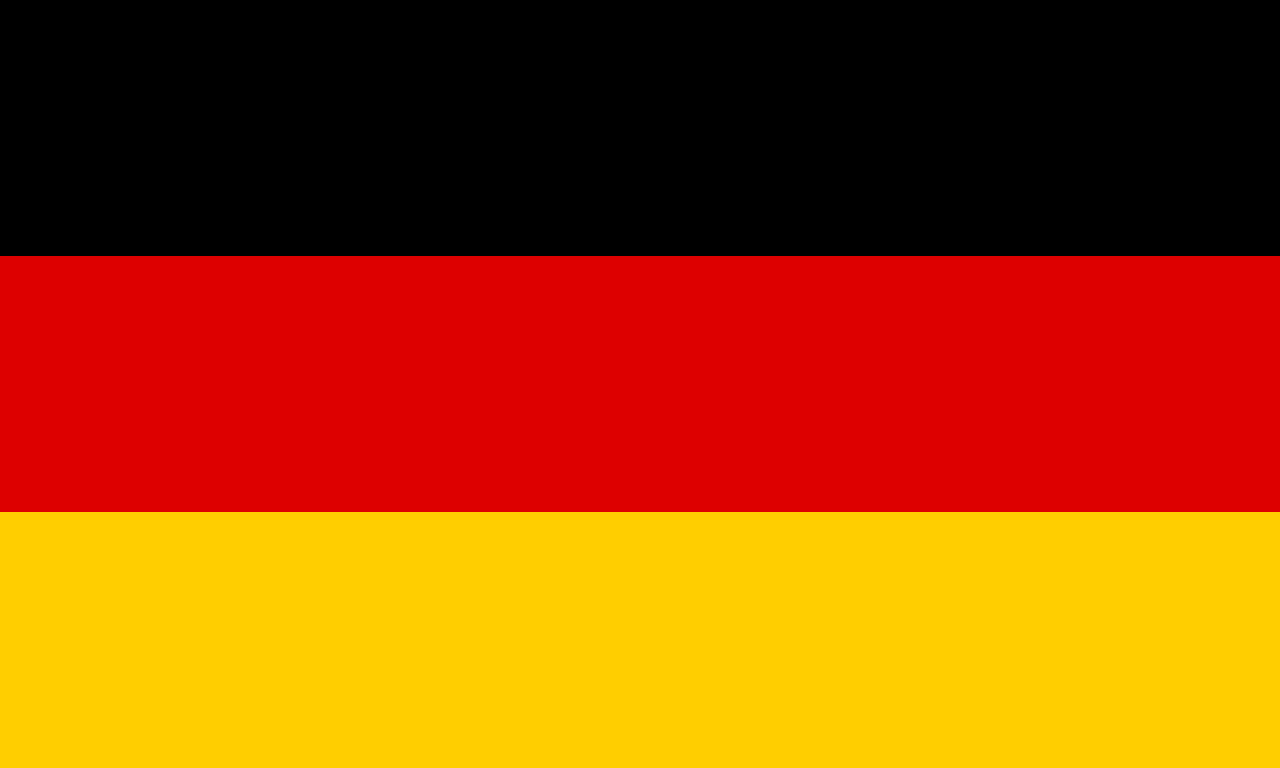
Deutschland
Also known as Federal Republic of Germany
Staat in Mitteleuropa
AI overview
Germany is a large country in Western and Central Europe with over 82 million people, making it the most populous member state of the European Union. It matters globally due to its size, central location between the Baltic and North Seas, and its role as a major economic and political power in Europe.
AI-generated from the Wikipedia summary — may contain errors.
Weather now
cached 3h ago16°overcast clouds
78% 3.0 m/s OpenWeatherMap
7-day forecast
via Open-Meteo
Country
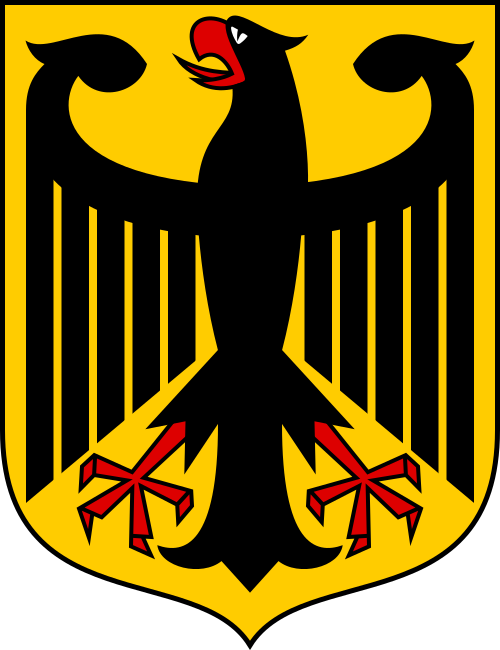

- Capital
- Berlin
- Population
- 83,491,249
- Region
Travel guide
Understand
An economically, politically, and culturally influential nation, Germany is the richest and most populous European Union member state.
Get in
There are a number of ways to get into Germany. From neighbouring European countries, a drive with the car or a train or bus ride are perhaps the easiest and most comfortable options; visitors from further away will probably be using air travel.
Get around
On the whole transportation is efficient and fast, though last minute tickets can be a bit on the expensive side. All modes of transportation are up to a high modern standard, including a dense network of airports, high speed rail services connecting most major cities and regional trains, one of the densest highway networks on earth (with stretches where the speed limit is shrug emoji), and intercity bus services.
Do
Germany offers a wide variety of activities of both a cultural and sporting nature. Many Germans are members of a sports club.
Drink
Pubs are open in Germany until 02:00 or later. Food is generally available until midnight. Germans typically go out after 20:00 (popular places are already full by 18:00).
The legal drinking ages are: 14 - minors are allowed to buy undistilled (fermented) alcoholic beverages in a restaurant, such as beer and wine, as long as they are in the company of their parents or a legal guardian. 16 - minors are allowed to buy undistilled (fermented) alcoholic beverages, such as beer and wine without their parents or a legal guardian. Any drink that contains distilled alcohol (even if the overall alcohol content is lower than for a typical beer) is not allowed 18 - having become adults, people are allowed unrestricted access to alcohol.
Sleep
Germany provides almost all options for accommodation, including hotels, B&Bs, hostels, and camping. You might also consider staying with members of a hospitality exchange network.
German mattresses tend to take a middle ground for firmness, compared to plush American ones and hard Japanese ones. The bedding tends to be simple: a sheet to cover the mattress, one duvet per person (Decke, very nice if you sleep with someone who tends to hog the blankets, but sometimes a little breezy around the toes for tall people) and an enormous square feather pillow, which you can mold into any shape that pleases you. Making the bed in the morning takes mere seconds: fold the Decke in thirds with a quick flick of the wrists, as if it were going to sleep in your place while you are out, and toss the pillow at the top of the bed.
Article · Deutsch
Deutschland ([ˈdɔɪ̯t͡ʃlant] ; Vollform des Staatennamens seit 1949: Bundesrepublik Deutschland) ist ein Bundesstaat in Mitteleuropa. Er hat 16 Bundesländer und ist als freiheitlich-demokratischer und sozialer Rechtsstaat verfasst. Die 1949 gegründete Bundesrepublik Deutschland stellt die jüngste Ausprägung des 1871 erstmals begründeten deutschen Nationalstaates dar. Bundeshauptstadt und Regierungssitz ist Berlin. Deutschland grenzt an neun Staaten, es hat Anteil an der Nord- und Ostsee im Norden sowie dem Bodensee und den Alpen im Süden. Es liegt in der gemäßigten Klimazone und verfügt über 16 National- und mehr als 100 Naturparks. Das heutige Deutschland hat gut 84 Millionen Einwohner und zählt bei einer Fläche von 357.588 Quadratkilometern mit durchschnittlich 232 Einwohnern pro Quadratkilometer zu den dicht besiedelten Flächenstaaten. Die bevölkerungsreichste deutsche Stadt ist Berlin; weitere Metropolen mit mehr als einer Million Einwohnern sind Hamburg, München und Köln; der größte Ballungsraum ist das Ruhrgebiet. Frankfurt am Main ist als europäisches Finanzzentrum von globaler Bedeutung. Die Geburtenrate liegt bei 1,58 Kindern pro Frau (2021). Auf dem Gebiet Deutschlands ist die Anwesenheit von Menschen vor 500.000 Jahren durch Funde des Homo heidelbergensis sowie einiger prähistorischer Kunstwerke aus der späteren Altsteinzeit nachgewiesen. Während der Jungsteinzeit, um 5600 v. Chr., wanderten die ersten Bauern mitsamt Vieh und Saatgut aus dem Nahen Osten ein. Seit der Antike ist die lateinische Bezeichnung Germania für das Siedlungsgebiet der Germanen bekannt. Das ab dem 10. Jahrhundert bestehende römisch-deutsche Reich, das aus vielen Herrschaftsgebieten bestand, war wie der 1815 ins Leben gerufene Deutsche Bund und die liberale demokratische Bewegung Vorläufer des späteren deutschen Gesamtstaates, der 1871 als Deutsches Reich gegründet wurde. Die rasche Entwicklung vom Agrar- zum Industriestaat vollzog sich während der Gründerzeit in der zweiten Hälfte des 19. Jahrhunderts. Nach dem Ersten Weltkrieg wurde 1918 die Monarchie abgeschafft und die demokratische Weimarer Republik konstituiert. Ab 1933 führte die nationalsozialistische Diktatur zu politischer und rassistischer Verfolgung und gipfelte in der Ermordung von sechs Millionen Juden und Angehörigen anderer Minderheiten wie Sinti und Roma. Der vom NS-Staat 1939 begonnene Zweite Weltkrieg endete 1945 mit der Niederlage der Achsenmächte. Das von den Siegermächten besetzte Land wurde 1949 geteilt, nachdem bereits 1945 seine Ostgebiete teils unter polnische, teils sowjetische Verwaltungshoheit gestellt worden waren. Der Gründung der Bundesrepublik als demokratischer westdeutscher Teilstaat mit Westbindung am 23. Mai 1949 folgte die Gründung der sozialistischen DDR am 7. Oktober 1949 als ostdeutscher Teilstaat unter sowjetischer Hegemonie. Die innerdeutsche Grenze war nach dem Berliner Mauerbau (ab 13. August 1961) abgeriegelt. Nach der friedlichen Revolution in der DDR 1989 erfolgte die Lösung der deutschen Frage durch die Wiedervereinigung beider Landesteile am 3. Oktober 1990, womit auch die Außengrenzen Deutschlands als endgültig anerkannt wurden. Durch den Beitritt der fünf ostdeutschen Länder sowie die Wiedervereinigung von Ost- und West-Berlin zur heutigen Bundeshauptstadt zählt die Bundesrepublik Deutschland seit 1990 sechzehn Bundesländer. Deutschland ist Gründungsmitglied der Europäischen Union und ihrer Vorgänger (Römische Verträge 1957) sowie deren bevölkerungsreichstes Land. Mit 18 anderen EU-Mitgliedstaaten bildet es eine Währungsunion, die Eurozone. Es ist Mitglied der UN, der OECD, der OSZE, der NATO, der G7, der G20 und des Europarates. Die Vereinten Nationen unterhalten seit 1951 ihren deutschen Sitz in Bonn („UNO-Stadt“). Die Bundesrepublik Deutschland gilt als einer der politisch einflussreichsten Staaten Europas und ist ein gesuchtes Partnerland auf globaler Ebene. Gemessen am Bruttoinlandsprodukt ist das marktwirtschaftlich organisierte Deutschland die größte Volkswirtschaft Europas und die viertgrößte der Welt. 2016 war es die drittgrößte Export- und Importnation. Es ist eine Informations- und Wissensgesellschaft. Automatisierung, Digitalisierung und Disruption prägen die innovative deutsche Industrieentwicklung. Die Steigerung der Qualität des deutschen Bildungssystems und die nachhaltige Entwicklung des Landes gelten als zentrale Aufgaben der Standortpolitik. Gemäß dem Index der menschlichen Entwicklung zählt Deutschland zu den sehr hoch entwickelten Ländern. Muttersprache der Bevölkerungsmehrheit ist die deutsche Sprache. Daneben gibt es Regional- und Minderheitensprachen und sowohl Deutsche als auch Migranten mit anderen Muttersprachen, von denen die bedeutendsten Türkisch und Russisch sind. Bedeutendste Fremdsprache ist Englisch, das in allen Bundesländern in der Schule gelehrt wird. Die Kultur Deutschlands ist vielfältig und wird neben zahlreichen Traditionen, Institutionen und Veranstaltungen beispielsweise in der Auszeichnung als UNESCO-Welterbe in Deutschland, in Kulturdenkmälern und als immaterielles Kulturerbe erfasst und gewürdigt.
Gallery (59)
On the map
6 mapped locations
Connections
Categories
1990 establishments in EuropeCountries and territories where German is an official languageCountries in EuropeFederal republicsG20 membersGermanyMember states of NATOMember states of the Council of EuropeMember states of the European UnionMember states of the Union for the MediterraneanMember states of the United NationsOECD members