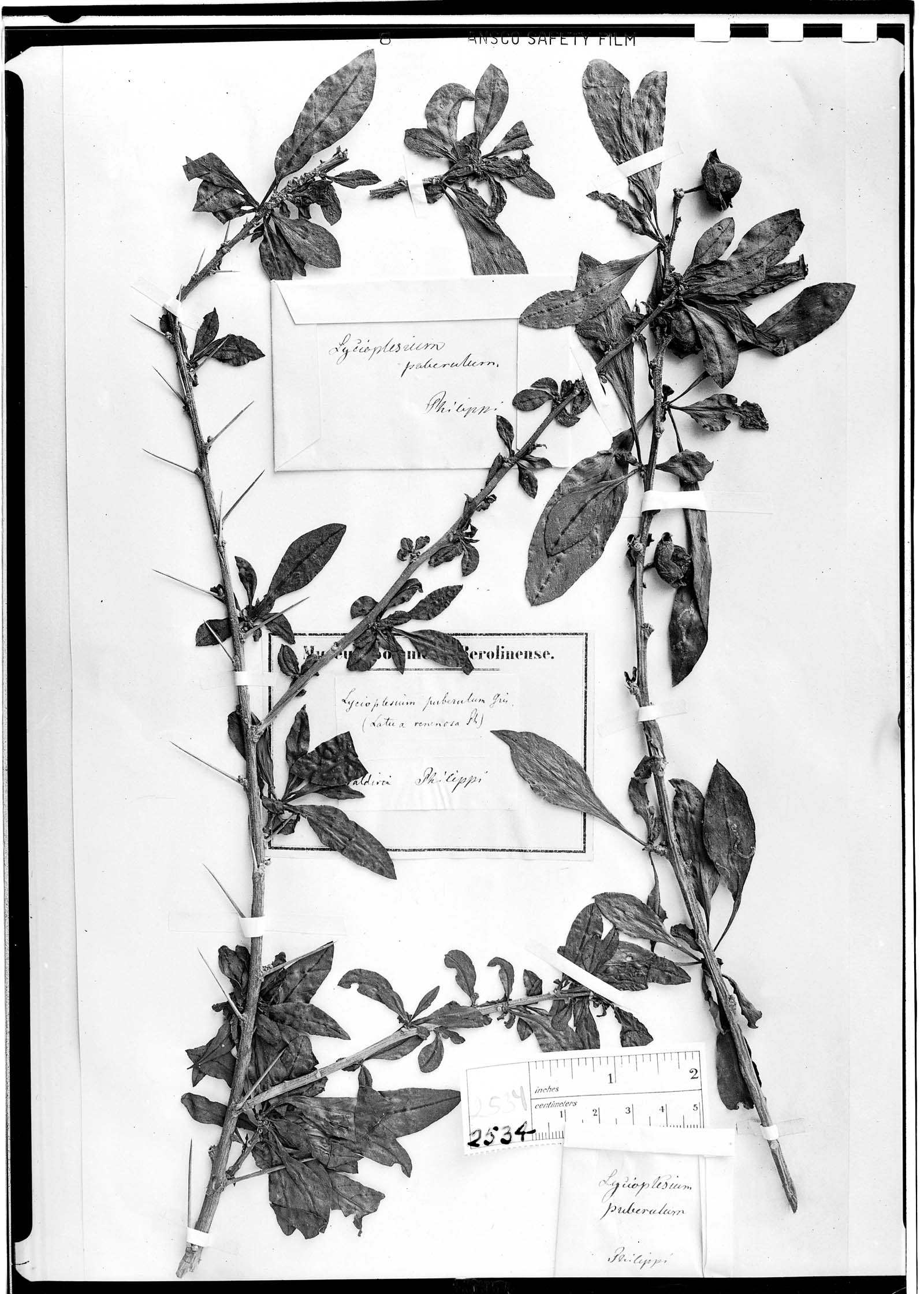
Specimen image via iDigBio
Latua
Sign in to saveLatua pubiflora (common name in Spanish: árbol de los brujos, tree of the sorcerers) is the single species of the monotypic genus Latua, endemic to the coastal mountains of southern Chile. A shrub or small tree to 10 m in height, bearing attractive, magenta-to-red, hummingbird-pollinated flowers, it is extremely poisonous – hallucinogenic (deliriant) in smaller doses – due to tropane alkaloid content and is used by Chilean machi (shamans) of the Mapuche–Huilliche people in traditional medicine, as a poison and to enter trance states. Its elegant flowers and yellow tomato-like fruit are at
Species
GENUS
- KingdomPlantae
- PhylumTracheophyta
- ClassMagnoliopsida
- OrderSolanales
- FamilySolanaceae
via GBIF
Wikidata facts
- Instance of
- taxon
- Parent taxon
- Solanaceae
- Image
- Palo de Brujo.jpg
Show 5 more facts
- Commons category
- Latua
- taxon rank
- genus
- taxon name
- Latua
- topic's main category
- Category:Latua
Sources (1)
via Wikidata · CC0
~33 min read
Encyclopedic overview
20 sectionsContents
- Description
- Flower colour
- Taxonomy
- Scientific name
- Vernacular names in Spanish
- Distribution
- Habitat
- Flowering season
- Toxicity
- Symptoms of poisoning
- Folk medicinal antidotes
- The self-experimentation of Dr. Sparre
- ''Latúe'' and ''Tayu'' : a potentially lethal confusion
- Fish poison
- Magic tree of the Huilliche shamans: ''Latua'' and the ''Machi''
- Latua curing ceremony, as described by Rolando Toro
- ''Latua'' use by ''machi'' in the 21st century
- Chemistry
- Gallery
- References
Latua pubiflora (common name in Spanish: árbol de los brujos, tree of the sorcerers) is the single species of the monotypic genus Latua, endemic to the coastal mountains of southern Chile. A shrub or small tree to 10 m in height, bearing attractive, magenta-to-red, hummingbird-pollinated flowers, it is extremely poisonous – hallucinogenic (deliriant) in smaller doses – due to tropane alkaloid content and is used by Chilean machi (shamans) of the Mapuche–Huilliche people in traditional medicine, as a poison and to enter trance states. Its elegant flowers and yellow tomato-like fruit are attractive enough to merit cultivation as an ornamental (despite the extreme toxicity).
==Description== Woody, spiny, evergreen, heteroblastic plant 2–10 m in height with one (tree) to several (shrub) trunks 3–40 cm in diameter, trunks spreading upward and outward from base; bark thin, grey-green, streaked with corky, longitudinal fissures, becoming reticulate and somewhat rough, reddish to greyish brown / buff; branches smooth, grey-green and armed with spines; branchlets cylindrical, those of current year's growth covered with yellowish-brown pubescence, glabrescent; spines rigid, erect, arising as modified branches in leaf axils, up to 2 cm in length, usually with small leaf at base and one or two minute cataphylls toward the apex; leaf blades 3–12 cm in length by 1.5–4 cm in width, finely hairy, petioles circa 2 mm long. Flowers pendent, borne in late Winter / early Spring. pedicels tomentose, 5–20 mm long; calyx 8–10 mm long, densely pubescent; corolla urceolate (urn-shaped), magenta to red, 3–4 cm in length and circa 1.5 cm at the middle, with a densely pubescent exterior; style magenta, bearing bright green, capitate stigma; filaments of stamens magenta, attached at base of corolla for circa 8 mm and hairy at their bases, anthers purple, somewhat heart-shaped and circa 2 mm in length, dehiscing to reveal ash-grey pollen. Fruit a globose berry, a little flattened in shape and of a yellow to orange-yellow colour, circa 2 cm in diameter, seated in a densely hairy, accrescent calyx 11–16 mm in length, the lobes spreading and the calyx often splitting when the berry is fully ripe. Seeds thick, slightly longer than broad, circa 2 mm long, dark brown to black.
Excerpted from Wikipedia’s “Latua” article, available under the CC BY-SA 4.0 licence.