Schmidt, C. A.;Shattuck, S. O.
Megaponera
Sign in to saveAlso known as Matabele ant, Pachycondyla analis
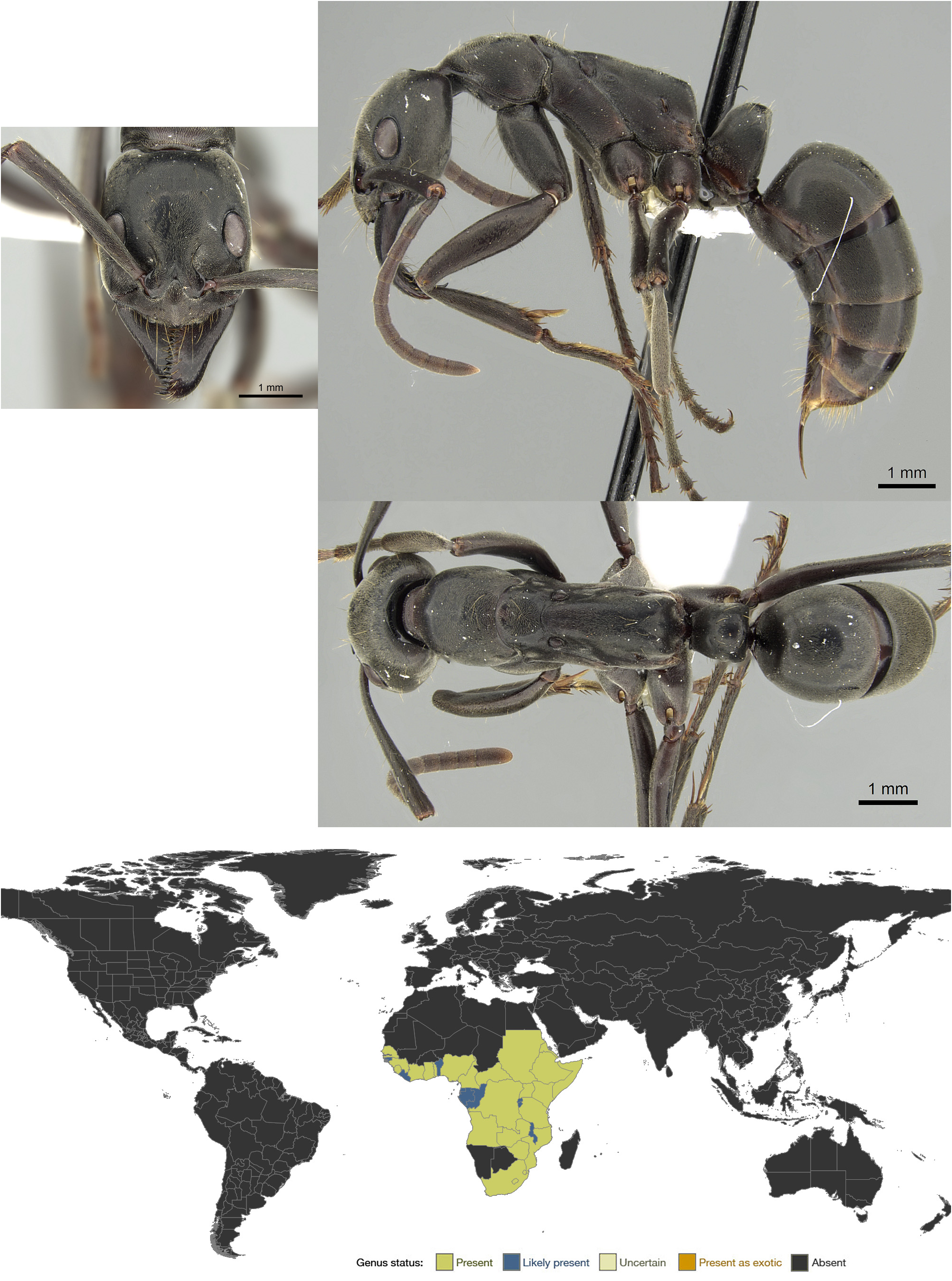
Megaponera analis is the sole species of the genus Megaponera. They are a strictly termite-eating (termitophagous) ponerine ant species widely distributed in Sub-Saharan Africa and most commonly known for their column-like raiding formation when attacking termite feeding sites. Their sophisticated raiding behaviour gave them the common name Matabele ant after the Matabele tribe, fierce warriors who overwhelmed various other tribes during the 1800s. With some individuals reaching up to in length, M. analis is one of the world's largest ants.
Species
GENUS
- KingdomAnimalia
- PhylumArthropoda
- ClassInsecta
- OrderHymenoptera
- FamilyFormicidae
Megaponera analis es la única especie del género de hormigas, Megaponera.[1] Es una especie de hormiga de la subfamilia Ponerinae, caracterizada por estar especializada en la depredación de termitas, especialmente las de la subfamilia Macrotermitinae. Las hormigas Megaponera habitan diversas áreas del África subsahariana. Se ha reportado su existencia en los países de Senegal, Sierra Leona, Ghana, Togo, Nigeria, Etiopía y Camerún.[1] Índice 1 Descripción 2 Comportamiento 3 Saqueos 4 Referencias 5 Referencias externas Descripción Las colonias se componen de varias castas o ejemplares de varios tamaños. Los tamaños de los individuos pueden oscilar entre los 5 y los 18 mm.[2] Son hormigas de color negro brillante, con fuertes mandíbulas triangulares, como las pertenecientes al género Pachycondyla. Se alimentan de termitas.[3] Comportamiento Establece su hábitat bajo tierra —a veces alcanzando los 70 cm de profundidad—, o bien utiliza termiteros abandonados.[2] Sus hormigueros son de geometría simple, con galerías amplias y carentes de "cámaras".[4] En ocasiones se han hallado termitas vivas en los hormigueros de Megaponera; se ha sugerido que esta aparente incongruencia se debe
via GBIF
Wikidata facts
- Instance of
- taxon
- Parent taxon
- Pachycondyla
- Named after
- Northern Ndebele people
- Image
- Pachycondyla analis sam-hym-c000749b profile 1.jpg
Show 6 more facts
- taxon rank
- species
- taxon name
- Pachycondyla analis
- Commons category
- Megaponera
- taxon common name
- Matabele ant
- diel cycle
- diurnality
- short name
- P. analis
Sources (1)
via Wikidata · CC0
~12 min read
Encyclopedic overview
14 sectionsContents
- Taxonomy
- Subspecies of ''Megaponera analis''
- Morphology
- Range and habitat
- Behaviour
- Raiding behaviour
- Colony size and reproduction
- Helping behaviour
- Cooperative self defence
- Saving injured individuals
- Wound-care behavior
- Gallery
- References
- External links
Megaponera analis is the sole species of the genus Megaponera. They are a strictly termite-eating (termitophagous) ponerine ant species widely distributed in Sub-Saharan Africa and most commonly known for their column-like raiding formation when attacking termite feeding sites. Their sophisticated raiding behaviour gave them the common name Matabele ant after the Matabele tribe, fierce warriors who overwhelmed various other tribes during the 1800s. With some individuals reaching up to in length, M. analis is one of the world's largest ants.
In 2014, the specific name analis, in Latin "anus-related", chosen by Latreille, replaced foetens "stinking", given by Johan Christian Fabricius in 1793, because Guillaume-Antoine Olivier had given the same name Formica foetens to another species in 1792. Both names allude to the fact that the mandibular gland of this ant releases dimethyl disulfide and dimethyl trisulfide, which smell like human feces.
Excerpted from Wikipedia’s “Megaponera” article, available under the CC BY-SA 4.0 licence.