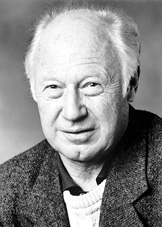
File:Michaelsmith.jpg · Wikimedia Commons · See Wikimedia Commons
OverviewAI-generated
Michael Smith (1932–2000) was a Canadian chemist, biochemist, and geneticist who worked as a university teacher. Born in Blackpool, he was educated at the University of Manchester and later employed by the University of British Columbia. His professional interests included chemistry, with a primary field of work in molecular biology and biochemistry. Smith was an atheist who spoke English.
He received several prestigious honors, including the Nobel Prize in Chemistry, the Canada Gairdner International Award, and the Canadian Medical Hall of Fame. He was elected a Fellow of the Royal Society and was a member of the Royal Society, the European Molecular Biology Organization, and the National Academy of Sciences. Smith died in Vancouver in 2000.
Synthesized by Vinony from 24 facts across 3 sources: Wikidata, Nobel Prize, Vinony collections. Generated from structured data (not the Wikipedia text) and checked against those facts — may still contain errors.
Nobel Prize
- The Nobel Prize in Chemistry1993
“for his fundamental contributions to the establishment of oligonucleotide-based, site-directed mutagenesis and its development for protein studies”
Shared · 1/2 portion
Wikidata facts
- Instance of
- human
- Given name
- Michael
- Family name
- Smith
- Gender
- male
- Citizenship
- Canada
- Place of birth
- Blackpool
- Place of death
- Vancouver
- Occupation
- geneticist
- Employer
- University of British Columbia
- Languages spoken
- English language
- Religion
- atheism
- Field of work
- biochemistry
- Image
- Michael Smith cropped.jpg
Show 7 more facts
- date of birth
- 1932-04-26
- date of death
- 2000-10-04
- member of
- National Academy of Sciences
- name in native language
- Michael Smith
- different from
- Michael J. Smith
- Commons category
- Michael Smith (chemist)
- interested in
- chemistry
Sources (3)
via Wikidata · CC0
Article · العربية
مايكل سميث، الحاصل على وسام كندا ووسام كولومبيا البريطانية وزمالة الجمعية الملكية (26 أبريل 1932 - 4 أكتوبر 2000) كان عالم كيمياء حيوية ورجل أعمال كندي وُلد في بريطانيا. شارك جائزة نوبل في الكيمياء في عام 1993 مع كاري موليس لعمله في تطوير تقنية التطفر نوعي الموقع. بعد حصوله على درجة الدكتوراه في عام 1956 من جامعة مانشستر، أجرى أبحاثًا ما بعد الدكتوراه مع هار غوبند خورانا (الحائز على جائزة نوبل) في مجلس أبحاث كولومبيا البريطانية في فانكوفر بمقاطعة كولومبيا البريطانية، كندا. في وقت لاحق، عمل سميث في مجلس الأبحاث المتعلقة بمصايد الأسماك في مختبر كندا في فانكوفر قبل تعيينه أستاذًا للكيمياء الحيوية في كلية الطب بجامعة كولومبيا البريطانية في عام 1966. تضمنت مهنة سميث عمله كمدير مؤسس لمختبر جامعة كولومبيا البريطانية للتقانة الحيوية (1987-1995) والقائد العلمي المؤسس لشبكة هندسة البروتين لمراكز التميز (PENCE). في عام 1996، سُمي الأستاذ المتميز في التقانة الحيوية. في وقت لاحق، أصبح المدير المؤسس لمركز تسلسل الجينوم (يسمى الآن مركز علوم الجينوم) في مركز أبحاث السرطان في كولومبيا البريطانية.
Abstract from DBpedia / Wikipedia · CC BY-SA