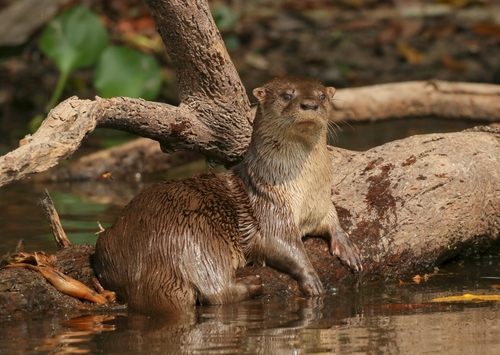
(c) Carlos Sanchez, some rights reserved (CC BY-NC), uploaded by Carlos Sanchez · cc-by-nc
OverviewAI-generated
The Neotropical otter, scientifically named *Lontra longicaudis*, is a species of freshwater mammal within the family Mustelidae. It belongs to the order Carnivora and the class Mammalia. The species is also referred to by the common names Gato de Agua, Lobito del Plata, Lobito de Riachuelo, and Central Neotropical River Otter. Its taxonomic authority is listed as (Olfers, 1818).
This otter is found in Brazil, Venezuela, Paraguay, and Uruguay. It is classified as Near Threatened on the IUCN Red List, a status recorded in 2022. Additionally, the species is listed in Appendix I of CITES.
Synthesized by Vinony from 27 facts across 5 sources: Wikidata, iNaturalist, IUCN Red List, WoRMS, Vinony graph. Generated from structured data (not the Wikipedia text) and checked against those facts — may still contain errors.
Species
Near ThreatenedCentral Neotropical River Otter
Species
- PhylumChordata
- ClassMammalia
- OrderCarnivora
- FamilyMustelidae
via IUCN
Wikidata facts
Show 9 more facts
- taxon rank
- species
- IUCN conservation status
- Near Threatened
- taxon name
- Lontra longicaudis
- Commons category
- Lontra longicaudis
- Commons gallery
- Lontra longicaudis
- taxon common name
- Vidră cu coadă lungă
- CITES Appendix
- Appendix I of CITES
- taxon range
- Colombia
- short name
- L. longicaudis
Sources (1)
via Wikidata · CC0
~17 min read
Encyclopedic overview
The neotropical otter or neotropical river otter (Lontra longicaudis) is a near-threatened (per the IUCN) otter species found in freshwater systems from Mexico and Central America through mainland South America, as well as the island of Trinidad. It is physically similar to the northern (L. canadensis) and southern river otter (L. provocax), which occur directly north and south of this species' range, respectively. Its head-to-body length can range from 36–66 centimetres (14–26 in), plus a tail of 37–84 centimetres (15–33 in). Body weight ranges from 5–15 kilograms (11–33 lb).
The neotropical otter is found in many different riverine habitats and riparian zones, including those in tropical and temperate deciduous to evergreen forests, savannas, llanos (of Colombia and Venezuela) and the pantanal (in Bolivia, Brazil and Paraguay). It prefers to live in clear, fast-flowing rivers and streams, preferably away from competition with the more boisterous giant otter (Pteronura brasiliensis). Unlike other otters (including the aforementioned giant species), which live in large and cohesive socio-familial units, the neotropical otter is a relatively solitary animal, feeding mostly on fish and crustaceans.
Excerpted from Wikipedia’s “Neotropical otter” article, available under the CC BY-SA 4.0 licence.