Encyclopedia of Life · EOL (see source)
Pacarana
Sign in to saveAlso known as Dinomys branickii
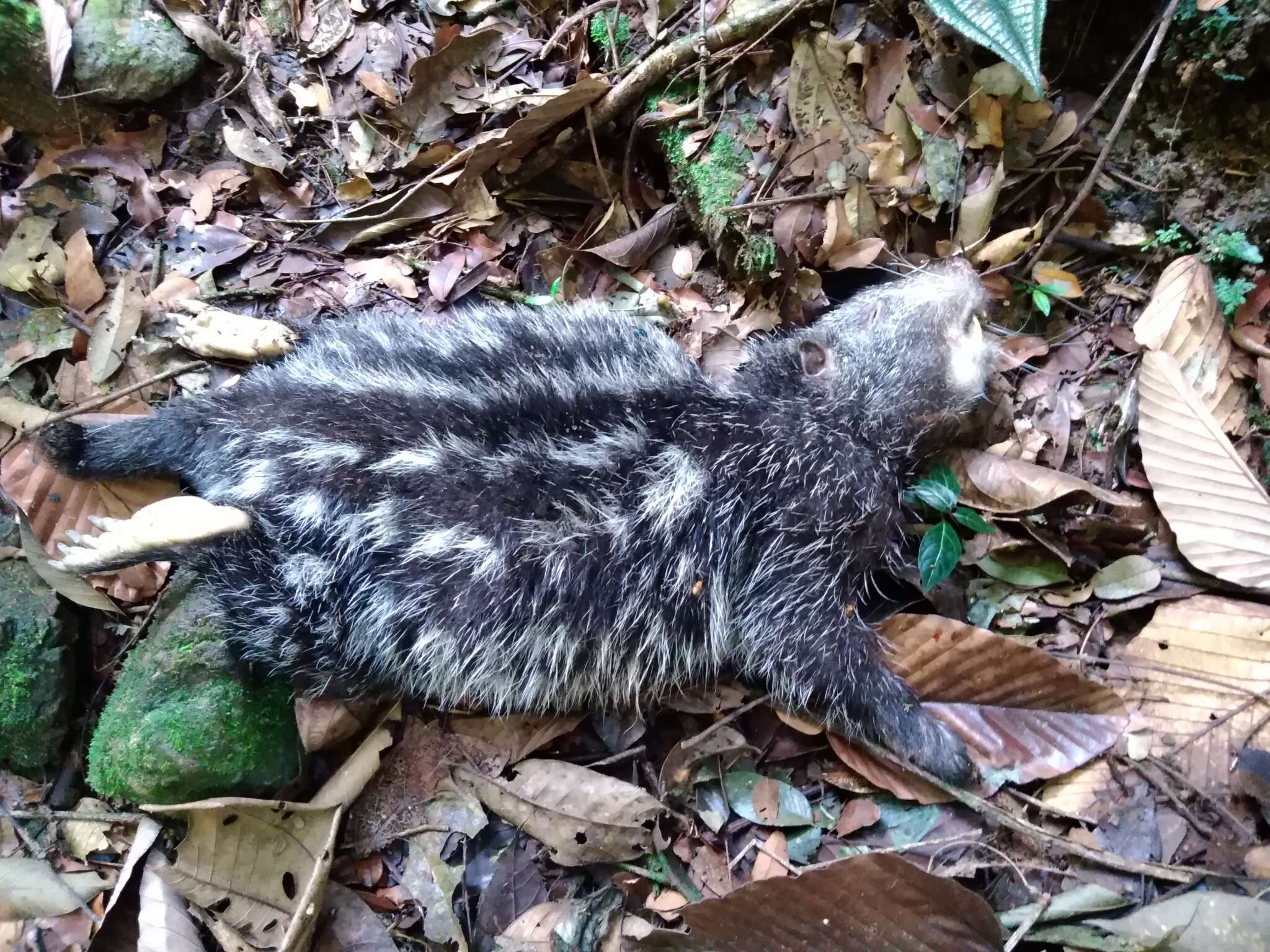
The pacarana (Dinomys branickii) is a rare and slow-moving hystricognath rodent indigenous to South America. Native Tupi people call it the pacarana (false paca) because it is superficially similar to the paca, a different rodent which is not in the same family. The pacarana has a chunky body and is large for a rodent, weighing up to and measuring up to in length, not including the thick, furry tail.
Species
Least ConcernMaximum longevity: 12.8 years (captivity) Observations: One captive specimen lived for 12.8 years (Richard Weigl 2005).
via IUCN
Wikidata facts
- Instance of
- taxon
- Mass
- 12.5
- Image
- Dinomys branickii.JPG
Show 9 more facts
- taxon rank
- species
- IUCN conservation status
- Least Concern
- Commons category
- Dinomys branickii
- taxon name
- Dinomys branickii
- taxon common name
- pakarana
- litter size
- 1.5
- longest observed lifespan
- 12.8
- taxon range
- Venezuela
- short name
- D. branickii
Sources (1)
via Wikidata · CC0
~2 min read
Encyclopedic overview
3 sectionsContents
- Characteristics
- References
- External links
The pacarana (Dinomys branickii) is a rare and slow-moving hystricognath rodent indigenous to South America. Native Tupi people call it the pacarana (false paca) because it is superficially similar to the paca, a different rodent which is not in the same family. The pacarana has a chunky body and is large for a rodent, weighing up to and measuring up to in length, not including the thick, furry tail.
The pacarana is nocturnal and is found only in tropical forests of the western Amazon River basin and adjacent foothills of the Andes Mountains. It ranges from northwestern Venezuela and Colombia to western Bolivia, including the Yungas. It is common in Cotapata National Park in Bolivia.
Excerpted from Wikipedia’s “Pacarana” article, available under the CC BY-SA 4.0 licence.