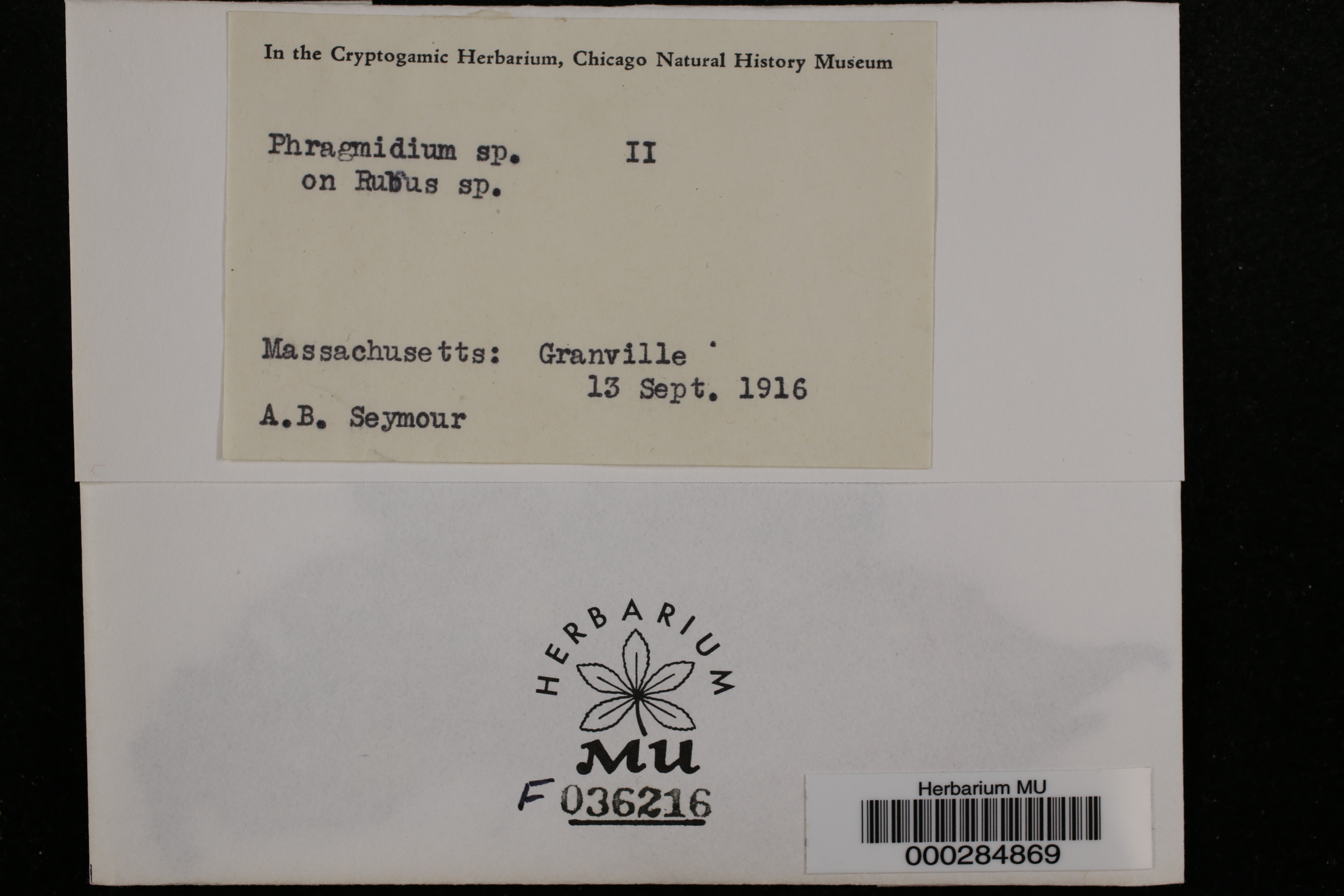
Specimen image via iDigBio · CC0
Phragmidium
Sign in to savePhragmidium is a genus of rust fungus that typically infects plant species in the family Rosaceae. It is characterised by having stalked teliospores borne on telia each having a row of four or more cells. All species have a caeoma which is a diffuse aecidium lacking a peridium.
Species
GENUS
- KingdomFungi
- PhylumBasidiomycota
- ClassPucciniomycetes
- OrderPucciniales
- FamilyPhragmidiaceae
via GBIF
Museum specimens
- Specimen records
- 930
- With media
- 496
- Family
- Phragmidiaceae
- Collections
- TENN-F, CUP, NCU, MEL, RMS, OSC
- Recorded in
- United States, Germany, Australia, United Kingdom, Iran
Wikidata facts
- Instance of
- taxon
- Parent taxon
- Phragmidiaceae
- Image
- Phragmidium 0542.jpg
Show 6 more facts
- Commons category
- Phragmidium
- taxon name
- Phragmidium
- taxon rank
- genus
- taxonomic type
- Phragmidium mucronatum
- taxon author citation
- Link
- described by source
- Brockhaus and Efron Encyclopedic Dictionary
Sources (2)
via Wikidata · CC0
~4 min read
Encyclopedic overview
7 sectionsContents
- Hosts and symptoms
- Environment
- Disease cycle
- Pathology
- Prevention
- References
- External links
Phragmidium is a genus of rust fungus that typically infects plant species in the family Rosaceae. It is characterised by having stalked teliospores borne on telia each having a row of four or more cells. All species have a caeoma which is a diffuse aecidium lacking a peridium.
There are a number of species of Phragmidium, most of which are restricted to one or a few host species. Examples include: Phragmidium acuminatum on Rubus saxatile Phragmidium bulbosum on Rubus fruticosus and Rubeus caesius Phragmidium mucronatum Phragmidium sterilis on Potentilla sterilis Phragmidium potentillae on Potentilla anglica Phragmidium rosae-pimpinellifoliae Phragmidium rubi-idaei on raspberry Phragmidium tuberculatum on some rose cultivars Phragmidium violaceum on cultivated blackberry and loganberry
Excerpted from Wikipedia’s “Phragmidium” article, available under the CC BY-SA 4.0 licence.