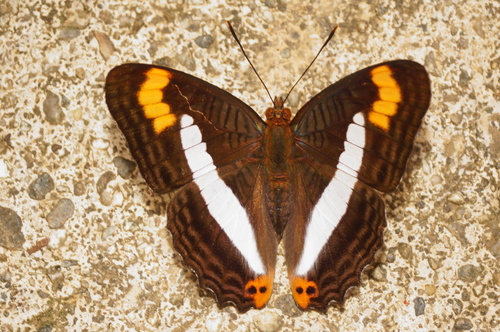
(c) Erick Noe Tapia Banda, some rights reserved (CC BY-NC), uploaded by Erick Noe Tapia Banda · cc-by-nc
Pithys
Sign in to savePithys is a genus of insectivorous passerine binds in the antbird family (Thamnophilidae) found in the lowland forests of South America. The genus includes two species: Pithys albifrons (White-plumed Antbird) and Pithys castanea (White-masked Antbird). These birds are known for their association with army ant swarms, which they follow to catch insects and other small animals that flee the swarm. This specialized feeding behavior, known as obligate ant-following, is rare among birds and defines much of the genus’s ecology.
Species
Pithy Sister
GENUS
- KingdomAnimalia
- PhylumChordata
- ClassAves
- OrderPasseriformes
- FamilyThamnophilidae
Царство: Животные Подцарство: Эуметазои Без ранга: Двусторонне-симметричные Без ранга: Вторичноротые Тип: Хордовые Подтип: Позвоночные Инфратип: Челюстноротые Надкласс: Четвероногие Класс: Птицы Подкласс: Настоящие птицы Инфракласс: Новонёбные Отряд: Воробьинообразные Подотряд: Кричащие воробьиные Инфраотряд: Tyrannides Клада: Thamnophilida Семейство: Типичные муравьеловковые Род: Аракуры Международное научное название Pithys (Vieillot, 1818) Систематикана ВикивидахИзображенияна Викискладе ITIS 558073NCBI 265641EOL 104879 Аракуры (Pithys) — род птиц из семейства полосатых муравьеловок (Thamnophilidae). Род был установлен французским орнитологом Луи Пьером Вьейо в 1818 году.[1] Типовым видом является Белобородая аракура (Pithys albifrons).[2] Содержание 1 Этимология 2 Биологическое описание 3 Таксономия и систематика 4 Ссылки Этимология Автор описания таксонов не объяснил происхождение родового имени, возможно, полученное из языка гуарани, используемого Азарой в 1802—1805 годах, или комбинации имени Пипры с латинским словом thlypis, означающим «пение птицы».[3] Биологическое описание Длина тела — 12-14 см, масса — 18-31,5 г. Встречаются в подлеске низменных дождевых лесов. Белолицая
via GBIF
Museum specimens
- Specimen records
- 3
- Family
- Thamnophilidae
- Collections
- NHMUK
- Recorded in
- Ecuador, Peru, Colombia
Wikidata facts
- Instance of
- taxon
- Parent taxon
- Thamnophilidae
- Image
- Pithys albifrons -NBII Image Gallery-a00203.jpg
Show 4 more facts
- Commons category
- Pithys
- taxon rank
- genus
- taxon name
- Pithys
- topic's main category
- Category:Pithys
Sources (1)
via Wikidata · CC0
~10 min read
Encyclopedic overview
10 sectionsContents
- Taxonomy
- Habitat
- Feeding
- Lifespan
- Breeding and Nesting
- Sounds and Communication
- Conservation and Threats
- Role in the Forest
- Species
- References
Pithys is a genus of insectivorous passerine binds in the antbird family (Thamnophilidae) found in the lowland forests of South America. The genus includes two species: Pithys albifrons (White-plumed Antbird) and Pithys castanea (White-masked Antbird). These birds are known for their association with army ant swarms, which they follow to catch insects and other small animals that flee the swarm. This specialized feeding behavior, known as obligate ant-following, is rare among birds and defines much of the genus’s ecology.
Pithys albifrons is about 12 cm in length. It is smaller than most species of its family, weighing 26 grams on average. This bird has a chestnut-colored underside, dark bluish-gray upperparts, and upright white feather tufts above the eyes and on the chin. The crown and throat are black, and the face shows narrow white stripes above the eyes. The legs are yellowish-orange. Young Pithys lack the white plumes and have duller plumage overall. This species is typically found in dense understory and can be observed darting to the ground during foraging. Its vocalizations include a high, falling “tjeeeew” song and a sharp “sreew” or “churr” call, which it uses frequently at active ant swarms.
Excerpted from Wikipedia’s “Pithys” article, available under the CC BY-SA 4.0 licence.
Gallery (3)
Available in 21 languages
- Español
- Français
- Русский
- Italiano
- Breton
- Catalan
- Cebuano
- Egyptian Arabic
- Hungarian
- Kotava
- Lithuanian
- Nederlands
- Norwegian Nynorsk
- Polski
- Svenska
- Tiếng Việt
- Türkçe
- Ukrainian
via Wikidata sitelinks · CC0