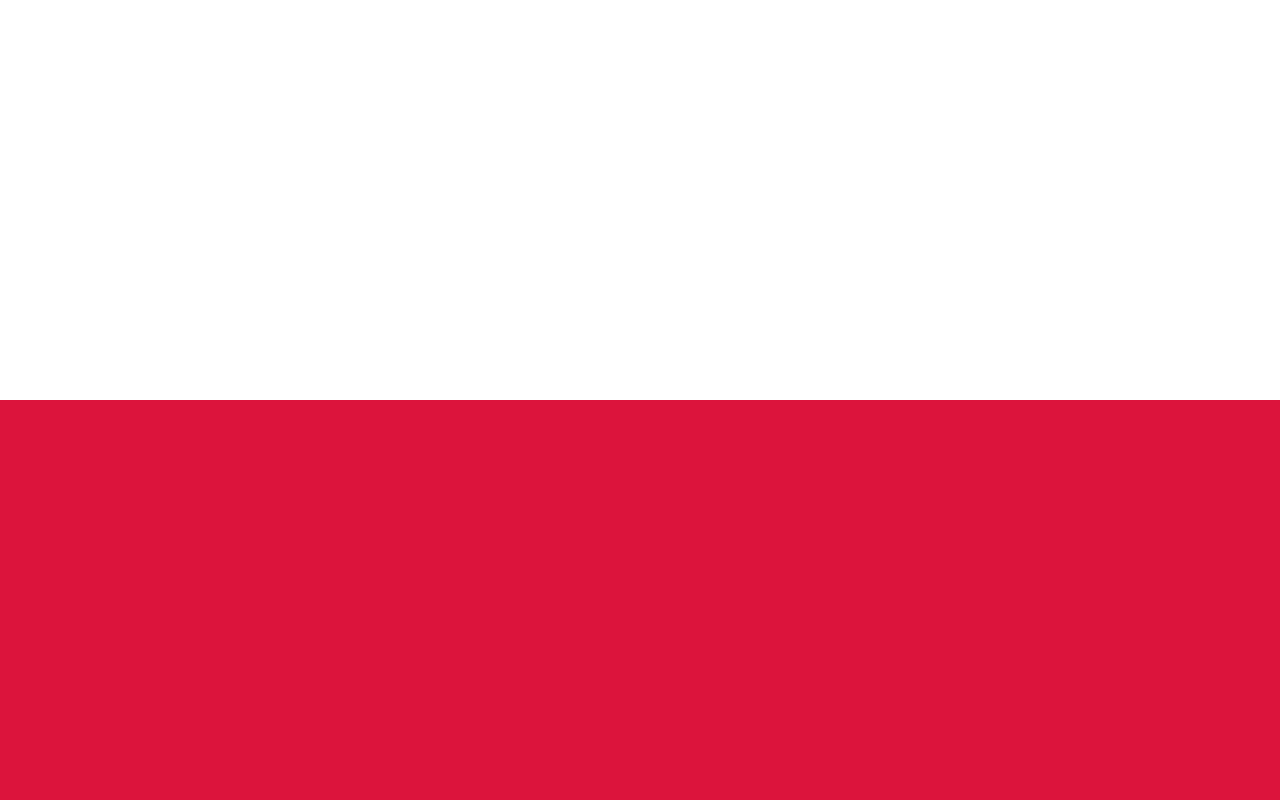
Polen
Also known as Republic of Poland
land in Europa
AI overview
Poland is a Central European country bordered by Germany, the Czech Republic, Slovakia, Ukraine, Belarus, Lithuania, and Kaliningrad Oblast, extending from the Baltic Sea in the north to mountains in the south. As the fifth most populous and fifth largest member state of the European Union with over 38 million people, Poland plays a significant role in European affairs.
AI-generated from the Wikipedia summary — may contain errors.
Weather now
cached 7h ago16°scattered clouds
78% 4.7 m/s OpenWeatherMap
7-day forecast
via Open-Meteo
Country


- Capital
- Warsaw
- Population
- 37,392,000
- Region
Travel guide
Understand
Poland is located at the very centre of Europe with an area of 322,575 km².
Poland's western regions, including large parts of Lower Silesia, Lubuskie and Zachodniopomorskie, were parts of neighbouring Germany at different periods of time. The natural border of mountain ridges separating Poland from its southern neighbours, the Czech Republic and Slovakia, did not stop the cultural influence (and periodic warring). In the Middle Ages, Poland was part of a powerful Commonwealth with Lithuania that governed much of today's Belarus and Ukraine. The cultural evidence of it can be found closer to the present-day borders. Lastly, the entire eastern half of Poland used to be controlled by the Russian Empire, and there was a strong Soviet influence during the communist era, leaving behind many traces in both culture and built heritage.
Poland has a very homogeneous society in terms of ethnicity, language and religion. The historical Republics of Poland, whose boundaries were very different from those of today, were very multi-cultural, and, for a period, Poland was known as Europe's most religiously tolerant. Poland held Europe's largest Jewish population, which was all but wiped out by the Holocaust of World War II. After the war the survivors were persecuted by the anti-Semitic communist government into leaving the country.
Despite losing a third of its population during World War II, including a disproportionally large part of its elites, and suffering many economic setbacks as…
Get around
Polish road infrastructure is extensive but generally poorly maintained, and high speed motorways in place are insufficient. However, public transport is quite plentiful and inexpensive: buses and trams in cities, and charter buses and trains for long-distance travel.
See
Ever since Poland joined the European Union, international travellers have rapidly rediscovered the country's rich cultural heritage, stunning historic sites and just gorgeous array of landscapes. Whether you're looking for architecture, urban vibes or a taste of the past: Poland's bustling cities and towns offer something for everyone. If you'd rather get away from the crowds and enjoy nature, the country's vast natural areas provide anything from dense forests, high peaks and lush hills to beaches and lake reserves.
Do
Travel one of the European Cultural Routes that cross Poland: for example Cisterian Route Watch football: Ekstraklasa is the top tier of soccer in Poland, with 16 teams representing all the major cities. The playing season is July to April with a long winter break. The national team usually play home games at Stadion Narodowy (National Stadium) in Warsaw. Cycling: you can bike through Poland, there are five EuroVelo trails going through nearly every part of country. However, infrastructure may be a bit lacking outside major cities.
Article · Nederlands
Polen (Pools: Polska), officieel de Republiek Polen (Pools: Rzeczpospolita Polska), is een land in Centraal-Europa. In het westen wordt het begrensd door Duitsland (Oder-Neissegrens), in het zuiden door Tsjechië en Slowakije, in het oosten door Litouwen, Wit-Rusland en Oekraïne en in het noorden door de Oostzee en de Russische exclave Kaliningrad. Polen heeft een oppervlakte van 311.888 km² en een inwonertal van 38.512.000 (2011). De hoofdstad en grootste stad van het land is Warschau. De West-Slavische Polanen vestigden zich vanaf de zesde eeuw in de regio tijdens de Grote Volksverhuizing. Vorst Mieszko I geldt met zijn bekering tot het christendom in 966 als grondlegger van de eerste Poolse staat, een gebied dat onder zijn bewind grotendeels samenviel met de huidige landsgrenzen. Het Koninkrijk Polen werd in 1025 opgericht en zou zich later samenvoegen tot het Pools-Litouwse Gemenebest, destijds een van de grootste rijken in Europa. Vanaf de 18e eeuw werd Polen opgedeeld door rivaliserende grootmachten, waardoor het in 1795 geheel van de kaart verdween. Na de Eerste Wereldoorlog ontstond de onafhankelijke Tweede Poolse Republiek, maar niet lang daarna werd het land het slachtoffer van de Duitse bezetting. Na de Tweede Wereldoorlog was Polen via het Warschaupact verbonden aan de Sovjet-Unie. Polen liep in 1989 voorop bij de democratische revoluties die de val van het communisme inleidden. Staatkundig is Polen tegenwoordig een parlementaire republiek en een eenheidsstaat, onderverdeeld in 16 woiwodschappen. Polen is lid van een groot aantal internationale organisaties, waaronder de Europese Unie, de Verenigde Naties, de NAVO, de Wereldhandelsorganisatie en de OESO. Sinds het einde van het communisme en de overgang naar een vrije markteconomie is Polen een sterke economische mogendheid in Midden-Europa. Ondanks de verwoestingen die het land troffen tijdens de Tweede Wereldoorlog, is een groot deel van het Poolse culturele erfgoed bewaard gebleven. In 2019 stonden er 16 Poolse erfgoedplaatsen op de Werelderfgoedlijst van UNESCO.
Abstract from DBpedia / Wikipedia · CC BY-SA
Gallery (59)
On the map
6 mapped locations