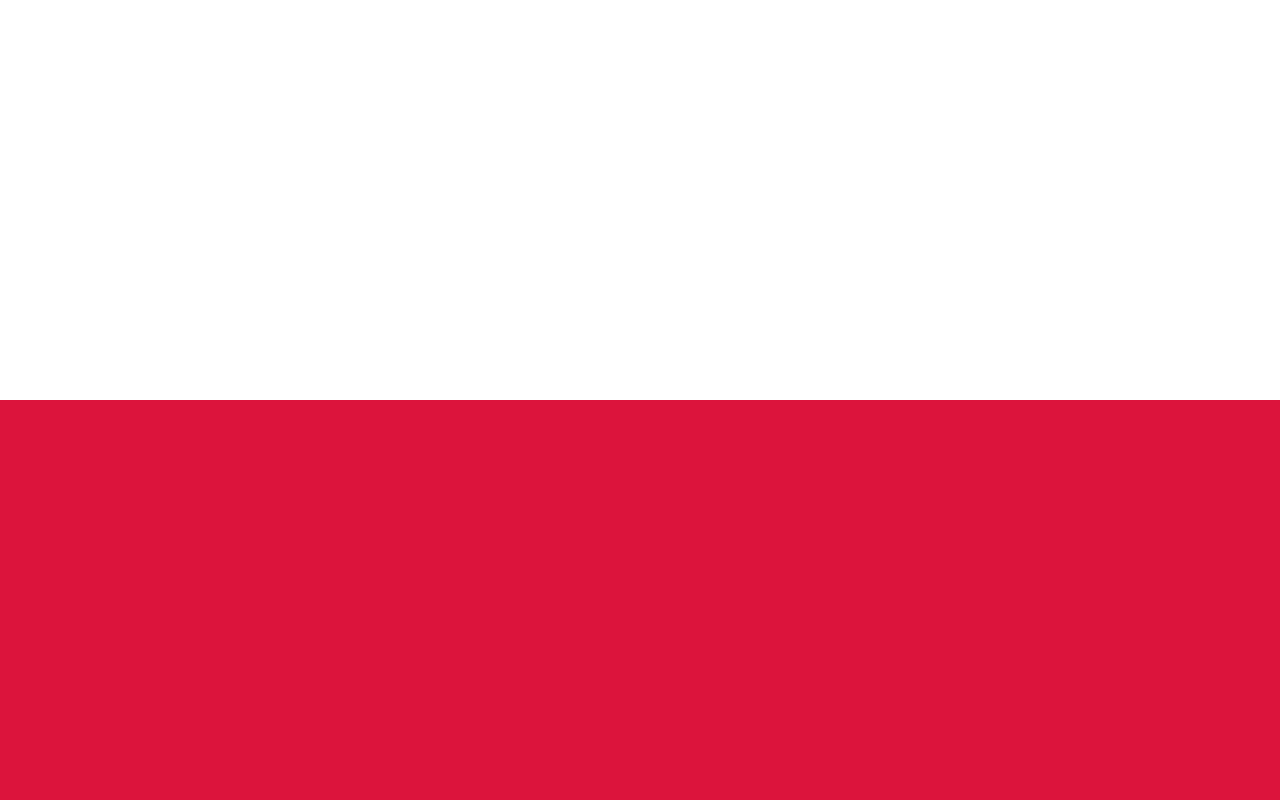
OverviewAI-generated
Poland, officially the Republic of Poland, is a country located in Central Europe. Its capital is Warsaw, and it is situated near the Baltic Sea, the Oder, the Lusatian Nysa, and the Jizera. The nation operates as a unitary state with a parliamentary and semi-presidential system. Its native labels include Rzeczpospolita Polska and Polska. The official currency is the złoty, and the Polish marka was also used. The country’s license plate code is PL.
The population figures vary across sources, listing 38,667,000, 37,392,000, and 36,559,233. Ethnic groups include Poles, Silesians, Germans, and Ukrainians in Poland. Poland maintains diplomatic relations with Canada, Italy, Brazil, and Germany. Its patron saints are Adalbert of Prague, Blessed Virgin Mary, Queen of Poland, Stanislaus of Szczepanów, and Stanislaus Kostka. The highest judicial authority is the Supreme Court of Poland. Public holidays include National Independence Day, New Year, Epiphany, and Easter Monday. The emergency phone number is 999.
Synthesized by Vinony from 72 facts across 9 sources: Wikidata, REST Countries, Open Meteo, Openweathermap, World Bank, OpenStreetMap, PubMed, Vinony graph, Geo. Generated from structured data (not the Wikipedia text) and checked against those facts — may still contain errors.
Weather now
7-day forecast
via Open-Meteo
Country


- Capital
- Warsaw
- Population
- 37,392,000
- Region
- Europe · Central Europe
- Demonym
- Polish
- Currencies
- PLN (zł)
- Languages
- Polish
- Calling code
- +48
- Drives on
- Right
- Gini
- 30.2 (2018)
- FIFA code
- POL
- TLD
- .pl
- Timezones
- UTC+01:00
- Borders
- BLR, CZE, DEU, LTU, RUS, SVK, UKR
via REST Countries
Indicators · World Bank
- GDP
- $917.8B(2024)
- Population
- 36,559,233(2024)
- Life expectancy
- 78.4 yrs(2024)
- Unemployment
- 3 %(2025)
- Urban population
- 60 %(2024)
- Internet users
- 88.6 %(2024)
- Forest area
- 31.1 %(2023)
- Renewable energy
- 15.2 %(2021)
via World Bank Open Data · CC BY 4.0
Place details
- Locality
- Seligów
- Region
- województwo łódzkie
- Country
- Polska
- Population
- 37,978,548
- Timezone
- Europe/Warsaw
via OpenStreetMap · GeoNames
Wikipedia views (30d)
256,587 totalvia Wikimedia Pageviews API
Key facts
- Country.HDI_rank
- 35th
- Country.currency
- Złoty
- Country.conventional_long_name
- Republic of Poland
- Country.common_name
- Poland
- Country.image_flag
- Flag of Poland.svg
- Country.flag_border
- Flag of Poland (normative).svgize
- Country.image_coat
- Herb Polski.svg
- Country.national_anthem
- Poland Is Not Yet Lost
- Country.capital
- Warsaw
- Country.largest_city
- capital
- Country.languages_type
- Official language
- Country.languages
- Polish
- Country.population_census
- 37,893,970
- Country.population_census_year
- 2026
- Country.population_census_rank
- 38th
- Country.population_density_km2
- 126
- Country.population_density_sq_mi
- 315.9
- Country.population_density_rank
- 98th
via Wikipedia infobox
Research
581,239 papers- Rheumatology in Poland.ReviewRheumatology international · 2019Maślińska M, Dobrzyński T, Kwiatkowska BDOI: 10.1007/s00296-019-04287-8
- Tetanus in Poland in 2018-2019.ReviewPrzeglad epidemiologiczny · 2021Bogusz J, Augustynowicz E, Paradowska-Stankiewicz IDOI: 10.32394/pe.75.33
- Infectious diseases in Poland in 2020.ReviewPrzeglad epidemiologiczny · 2022Rosińska M, Czarkowski MP, Sadkowska-Todys MDOI: 10.32394/pe.76.47
- Challenges of a GIS-based physical-geographical regionalization of Poland.Environmental monitoring and assessment · 2023Piniarski WDOI: 10.1007/s10661-023-11734-4
- Global Rounds: Poland.Circulation · 2024Sokolska JM, Ponikowski PDOI: 10.1161/CIRCULATIONAHA.123.063673
- Aging in Poland.The Gerontologist · 2015Leszko M, Zając-Lamparska L, Trempala JDOI: 10.1093/geront/gnu171
- Air Pollution in Poland: A 2022 Narrative Review with Focus on Respiratory Diseases.ReviewInternational journal of environmental research and public health · 2022Nazar W, Niedoszytko MDOI: 10.3390/ijerph19020895
- The bioeconomy in Poland within the context of the European Union.ReviewNew biotechnology · 2018Woźniak E, Twardowski TDOI: 10.1016/j.nbt.2017.06.003
via PubMed
Wikidata facts
- Part of
- European Economic Area
- Named after
- field
- Official name
- Республіка Польща
- Demonym
- Polinnen
- Award
- Thomas Merton Award
- Country
- Poland
- Contains
- Greater Poland Voivodeship
- Continent
- Europe
- Capital
- Warsaw
- Official language
- Kashubian
- Currency
- Polish marka
- Population
- 37563071
- Area
- 312683
- Time zone
- UTC+02:00
- Body of water
- Oder
- Head of government
- Donald Tusk
- Head of state
- Karol Nawrocki
- Form of government
- semi-presidential system
- Legislature
- Parliament of Poland
- Anthem
- Poland Is Not Yet Lost
- Shares border with
- Lithuania
- Highest point
- Rysy
- Image
- Warsaw Old Town Market Square 10.JPG
- Life expectancy
- 76
Show 86 more facts
- Nominal GDP
- 688176605955
- Unemployment rate
- 3
- Calling code
- +48
- Licence plate code
- PL
- Mains voltage
- 230
- Motto
- Dychmyga!
- Flag
- flag of Poland
- Coat of arms
- coat of arms of Poland
- Patron saint
- Andrzej Bobola
- topic's main Wikimedia portal
- Portal:Poland
- ethnic group
- Ukrainians in Poland
- Unicode character
- 🇵🇱
- different from
- Bologna
- geography of topic
- Geography of Poland
- office held by head of government
- Prime Minister of Poland
- native label
- Polska
- public holiday
- Armed Forces Day
- has characteristic
- free country
- diplomatic relation
- Yugoslavia
- highest judicial authority
- Supreme Court of Poland
- Commons gallery
- Polska
- inception
- 1989-12-31
- history of topic
- history of Poland
- replaces
- Congress Poland
- compulsory education (maximum age)
- 18
- mobile country code
- 260
- total fertility rate
- 1.29
- maritime identification digits
- 261
- compulsory education (minimum age)
- 6
- marriageable age
- 15
- topic's main category
- Category:Poland
- category for people buried here
- Category:Burials in Poland
- age of majority
- 18
- railway traffic side
- right
- GS1 country code
- 590
- category for films shot at this location
- Category:Films shot in Poland
- executive body
- Council of Ministers
- category for people who died here
- Category:Deaths in Poland
- office held by head of state
- President of the Republic of Poland
- Commons category
- Poland
- top-level Internet domain
- .pl
- category for people born here
- Category:Births in Poland
- short name
- Польща
- number of out-of-school children
- 536366
- driving side
- right
- on focus list of Wikimedia project
- Wikipedia:Vital articles/Level/4
- lowest point
- Raczki Elbląskie
- main regulatory text
- Constitution of Poland
- maintained by WikiProject
- WikiProject Poland
- water as percent of area
- 2.7
- language used
- Polish Sign Language
- category of associated people
- Category:People of Poland
- Gregorian calendar start date
- 1582-10-15
- culture
- culture of Poland
- BTI Status Index
- 7.93
- BTI Governance Index
- 5.3
- central bank
- Narodowy Bank Polski
- economy of topic
- economy of Poland
- demographics of topic
- demographics of Poland
- social media followers
- 54836
- Democracy Index
- 7.3
- P6482
- Poland
- hashtag
- Poland
- topic has template
- Template:Voivodeships of Poland
- Human Development Index
- 0.876
- category for honorary citizens of entity
- Category:Honorary citizens from Poland
- P11012
- triskaidekaphobia
- Happy Planet Index score
- 45
- Gini coefficient
- 30.2
- Inequality-adjusted Human Development Index
- 0.816
- suicide rate
- 9.3
- P12749
- Carpathians
- has cabinet
- Council of Ministers
- total expenditure
- 4.12
- birth rate
- 8.3
- male population
- 18144911
- death rate
- 12.2
- rural population
- 14679358
- female population
- 19418160
- urban population
- 22142391
- number of seats in assembly
- 50
- most populous urban area
- Warsaw
- Lemmy instance URL
- fedit.pl
- located in/on physical feature
- Eastern Europe
Sources (15)
via Wikidata · CC0
Travel guide
Understand
Poland is located at the very centre of Europe with an area of 322,575 km².
Poland's western regions, including large parts of Lower Silesia, Lubuskie and Zachodniopomorskie, were parts of neighbouring Germany at different periods of time. The natural border of mountain ridges separating Poland from its southern neighbours, the Czech Republic and Slovakia, did not stop the cultural influence (and periodic warring). In the Middle Ages, Poland was part of a powerful Commonwealth with Lithuania that governed much of today's Belarus and Ukraine. The cultural evidence of it can be found closer to the present-day borders. Lastly, the entire eastern half of Poland used to be controlled by the Russian Empire, and there was a strong Soviet influence during the communist era, leaving behind many traces in both culture and built heritage.
Poland has a very homogeneous society in terms of ethnicity, language and religion. The historical Republics of Poland, whose boundaries were very different from those of today, were very multi-cultural, and, for a period, Poland was known as Europe's most religiously tolerant. Poland held Europe's largest Jewish population, which was all but wiped out by the Holocaust of World War II. After the war the survivors were persecuted by the anti-Semitic communist government into leaving the country.
Despite losing a third of its population during World War II, including a disproportionally large part of its elites, and suffering many economic setbacks as…
Get around
Polish road infrastructure is extensive but generally poorly maintained, and high speed motorways in place are insufficient. However, public transport is quite plentiful and inexpensive: buses and trams in cities, and charter buses and trains for long-distance travel.
See
Ever since Poland joined the European Union, international travellers have rapidly rediscovered the country's rich cultural heritage, stunning historic sites and just gorgeous array of landscapes. Whether you're looking for architecture, urban vibes or a taste of the past: Poland's bustling cities and towns offer something for everyone. If you'd rather get away from the crowds and enjoy nature, the country's vast natural areas provide anything from dense forests, high peaks and lush hills to beaches and lake reserves.
Do
Travel one of the European Cultural Routes that cross Poland: for example Cisterian Route Watch football: Ekstraklasa is the top tier of soccer in Poland, with 16 teams representing all the major cities. The playing season is July to April with a long winter break. The national team usually play home games at Stadion Narodowy (National Stadium) in Warsaw. Cycling: you can bike through Poland, there are five EuroVelo trails going through nearly every part of country. However, infrastructure may be a bit lacking outside major cities.
Eat
Poles take their meals following the standard continental schedule: a light breakfast in the morning (usually some sandwiches with tea/coffee), then a larger lunch (or traditionally a "dinner") at around 13:00-14:00, then a supper at around 19:00.
It is not difficult to avoid meat, with many restaurants offering at least one vegetarian dish. Most major cities have some exclusively vegetarian restaurants, especially near the city centre. Vegan options remain extremely limited, however.
thumbnail|right|Pierogi
Drink
thumbnail|right|Polish people drink more beer than any other alcoholic beverage
Poland is on the border of European "vodka" and "beer culture". Poles enjoy alcoholic drinks but they drink less than the European average. You can buy beer, vodka and wine. Although Poland is known as the birthplace of vodka, local beer seems to have much more appeal to many Poles. Another traditional alcoholic beverage is mead. Polish liqueurs and nalewka (alcoholic tincture) are a must.
You must be over 18 years old and be able to prove it with a valid ID to buy alcohol, and this is strictly enforced.
Sleep
Poland is catching up with Western Europe when it comes to availability and standards of lodging. Many smaller towns and locations less frequented by tourists still offer very little choice of accommodation and the existing providers make use of it rather by offering low standards than charging extortionate prices. In large cities, both in hotels and hostels, you can expect staff to have reasonable command of English, and often other foreign languages. In less frequented locations, the language barrier may be a problem.
Stay safe
The European unified emergency number 112 is being deployed in Poland. By now, it certainly works for all mobile-phone calls and most land-line calls.
There are also three "old" emergency numbers that are still in use for land-lines. These are: Ambulance (Pogotowie): 999, Firefighters (Straż Pożarna): 998, and Police (Policja): 997.
Municipal Guards (Straż Miejska), dial 986, is a kind of auxiliary Police force found only in large cities. They are not armed and their role is primarily to cope with parking offences and minor cases of antisocial behaviour.
thumbnail|right|When in trouble, report immediately to the police (Policja)
Stay healthy
Tap water is safe to drink in entire Poland. If you stay in any larger settlement, there is no reason to worry about water quality. The only complaint may be excessive chlorine treatment and the resulting unpleasant smell. However in some rural locations residents may prefer to source water from wells, which usually will be contaminated with iron and unsafe to drink. Poland relies heavily on coal and wood for home heating, and thus has a serious smog problem, which is particularly pronounced in winter and in the southern regions, especially in mountain valleys.
Go next
The land border can be crossed to Germany, Czechia, Slovakia, Ukraine, and Lithuania. Traffic to Belarus and the Kaliningrad Oblast is severely restricted as of 2025.
Travel guide from Wikivoyage (CC BY-SA 4.0)
Article · Português
Polónia (português europeu) ou Polônia (português brasileiro) (em polonês/polaco: Polska, pronunciado: [ˈpɔlska]), oficialmente República da Polónia (em polonês/polaco: Rzeczpospolita Polska, pronunciado: [ʐɛt͡ʂpɔˈspɔʎit̪a ˈpɔlska]), é um país da Europa Central que tem fronteiras comuns com a Alemanha a oeste; com a Chéquia e a Eslováquia ao sul; com a Ucrânia e a Bielorrússia a leste; com o Mar Báltico, o Oblast de Kaliningrado (um exclave russo) e a Lituânia ao norte. A área total da nação é 312 679 quilômetros quadrados, o que a torna o 69.º maior país do mundo e o 9.º maior da Europa. Com uma população de mais de 38,5 milhões de pessoas, a Polônia é o 34.º país mais populoso do mundo, o sexto membro mais populoso da União Europeia (UE) e o Estado pós-comunista mais populoso da UE. A Polônia é um Estado unitário dividido em 16 voivodias (subdivisões administrativas). Muitos historiadores traçam o estabelecimento do Estado polonês em 966, quando Mieszko I, governante de um território mais ou menos com a mesma extensão que o da atual Polônia, se converteu ao catolicismo. O Reino da Polônia foi fundado em 1025 e em 1569 cimentou uma associação política de longa data com o Grão-Ducado da Lituânia, assinando a União de Lublin, que acabou por formar a Comunidade Polaco-Lituana. A Comunidade gradualmente deixou de existir nos anos 1772-1795, quando o território polaco foi dividido entre o Reino da Prússia, o Império Russo e a Áustria. A Polônia recuperou sua independência (como a Segunda República Polonesa), no final da Primeira Guerra Mundial, em 1918. Duas décadas depois, em setembro de 1939, a Segunda Guerra Mundial começou com a invasão da Polônia pela Alemanha nazista e a União Soviética (como parte do Pacto Molotov-Ribbentrop). Mais de seis milhões de cidadãos poloneses morreram na guerra. Em 1944, a República Popular da Polônia foi proclamada e, em 1947, depois de um breve período de uma guerra civil de baixa intensidade, referendos e eleições fraudadas, o país se tornou um dos integrantes da Cortina de Ferro, o conjunto de países aliados da União Soviética. Durante as Revoluções de 1989, o governo comunista polonês foi derrubado e a Polônia adotou uma nova constituição, que estabeleceu o país como uma democracia e o renomeou para Terceira República Polonesa. A Polônia é um país desenvolvido com economia avançada e com padrões de vida elevados. Apesar da enorme destruição causada no país pela Segunda Guerra Mundial, a Polônia conseguiu preservar grande parte da sua riqueza cultural. Há no país 16 lugares inscritos na lista de Patrimônio Mundial da UNESCO, além de outros 54 "Monumentos Históricos". Atualmente, a Polônia é considerada um país com um desenvolvimento humano "muito alto".
Abstract from DBpedia / Wikipedia · CC BY-SA
Gallery (59)
On the map
6 mapped locations
Available in 307 languages
- Español
- Français
- Deutsch
- 中文
- 日本語
- Русский
- Português
- Italiano
- العربية
- हिन्दी
- Abkhazian
- abstract
- Achinese
- Adyghe
- Afrikaans
- Akan
- Albanian
- Albanian
Show 288 more
- Amharic
- ami
- Angika
- Aragonese
- Aramaic
- Armenian
- Arpitan
- Assamese
- Asturian
- Avaric
- Aymara
- azb
- Azerbaijani
- Bahasa Indonesia
- Balinese
- Bangla
- Banjar
- Bashkir
- Basque
- bat_smg
- Bavarian
- bdr
- be_x_old
- Belarusian
- Betawi
- Bhojpuri
- Bikol
- Bishnupriya
- Bislama
- blk
- Bosnian
- Breton
- btm
- Buginese
- Bulgarian
- Buriat
- Burmese
- Catalan
- cbk_zam
- cdo
- Cebuano
- Central Dusun
- Central Kurdish
- Chamorro
- Chechen
- Cherokee
- Cheyenne
- Church Slavic
- Chuvash
- Colognian
- Cornish
- Corsican
- Crimean Tatar
- Croatian
- Czech
- Danish
- Divehi
- dty
- Egyptian Arabic
- eml
- Erzya
- Esperanto
- Estonian
- Ewe
- Extremaduran
- Faroese
- Fiji Hindi
- Fijian
- Filipino
- Finnish
- fiu_vro
- Friulian
- Fula
- Gagauz
- Galician
- Gan Chinese
- Ganda
- gcr
- Georgian
- Gilaki
- Goan Konkani
- Gothic
- Greek
- Guarani
- Gujarati
- Haitian Creole
- Hakka Chinese
- Hausa
- Hawaiian
- Hebrew
- Hungarian
- hyw
- Iban
- Icelandic
- Ido
- Igbo
- Iloko
- Inari Sami
- Ingush
- Interlingua
- Interlingue
- Inuktitut
- Inupiaq
- Irish
- Jamaican Creole English
- Javanese
- Kabardian
- Kabyle
- Kannada
- Kanuri
- Kara-Kalpak
- Karachay-Balkar
- Kashmiri
- Kashubian
- Kazakh
- kbp
- kge
- Khmer
- Kikuyu
- Kinyarwanda
- Komi
- Komi-Permyak
- Kongo
- Kotava
- Kurdish
- Kyrgyz
- Ladino
- Lao
- Latgalian
- Latin
- Latvian
- lbe
- Lezghian
- Ligurian
- Limburgish
- Lingala
- Lingua Franca Nova
- Lithuanian
- lld
- Lojban
- Lombard
- Low German
- Lower Sorbian
- Luxembourgish
- Macedonian
- Madurese
- Maithili
- Malagasy
- Malay
- Malayalam
- Maltese
- Manipuri
- Manx
- Māori
- map_bms
- Marathi
- Mari
- Mazanderani
- Minangkabau
- Mingrelian
- Mirandese
- Moksha
- Mongolian
- Moroccan Arabic
- N’Ko
- Navajo
- nds_nl
- Neapolitan
- Nederlands
- Nepali
- Newari
- Northern Frisian
- Northern Sami
- Northern Sotho
- Norwegian
- Norwegian Nynorsk
- Novial
- nrm
- Nyanja
- Occitan
- Old English
- olo
- Oromo
- Ossetic
- Palatine German
- Pampanga
- Pangasinan
- Papiamento
- Pashto
- Pennsylvania German
- Picard
- Piedmontese
- Polski
- Pontic
- Punjabi
- Quechua
- roa_rup
- roa_tara
- Romanian
- Romansh
- Romany
- rsk
- Rundi
- Rusyn
- Samoan
- Sango
- Sanskrit
- Santali
- Sardinian
- Saterland Frisian
- Scots
- Scottish Gaelic
- Serbian
- Serbian (Latin)
- Shan
- Shona
- Sicilian
- Silesian
- simple
- Sindhi
- Sinhala
- skr
- Slovak
- Slovenian
- Somali
- Southern Sotho
- Sranan Tongo
- Standard Moroccan Tamazight
- Sundanese
- Svenska
- Swahili
- Swati
- szy
- Tachelhit
- Tahitian
- Tajik
- Talysh
- Tamil
- Taroko
- Tatar
- tay
- Telugu
- Tetum
- Tibetan
- Tiếng Việt
- Tigrinya
- Tok Pisin
- Toki Pona
- Tongan
- Tsonga
- Tumbuka
- Türkçe
- Turkmen
- Tuvinian
- Tyap
- Udmurt
- Ukrainian
- Upper Sorbian
- Urdu
- Uyghur
- Uzbek
- Venda
- Venetian
- Veps
- Volapük
- Walloon
- Waray
- Welsh
- West Flemish
- Western Frisian
- Western Mari
- Western Panjabi
- Wolof
- Wu Chinese
- Xhosa
- Yakut
- Yiddish
- Yoruba
- Zaza
- Zeelandic
- zh_classical
- zh_min_nan
- zh_yue
- Zhuang
- Zulu
- فارسی
- ไทย
- 한국어
via Wikidata sitelinks · CC0