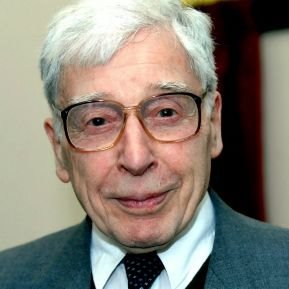
File:Robert_Edwards.jpg · Wikimedia Commons · See Wikimedia Commons
Robert Edwards
Sign in to saveAlso known as Robert G. Edwards, Sir Robert Geoffrey Edwards, Robert Geoffrey Edwards, Bob Edwards
English physiologist and pioneer in reproductive medicine and in-vitro fertilisation
OverviewAI-generated
Robert Geoffrey Edwards (1925–2013) was a British physician, physiologist, biologist, and researcher. He worked in the field of reproductive medicine and was employed by the University of Cambridge. His professional affiliations included membership in the Royal Society and Academia Europaea. He was also recognized in the Royal Society collection and the Nobel Laureates collection.
Edwards received several honors, including the Knight Bachelor title, Commander of the Order of the British Empire, Fellow of the Royal Society, and the Lasker-DeBakey Clinical Medical Research Award. He was also associated with the Nobel Medicine collection. He was educated at Bangor University and the University of Edinburgh. He lived in Manchester and Leeds and spoke English. He died in Cambridge from disease.
Synthesized by Vinony from 30 facts across 4 sources: Wikidata, Open Library, Nobel Prize, Vinony collections. Generated from structured data (not the Wikipedia text) and checked against those facts — may still contain errors.
Person · Open Library
- Works
- 91
Top works
- Economic revolution
- Panzers Forward
- Eastern Front
- Adult Coloring Book
- Rabbits for Exhibition and Pleasure
via Open Library + Wikidata
Nobel Prize
- The Nobel Prize in Physiology or Medicine2010
“for the development of in vitro fertilization”
Wikidata facts
- Instance of
- human
- Given name
- Robert
- Family name
- Edwards
- Gender
- male
- Citizenship
- United Kingdom
- Place of birth
- Batley
- Place of death
- Cambridge
- Occupation
- researcher
- Educated at
- University of Edinburgh
- Employer
- University of Cambridge
- Languages spoken
- English language
- Noble title
- Knight Bachelor
- Doctoral student
- Azim Surani
- Field of work
- reproductive medicine
- Image
- Robert Geoffrey Edwards (2010).jpg
- Residence
- Leeds
Show 10 more facts
- member of
- Academia Europaea
- date of death
- 2013-04-10
- date of birth
- 1925-09-27
- Erdős number
- 5
- birth name
- Robert Geoffrey Edwards
- Commons category
- Robert G. Edwards
- cause of death
- disease
- name in native language
- Robert Geoffrey Edwards
- manner of death
- natural causes
- interested in
- biology
Sources (14)
via Wikidata · CC0
~7 min read
Encyclopedic overview
Sir Robert Geoffrey Edwards (27 September 1925 – 10 April 2013) was a British physiologist and pioneer in reproductive medicine, and in-vitro fertilisation (IVF) in particular. Along with obstetrician and gynaecologist Patrick Steptoe and nurse and embryologist Jean Purdy, Edwards successfully pioneered conception through IVF, which led to the birth of Louise Brown on 25 July 1978. They founded the first IVF programme for infertile patients and trained other scientists in their techniques. Edwards was the founding editor-in-chief of Human Reproduction in 1986. In 2010, he was awarded the Nobel Prize in Physiology or Medicine "for the development of in vitro fertilization".
Education and early career
Excerpted from Wikipedia’s “Robert Edwards” article, available under the CC BY-SA 4.0 licence.
Gallery (2)
Available in 71 languages
- Español
- Français
- Deutsch
- 中文
- 日本語
- Русский
- Português
- Italiano
- العربية
- हिन्दी
- Armenian
- azb
- Azerbaijani
- Bahasa Indonesia
- Bangla
- Basque
- Belarusian
- Catalan
Show 52 more
- Croatian
- Czech
- Egyptian Arabic
- Esperanto
- Estonian
- Finnish
- Georgian
- Hebrew
- Hungarian
- Ido
- Javanese
- Kannada
- Kazakh
- Latin
- Latvian
- Low German
- Luxembourgish
- Macedonian
- Malay
- Malayalam
- Marathi
- Mazanderani
- Mingrelian
- Nederlands
- Norwegian
- Norwegian Nynorsk
- Occitan
- Piedmontese
- Polski
- Punjabi
- Romanian
- Serbian
- Sicilian
- simple
- Slovak
- Slovenian
- Svenska
- Swahili
- Tamil
- Tatar
- Telugu
- Tiếng Việt
- Türkçe
- Ukrainian
- Urdu
- Welsh
- Western Panjabi
- Wu Chinese
- Yoruba
- zh_min_nan
- فارسی
- 한국어
via Wikidata sitelinks · CC0