
Roménia
Also known as Roumania, Rumania, România, ro
país da Europa
AI overview
Romania is a Southeast and Central European country situated along the Danube River and the Black Sea coast, bordered by Ukraine, Hungary, Serbia, Bulgaria, and Moldova. As Europe's twelfth-largest country by area and the sixth-most populous European Union member state with nearly 20 million people, Romania plays a significant role in the EU and the broader European region, with Bucharest serving as its capital and economic center.
AI-generated from the Wikipedia summary — may contain errors.
Weather now
cached 27h ago16°few clouds
93% 2.3 m/s OpenWeatherMap
7-day forecast
via Open-Meteo
Country
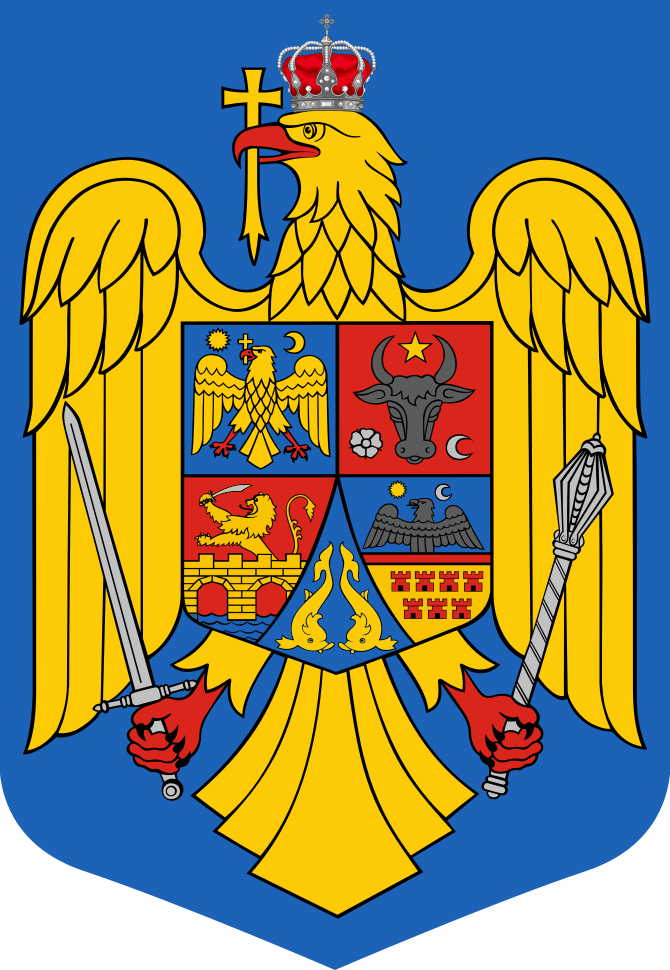

- Capital
- Bucharest
- Population
- 19,036,031
- Region
Travel guide
Understand
With a Black Sea coast to the east, it is bordered by Bulgaria to the south, Serbia to the southwest, Hungary to the northwest, Moldova to the northeast and Ukraine in both the north and the east. While its southern regions are usually seen as part of Southeastern Europe (Balkans), Transylvania, its largest region, is in Central Europe.
The country is enjoying better standards since the Communist periods, with foreign investment on the rise. It is even considered to be the one of the fastest developing countries in the world due to its rapid GDP growth year by year and infrastructure improvements.
Get in
Getting to Romania is easy from nearly all parts of the world: it is served by an array of transport types and companies.
Romania has borders with the following countries: Ukraine, Bulgaria, Serbia, Moldova, and Hungary.
Get around
thumb|Lake Oașa near [[Sebeș, with Pătru's peak in the background.]] thumb|Colourful tombstones at the Merry Cemetery in [[Săpânța.]] thumb|Rugged landscapes in Prahova County. Getting around Romania is relatively inefficient for the great distances that have to be covered in this country (this is after all, the second-largest country in Central Europe, after Poland). The transport infrastructure has been improving quite significantly, even though roads remain a weak point. There are three operational highways, that connect Bucharest to the seaside and to the cities of Pitești and Ploiești, respectively, and several others under construction. Train travel, however, has improved dramatically. Several upgrade projects are underway for several railway tracks, which makes rail traffic on those lines a bit slow for the time being.
See
thumb|Bran Castle is one of Romania's main landmarks.
Whether you're looking for stunning landscapes, ancient cultural traditions, bustling city life or beautiful historic heritage; no visitor to Romania needs to search for things to see. This country is home to a range of top sights, especially when you'd like to get a feel for the old Europe, the time of monasteries and castles.
Do
thumb|Trekking in the Retezat Mountains thumb|[[Southern Bukovina is home to the remarkable Painted Monasteries]] thumb|Romania has a number of good winter sports destinations Go to church - Romania is one of the most religious countries in Europe, and the Orthodox church is omnipresent. You will certainly want to visit some churches and monasteries for their beauty and history, but why not take the chance to experience an Orthodox mass? The congregation is usually standing and it is perfectly normal to show up only briefly during the mass so you can come and go at your leisure without disturbing anyone. Show up at any church on Sunday morning, stand quietly in the back and observe. Be suitably dressed, see the section "Respect".
Article · Português
Romênia (português brasileiro) ou Roménia (português europeu) (em romeno: România, pronunciado: [romɨˈni.a]) é uma república unitária semipresidencialista localizada no centro-sudeste da Europa, no norte da península dos Bálcãs e na costa ocidental do mar Negro. O país faz fronteira com Hungria, Sérvia, Ucrânia, Moldávia e Bulgária, abrangendo um território de 238 391 quilômetros quadrados, com um clima predominantemente temperado-continental. Com 20,1 milhões de habitantes, é o sétimo membro mais populoso da União Europeia (UE). Sua capital e maior cidade, Bucareste, é a sexta maior cidade da UE. Cerca de 90% da população identifica-se como praticantes da Ortodoxia Oriental e são falantes nativos do romeno, uma língua românica. Com uma rica história cultural, a Romênia tem sido o lar de artistas, músicos e inventores influentes e apresenta uma variedade de atrações turísticas, como o "Castelo do Drácula". A Romênia surge no interior dos territórios da antiga Dácia, uma província do Império Romano, assim como dos principados da Moldávia e Valáquia, formados em uma união pessoal em 1859. A nação conquistou a independência do Império Otomano em 1877 e, no final da Primeira Guerra Mundial, Transilvânia, Bucovina e Bessarábia uniram-se como o soberano Reino da Romênia. No final da Segunda Guerra Mundial, os territórios que hoje correspondem aproximadamente à Moldávia foram ocupados pela União Soviética e o país tornou-se uma república socialista e membro do Pacto de Varsóvia. Após a Revolução Romena de 1989, a nação começou uma transição para a democracia e a economia de mercado capitalista. Desde então, os padrões de vida da população têm tido uma grande melhoria, e, atualmente, a Romênia é um país de renda média-alta com um Índice de Desenvolvimento Humano (IDH) muito elevado. É membro da Organização do Tratado do Atlântico Norte (OTAN) desde 2004 e faz parte da União Europeia desde 2007. Após um rápido crescimento econômico na década de 2000, o país tem uma economia predominantemente baseada em serviços e é um produtor e exportador de máquinas e de energia elétrica, com empresas como a Automobile Dacia.
Abstract from DBpedia / Wikipedia · CC BY-SA
Gallery (59)
On the map
6 mapped locations
Connections
Categories
1859 establishments in EuropeCountries and territories where Romanian is an official languageCountries in EuropeCountries in the BalkansMember states of NATOMember states of the European UnionMember states of the Three Seas InitiativeMember states of the Union for the MediterraneanMember states of the United NationsRepublicsRomaniaSource attribution