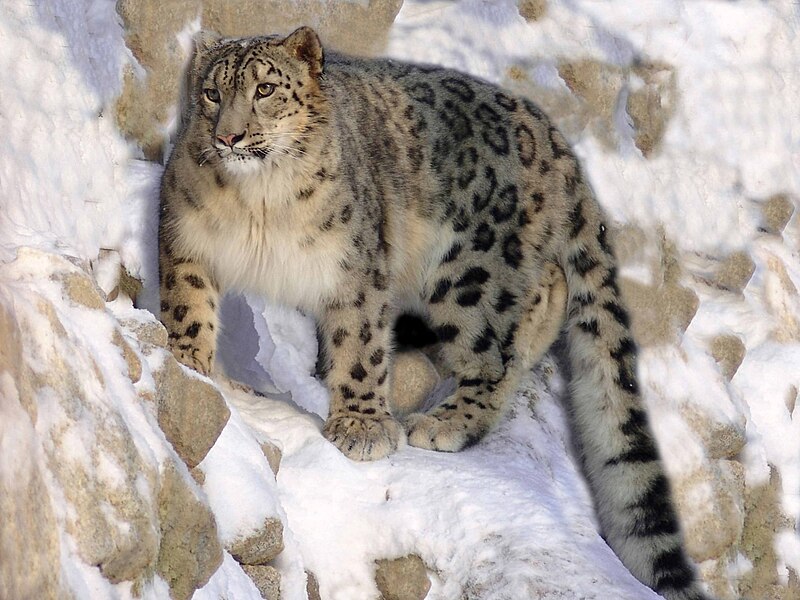
File:Irbis4.JPG · Wikimedia Commons · See Wikimedia Commons
نمر الثلوج
Sign in to saveAlso known as ounce, Uncia uncia, Panthera uncia, P. uncia
نوعٌ ضخمٌ من السنوريَّات يستوطنُ السلاسل الجبليَّة المُمتدَّة عبر آسيا الوُسطى والجنوبيَّة
OverviewAI-generated
The snow leopard (Panthera uncia) is a species within the genus Panthera. It functions as an apex predator and flagship species. Its primary food sources include onager, Gazella subgutturosa, Common Pheasant, and Tibetan fox. The animal inhabits mountain and forest environments.
The International Union for Conservation of Nature lists the snow leopard as Vulnerable, a status recorded in 2017. It is included in Appendix I of CITES. The taxon has been described in the Brockhaus and Efron Encyclopedic Dictionary and the Encyclopædia Britannica 11th edition. Its gestation period is 102 days.
Synthesized by Vinony from 20 facts across 3 sources: Wikidata, IUCN Red List, Vinony graph. Generated from structured data (not the Wikipedia text) and checked against those facts — may still contain errors.
Species
VulnerableMaximum longevity: 21.2 years (captivity) Observations: In zoos, these animals can live up to 21.2 years (Richard Weigl 2005).
via IUCN
Wikidata facts
- Instance of
- flagship species
- Parent taxon
- Panthera
- Image
- Uncia uncia - A tail and a cat cropped.jpg
Show 15 more facts
- main food source
- Siberian ibex
- taxon rank
- species
- IUCN conservation status
- Vulnerable
- taxon name
- Panthera uncia
- Commons gallery
- Panthera uncia
- taxon common name
- snežni leopard
- gestation period
- 102
- Commons category
- Panthera uncia
- exact match
- wordnet-rdf.princeton.edu/wn30/02128757-n
- described by source
- Encyclopædia Britannica 11th edition
- CITES Appendix
- Appendix I of CITES
- sequenced genome URL
- www.dnazoo.org/assemblies/Panthera_uncia
- different from
- Snow Leopard
- habitat
- forest
- short name
- P. uncia
Sources (7)
via Wikidata · CC0
Article · العربية
نَمِرُ الثُّلُوجِ (الاسم العلمي: Panthera uncia) هو نوعٌ ضخمٌ من السنوريَّات يستوطنُ السلاسل الجبليَّة المُمتدَّة عبر آسيا الوُسطى والجنوبيَّة. تُصنَّفُ هذه الحيوانات من قِبل الاتحاد العالمي للحفاظ على الطبيعة على أنَّها مُهدَّدةٌ بالانقراض بدرجةٍ وُسطى، بعد أن أظهرت بعضُ الأبحاث التي أُجريت سنة 2003م أنَّ عدد الجُمهرة العالميَّة يتراوح بين 4,080 و6,590 سنوّرٍ بالغ، منها أقل من 2,500 فرد قادرٌ على التكاثر والإنجاب في البريَّة. تقطُنُ نُمورُ الثُلوج المناطق الجبليَّة وشبه الجبليَّة على ارتفاعاتٍ تتراوح بين 3,000 و 4,500 (بين 9,800 و14,800 قدم)، وفي موطنها الشماليّ يُمكنُ العُثور عليها على ارتفاعاتٍ أكثر انخفاضًا. وفي المناطق حيثُ تقطن الارتفاعات الشاهقة، تنحدرُ إلى الأماكن المُنخفضة التي تتوفَّر الفرائس فيها، وتشمل هذه أنواع الماعز الجبلي كالمارخور والطُهر، والقوَّاعات، والغزلان، والأيائل، وطُيورُ التًدْرُج، والمواشي المُستأنسة كالماعز والقُطاس والبغال والحُمر. وعلى نقيضِ أفرادِ فصيلتها التي تعيشُ في المناطق الاستوائيَّة، فإنَّ توالُد هذه النُمور يتمُّ في أوقاتٍ مُعيَّنةٍ من السنة، إذ تلدُ الأُنثى في شهر نيسان (أبريل) من صغيرين إلى أربعةٍ بعد حملٍ يستمرُّ ثلاثةً وتسعين يومًا كما هي الحالُ في النمر. أُطلق على هذه النُمور تسمية «Uncia uncia» العلميَّة مُنذ عقد الثلاثينيَّات من القرن العشرين، فكانت وفق هذا المُمثلة الوحيدة لِجنسها. وفي سنة 2008م اقترح بعضُ العُلماء نقلها إلى جنس النُمور (باللاتينية: Panthera) بناءً على دراساتٍ مورثيَّة تنميطيَّة اقترحت توحُدها مع سائر أعضاء الجنس سالف الذِكر. كذلك، حدَّد العُلماء نويعتين منها، لكنَّ أيُّ اختلافاتٍ مورثيَّة بينها لم تؤكَّد بعد. تتخذُ كُلًا من أفغانستان وپاكستان نمر الثُلوجِ حيوانًا وطنيًا.
Abstract from DBpedia / Wikipedia · CC BY-SA
Gallery (13)
Available in 126 languages
- Español
- Français
- Deutsch
- 中文
- 日本語
- Русский
- Português
- Italiano
- العربية
- हिन्दी
- Afrikaans
- Albanian
- Amharic
- Armenian
- Assamese
- Asturian
- Avaric
- azb
Show 107 more
- Azerbaijani
- Bahasa Indonesia
- Balinese
- Bangla
- Bashkir
- Basque
- be_x_old
- Belarusian
- Bosnian
- Breton
- Bulgarian
- Burmese
- Catalan
- Cebuano
- Chuvash
- Cornish
- Croatian
- Czech
- Danish
- dty
- Egyptian Arabic
- Esperanto
- Estonian
- Filipino
- Finnish
- fiu_vro
- Galician
- Georgian
- Greek
- Guarani
- Hebrew
- Hungarian
- Icelandic
- Ido
- Inari Sami
- Ingush
- Irish
- Javanese
- Kabyle
- Kannada
- Kashmiri
- Kazakh
- Kotava
- Kurdish
- Kyrgyz
- Latgalian
- Latin
- Latvian
- Lithuanian
- Luxembourgish
- Macedonian
- Malay
- Malayalam
- Marathi
- Mari
- Mingrelian
- Mongolian
- Navajo
- Nederlands
- Nepali
- Northern Frisian
- Norwegian
- Norwegian Nynorsk
- Occitan
- Odia
- Oromo
- Ossetic
- Pashto
- Polski
- Punjabi
- Romanian
- Scots
- Scottish Gaelic
- Serbian
- Serbian (Latin)
- simple
- Sindhi
- Slovak
- Slovenian
- Svenska
- Swahili
- Tajik
- Tamil
- Tatar
- Tibetan
- Tiếng Việt
- Tok Pisin
- Türkçe
- Tuvinian
- Udmurt
- Ukrainian
- Urdu
- Uyghur
- Uzbek
- Waray
- Western Frisian
- Western Panjabi
- Wu Chinese
- Yakut
- Yiddish
- Zaza
- zh_classical
- zh_min_nan
- zh_yue
- فارسی
- ไทย
- 한국어
via Wikidata sitelinks · CC0