
Somalia
Also known as Federal Republic of Somalia
stato dell'Africa Orientale
AI overview
I don't have any context provided to base an overview of Somalia on. Please provide the source material or context you'd like me to use, and I'll be happy to write a 2-sentence overview based solely on that information.
AI-generated from the Wikipedia summary — may contain errors.
Weather now
cached 12h ago25°overcast clouds
59% 14.3 m/s OpenWeatherMap
7-day forecast
via Open-Meteo
Country
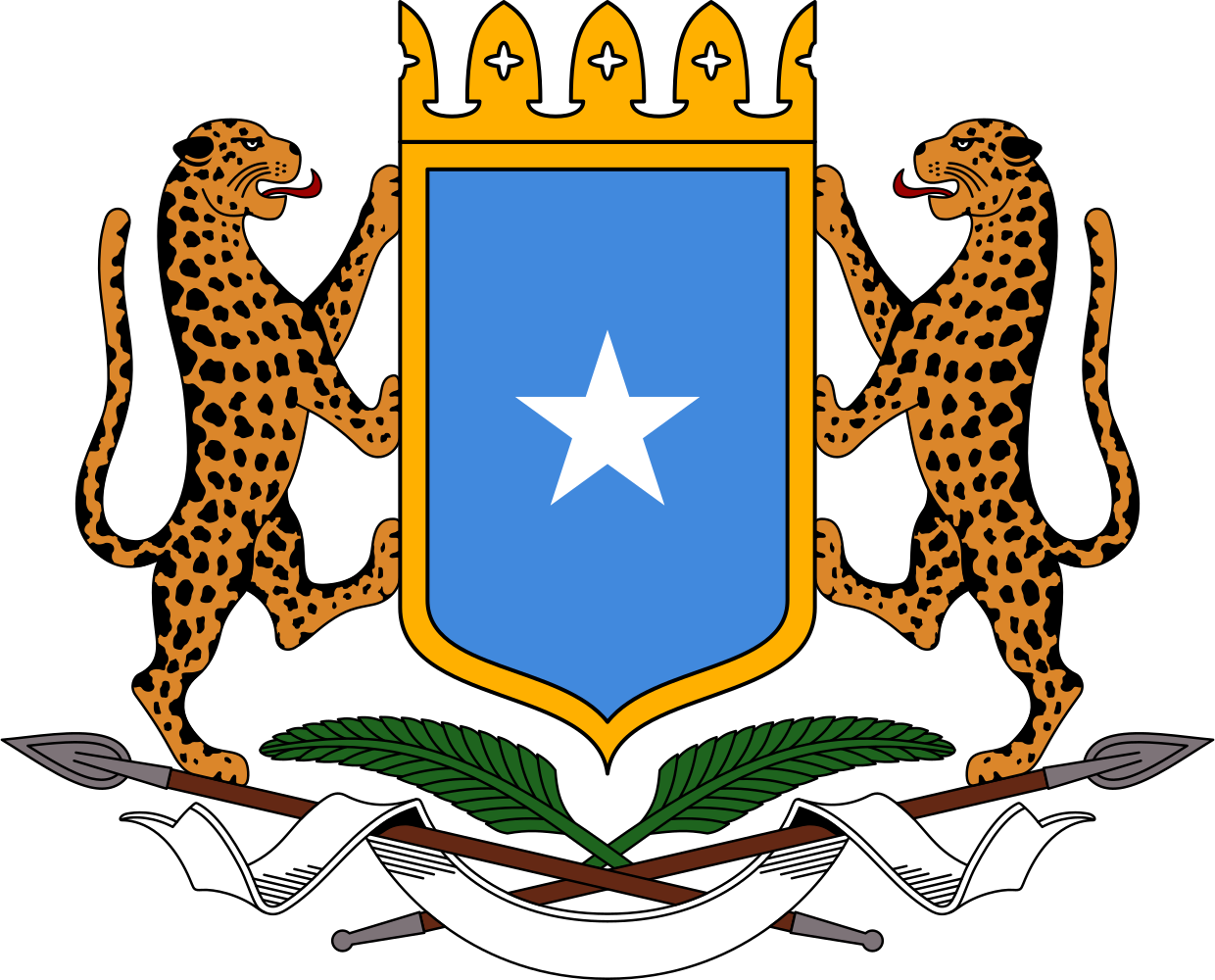
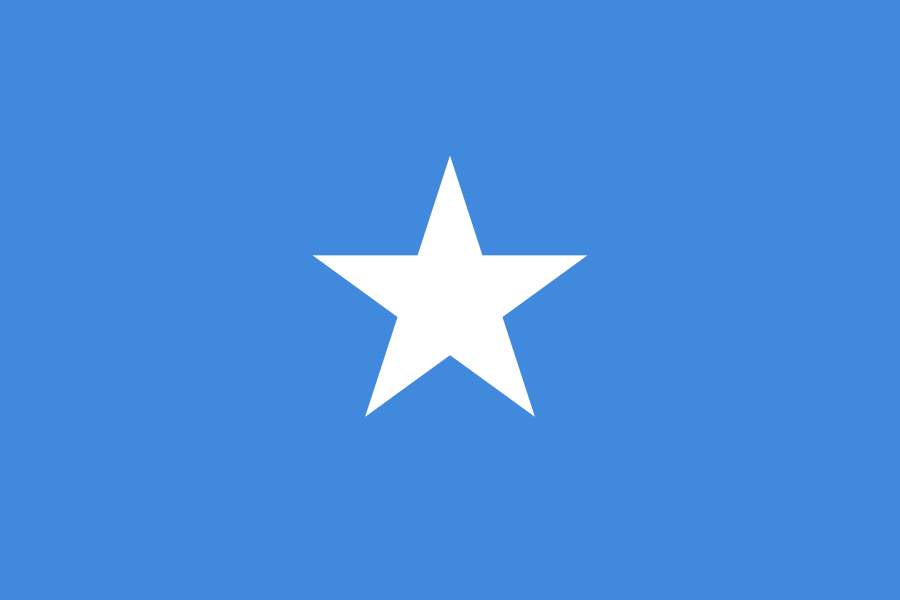
- Capital
- Mogadishu
- Population
- 19,655,000
- Region
Travel guide
Get in
Foreigners and overseas Somalis will need a visa. This can be arranged in three ways:
The Somali embassy in your home country can easily arrange it for US$40-50. Visa on arrival: if you have the right documents, you can easily get a visa on arrival; the whole process takes about 40 minutes. The most secure way is to arrange your whole journey through a local luxury hotel, which will arrange everything from visa processing, picking you up from the airport, providing protection, sightseeing, and everything you need.
Get around
Somalia was without an effective government for 17 years; this has had a negative effect on the roads and transit.
Traffic is dangerous in Somalia. There may be landmines in different parts of the country. Roads are in poor condition and dangerous, especially in the Mogadishu and Jowhar regions. The main roads in the north-west from Hargeisa to Borama, Berbera and Sheikh have been resurfaced and demined.
There are two different modes of public transportation that you can use in Somalia: buses and taxis. The common rule of the road that seems to still be in force is that Somalis generally drive on the right. Little ride hailing app works in Somalia.
See
Liido Beach and Gezira Beach near Mogadishu are very beautiful. Families usually go on weekends. Women must swim fully clothed, but resort investors provide a special place for couples, as Somalia is a Muslim country, and does not permit women to show much of their bodies or to mingle with men. Although improvements have been made, caution is advised.
It is not clear as what the situation is now. In other circumstances, the beach would make for an ideal destination; however, the general threat of banditry and piracy along the coast make this, along with every other option in the country, risky, and caution is usually advised.
Visit some of the Dhulbahante garesas built during the era of Darawiish sultan Diiriye Guure, including:
Taleh Dhulbahante garesa Las Anod Dhulbahante garesa
Do
thumb|People watching a performance during the Eid Al Fitr In Mogadishu, security guards must accompany foreigners. Do not go alone if you are a foreign tourist.
Article · Italiano
La Somalia (in somalo: Soomaaliya, scrittura somala: 𐒈𐒝𐒑𐒛𐒐𐒘𐒕𐒖; in arabo الصومال, al-Sūmāl), ufficialmente Repubblica Federale di Somalia (in somalo Jamhuuriyadda Federaalka Soomaaliya; in arabo جمهورية الصومال الفدرالية, Jumhūriyyat aṣ-Ṣūmāl al-Fideraaliya), nota anche come Penisola dei Somali o Paese dei Somali, è uno Stato dell'Africa orientale situato nel Corno d'Africa. Il nome attuale in italiano della Somalia, precedentemente nota come "Paese dei Somali", fu dato dall'esploratore italiano Luigi Robecchi Bricchetti, primo europeo a visitare estensivamente la regione del Corno d'Africa denominata Benadir. Confina con Gibuti a nord, con l'Etiopia a ovest e con il Kenya a sudovest; si affaccia a nord sul Golfo di Aden e a est sull'oceano Indiano. Ha la linea di costa più lunga di tutto il continente e ha un territorio prevalentemente composto da altopiani e pianure. Il clima è perlopiù arido lungo tutto l'anno, con periodici venti monsonici e piogge irregolari. Anticamente, la Somalia fu un importante centro commerciale con il resto del mondo antico e, secondo molti studiosi, potrebbe essere l'ubicazione più probabile del leggendario Paese di Punt. Nel corso del tempo fu denominata in svariati modi, gli antichi Egizi la chiamavano Punt (egiziano: pwnt; secondo letture alternative da parte di egittologi invece pwene(t)), per gli antichi Greci aveva più di un nome, la chiamavano Barbaria (il nome si riferiva al litorale della regione del Nordest Africa, corrispondente agli odierni Sudan, Eritrea, Gibuti e Somalia), e Macrobia (Μακροβίοι), quest’ultimo era il nome usato da Erodoto, ed esso deriva dal nome dei suoi abitanti che erano considerati un popolo leggendario che si trovava all’estremo sud del mondo (dal punto di vista dei Greci), gli antichi Romani invece la chiamavano Regio Aromatica, mentre il nome datogli dagli antichi Arabi era bilad-al-Barbar, nome che si pensa sia stato influenzato da quello datogli dai Greci. Lungo il medioevo, i flussi commerciali della regione vennero dominati da vari sultanati somali, fra cui quelli degli Agiuran, Adal, Uarsangheli e Gheledi. Nel tardo XIX secolo, britannici e italiani acquisirono il controllo di parte della costa somala, portando alla creazione dei protettorati della Somalia britannica (nord) e della Somalia italiana (centro e sud). Il controllo sulla parte interna dei territori fu però consolidato solo lungo gli anni 1920. Nel 1936, la Somalia italiana fu fatta confluire nell'Africa Orientale Italiana. Amministrativamente rimase tale fino al 1941, quando passò sotto il controllo militare britannico. Dopo la seconda guerra mondiale, il nord del paese rimase protettorato britannico, mentre la restante parte fu affidata ad una amministrazione fiduciaria italiana. Nel 1960, le due regioni furono unite nella Repubblica Somala. Nel 1969, il maggiore Mohammed Siad Barre portò a termine un colpo di Stato e si insediò come presidente-dittatore, rimanendo in carica fino allo scoppio della guerra civile (26 gennaio 1991). Da allora, nonostante numerosi tentativi, nessuna autorità o fazione è riuscita a imporre il proprio controllo su tutto il paese. La Somalia è stata governata da una pluralità di entità statali più o meno autonome, che esercitano ciascuna un diverso grado di controllo del territorio. Anche per questo motivo, la Somalia è stata considerata uno "Stato fallito" ed è ancora oggi nel 2022 uno degli Stati più poveri e violenti del mondo. In assenza di un governo centrale, l'amministrazione della giustizia è regredita a livello locale, con l'utilizzo di istituti civili, religiosi islamici oppure consuetudinari, mentre l'economia si mantiene a livelli informali, basati sull'allevamento del bestiame, sulle rimesse degli emigrati, e sulle telecomunicazioni. Tali condizioni rimangono anche dopo la presenza di un Governo Centrale a partire dal 2012. Dal 2011 sono state riaperte le ambasciate di Turchia, Gibuti, Kenya, Iran, Regno Unito, Italia e ONU. Prova del miglioramento della sicurezza in Somalia è la visita del segretario generale dell'ONU Ban Ki-moon nel dicembre del 2011. Nell'agosto 2012 fu istituita la Repubblica Federale somala. Nel settembre 2012, fu eletto presidente Hassan Sheikh Mohamoud e successivamente il ministro degli affari esteri Fowsiyo Yusuf Haji Adan ha invitato i paesi occidentali ad investire nel paese, riuscendo nel 2013 a stipulare accordi con Emirati Arabi e Cina. Nel 2017 fu eletto presidente Mohamed Farmajo.
Gallery (59)
On the map
6 mapped locations
Connections
Categories
1960 establishments in SomaliaCountries and territories where Arabic is an official languageCountries and territories where Somali is an official languageCountries in AfricaCountries in East AfricaFederal republicsHorn African countriesLeast developed countriesMember states of the African UnionMember states of the Arab LeagueMember states of the Organisation of Islamic Cooperation