
Sudán
Also known as Republic of the Sudan, as-Sūdān, sd, North Sudan, the Sudan, Republic of Sudan, SUD, Soudan
país de África
AI overview
Sudan is a large country in Northeast Africa, bordering Egypt, Ethiopia, South Sudan, and several other nations, with a population of about 51.8 million people and a capital in Khartoum. It matters as Africa's third-largest country by area and a strategically important region in Northeast Africa connecting the Arab world, the Horn of Africa, and sub-Saharan Africa.
AI-generated from the Wikipedia summary — may contain errors.
Weather now
cached 3h ago34°scattered clouds
13% 5.8 m/s OpenWeatherMap
7-day forecast
via Open-Meteo
Country
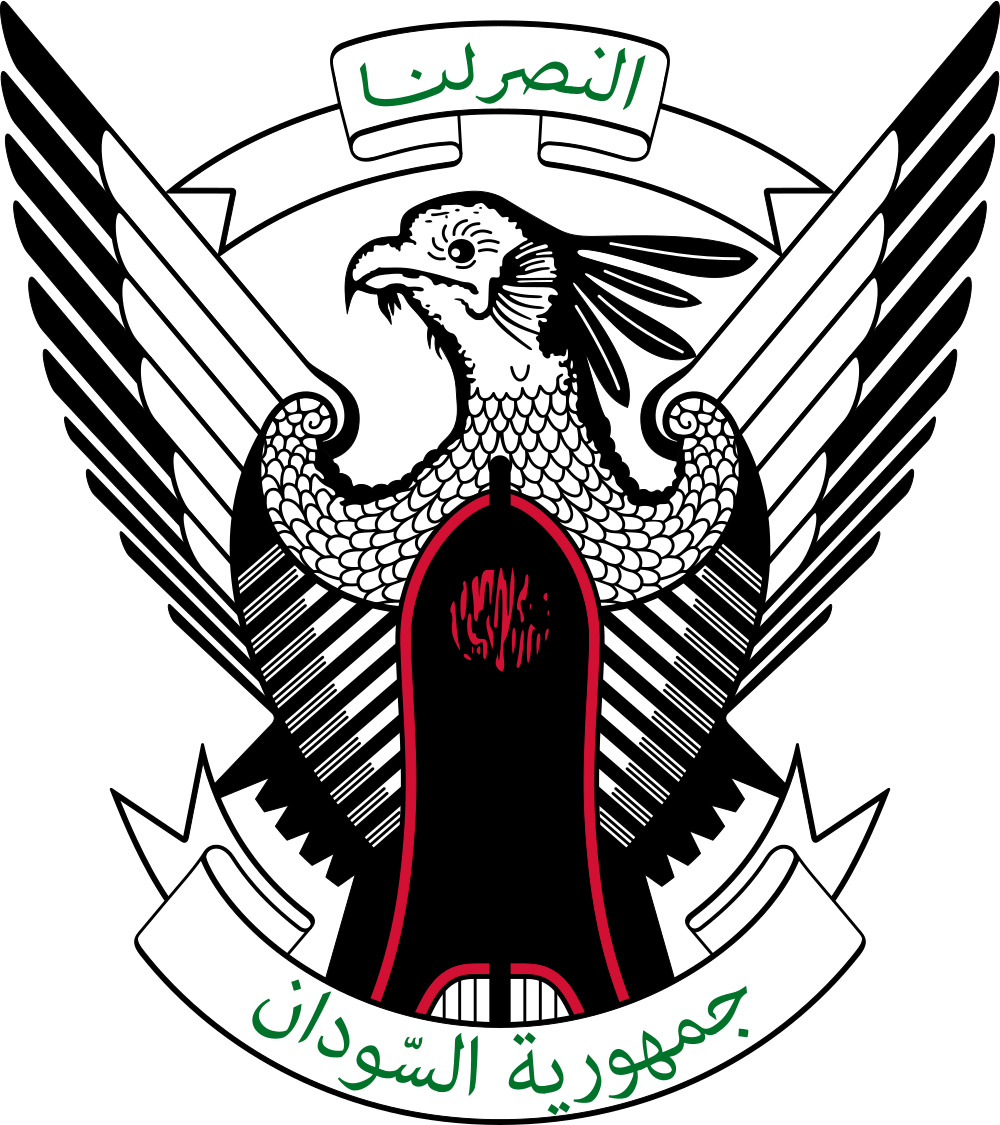
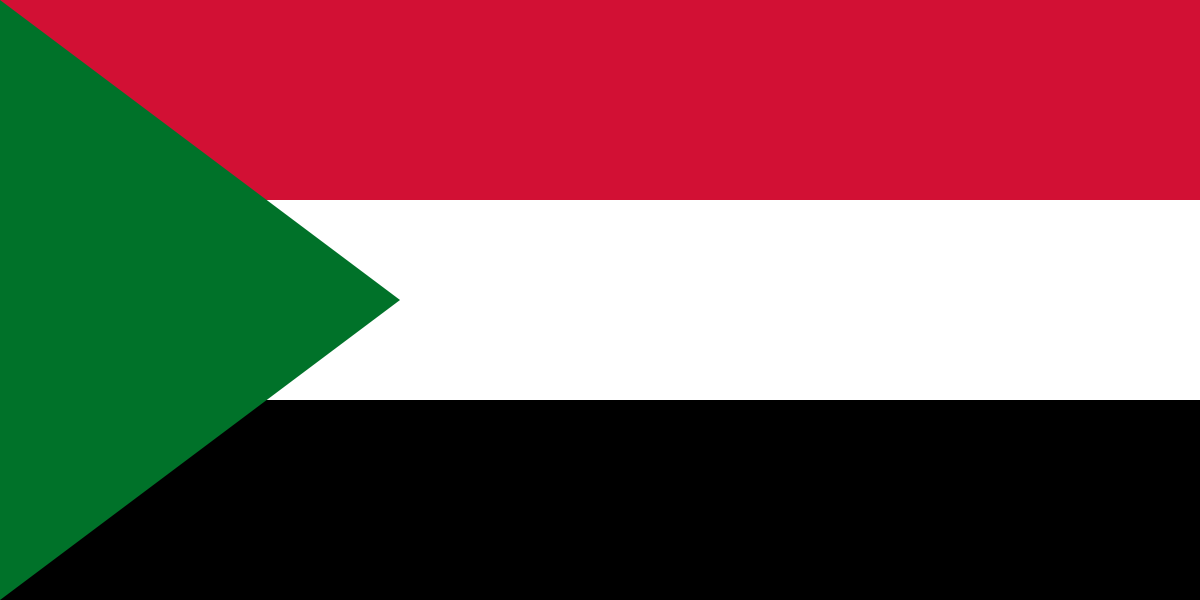
- Capital
- Khartoum
- Population
- 51,662,000
- Region
Travel guide
See
thumb|The ruined ancient city of Musawwarat is one of the country's most important archaeological sites. In Khartoum/Omdurman you must see the Sufi ritual of drumming and trance dancing, about one hour before sunset and Friday prayer. These rituals take place northwest of the Nile river in Omdurman. Very welcoming, festive atmosphere.
A walk around Tuti Island, situated in the middle of the confluence of the two branches of the Nile, can take about four hours. The less populated northern section is pretty, with its shady lanes, and irrigated fields, and there is a great little coffee stall under a tree on the western side.
The pyramids of Meroe are 2.5 hours north of Khartoum (leave early to avoid Khartoum traffic). On the same route visit the sites of Naqa and Musawarat. Permits are required before visiting the sites. You pay at each site (which may depend on how well your driver gets along with the guards). Naqa and Musawarat are signposted beside the Nile Petrol station (about 1 hour 15 minutes north of Khartoum) and the track is fairly clear but sandy. It is probably good to carry a GPS to avoid getting lost in the bush.
After 16:00 take a good coffee at the Burj Al-Fatih - also known as Corinthia hotel -, with high altitude view over Khartoum, the Nile, and Omdurman, and stay to watch the sunset. Worthwhile.
About 1½ hours south of Khartoum visit the dam. Just north of the dam (downstream) the Nile is also very wide; on Friday/Saturday the area is popular is day visi…
Drink
thumbnail|Traditional Sudanese coffee jug Islam is the official religion of the country, and alcohol has been banned since sharia was imposed in the 1980s. Sudanese people frequently drink tea, usually sweet and black. Sudan also has some refreshing drinks such as karkade (hibiscus) which can be served hot or chilled, aradeeb (tamarind) and gongleiz (made with the baobab fruit). The local energy drink is a carbohydrate-laden drink known as madeeda. There are several types of madeeda, made with dates, dukhun (millet) or other ingredients blended with fresh milk, and usually heavily sweetened with sugar, though reduced-sugar versions may be available if you ask. Sudanese coffee is available in most souks and is similar to Turkish style coffee; thick and strong, sometimes flavoured with cardamom or ginger with a powerful kick and altogether delicious. Not to be taken before bed though if you want an undisturbed night's sleep!
However, while alcohol is strictly illegal in the Muslim north, locally-brewed alcohol is widely available in various forms and at various degrees of potency. A local beer (merissa) brewed from sorghum or millet is cloudy, sour and heavy and likely to be brewed with untreated water and will almost certainly lead to the 'Mahdi's revenge' (the Sudanese version of 'Delhi belly'). Aragi is a pure spirit distilled from sorghum or in its purest form, dates. It is potent and should be treated with respect, and beware that it is sometimes contaminated with the lik…
Article · Español
Sudán (árabe: سودان, Sūdān), oficialmente República del Sudán (árabe: جمهورية السودان, Yumhūriyyat as-Sūdān), es uno de los cincuenta y cuatro países que forman el continente africano. Su capital y ciudad más poblada es Jartum. Está situado al noreste de África y comparte frontera con Egipto al norte, con el mar Rojo al noreste, con Eritrea y Etiopía al este, con Sudán del Sur al sur, con la República Centroafricana al suroeste, con Chad al oeste y con Libia al noroeste. Hasta el año 2011, momento en que se separó la región sur del país (conformando la nueva República de Sudán del Sur) fue el estado africano que compartía frontera con un mayor número de países (nueve), incluyendo a Kenia, Uganda y la República Democrática del Congo. La población de Sudán es una combinación de africanos indígenas con lengua madre nilo-sahariana y descendientes de emigrantes de la península arábiga. Debido a un proceso de arabización, común al resto del mundo musulmán, hoy en día la cultura árabe predomina en Sudán. La mayoría de la población profesa el islam. El río Nilo cruza el país de sur a norte. El país tiene una larga historia, que se remonta a la Edad Antigua, donde se entrecruza profundamente con la historia de Egipto, perteneciendo sucesivamente a diversos estados hasta obtener su independencia el 1 de enero de 1956. Sudán sufrió diecisiete años de guerra durante la Primera Guerra Civil Sudanesa (1955-1972), seguido de conflictos étnicos, religiosos y económicos entre la población del norte árabe-musulmana y la población del sur animista, nilótica-cristiana y negra que desembocaron en la Segunda Guerra Civil Sudanesa (1983-2005). Debido al continuo desequilibrio político y militar, se llevó a cabo un golpe de Estado en el año 1989 encabezado por el entonces brigadier Omar Hassan Ahmad al-Bashir, quien terminó autoproclamándose, en 1993, presidente de Sudán. La segunda guerra civil terminó tras la firma, en 2005, del que supuso la redacción de una nueva constitución y le dio autonomía a lo que en aquel momento era la región sur del país. En un referéndum llevado a cabo en enero de 2011, dicha región obtuvo los votos necesarios para independizarse por lo que el 9 de julio de 2011 efectivamente lo hizo, pasando a denominarse República de Sudán del Sur. Es miembro de la Organización de las Naciones Unidas, de la Unión Africana, de la Liga de Estados Árabes, de la Organización para la Cooperación Islámica y del Movimiento de Países no Alineados, así como observador en la Organización Mundial del Comercio. Hasta 2019, era considerado una República federal democrática representativa presidencialista, aunque la política sudanesa es internacionalmente considerada por muchos como un sistema autoritario debido al control que el Partido del Congreso Nacional ejerce sobre las ramas ejecutiva, legislativa y judicial del gobierno desde su fundación en 1996. El 11 de abril de 2019, el ejército sudanés derroca al hasta entonces presidente, Omar al-Bashir, comenzando una dictadura militar suspendiendo la Constitución. El ejército prometió que luego de dos años convocaría a elecciones libres. El 25 de octubre de 2021, dos años después del la renuncia de Omar al-Bashir, el ejército daría un golpe de Estado disolviendo el Consejo Soberano y arrestando al primer ministro Abdalla Hamdok. El gobierno sudanés presuntamente ha apoyado el uso de milicias árabes yanyauid en guerra de guerrillas en el conflicto de Darfur. Desde ese momento (2003) miles de personas han sido desplazadas y asesinadas y la necesidad de ayuda humanitaria en Darfur ha captado la atención de la comunidad internacional. El conflicto ha sido incluso observado por la Corte Penal Internacional, organismo que en los años 2009 y 2010 emitió sendas órdenes de arresto contra Omar al-Bashir, expresidente de Sudán, acusándolo de haber cometido genocidio, crímenes de lesa humanidad y crímenes de guerra. El país es rico en recursos naturales como el petróleo y el algodón y su economía está entre las que más rápido crecen del mundo. China, Japón e India son los principales destinos de exportación de Sudán.
Gallery (59)
On the map
6 mapped locations
Connections
Categories
1956 establishments in AfricaCountries and territories where Arabic is an official languageCountries and territories where English is an official languageCountries in AfricaCountries in East AfricaCountries in North AfricaFederal republicsHarv and Sfn no-target errorsLeast developed countriesMember states of the African UnionMember states of the Arab League