
Судан
Also known as Republic of the Sudan, as-Sūdān, sd, North Sudan, the Sudan, Republic of Sudan, SUD, Soudan
страна в Африке
AI overview
Sudan is a large country in Northeast Africa, bordering Egypt, Ethiopia, South Sudan, and several other nations, with a population of about 51.8 million people and a capital in Khartoum. It matters as Africa's third-largest country by area and a strategically important region in Northeast Africa connecting the Arab world, the Horn of Africa, and sub-Saharan Africa.
AI-generated from the Wikipedia summary — may contain errors.
Weather now
cached 9h ago34°scattered clouds
13% 5.8 m/s OpenWeatherMap
7-day forecast
via Open-Meteo
Country
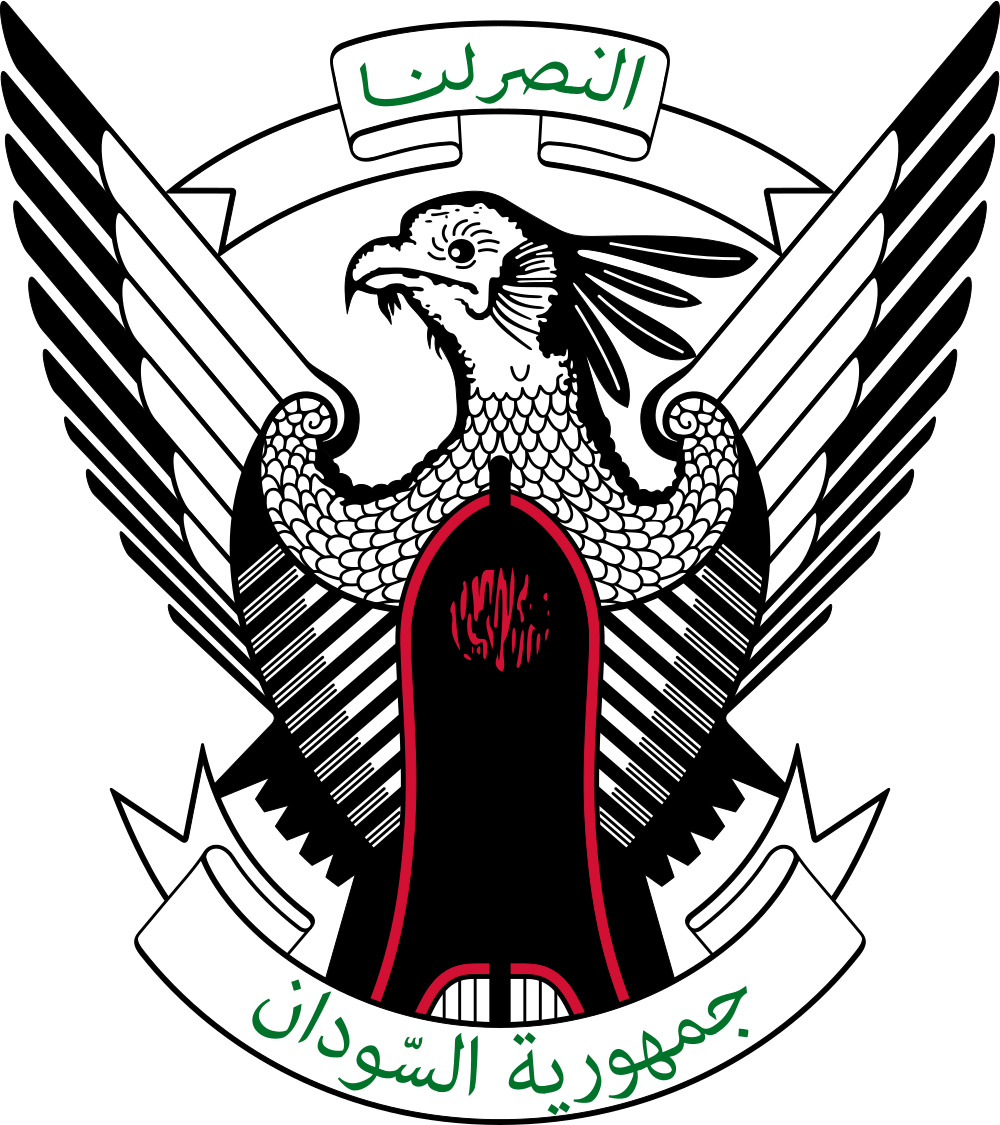
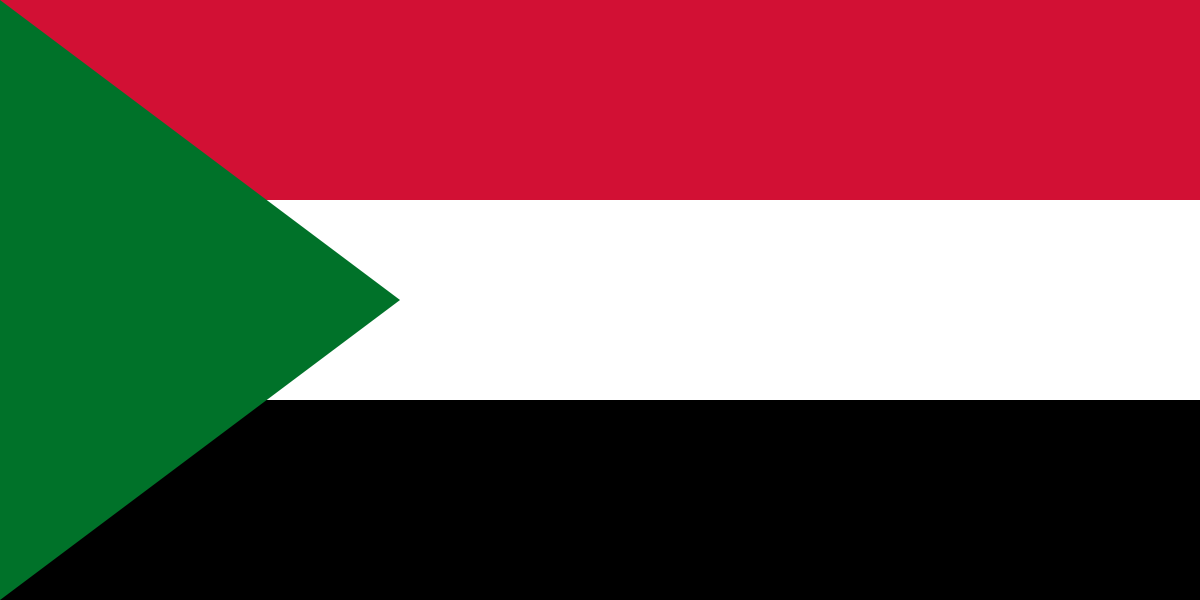
- Capital
- Khartoum
- Population
- 51,662,000
- Region
Travel guide
See
thumb|The ruined ancient city of Musawwarat is one of the country's most important archaeological sites. In Khartoum/Omdurman you must see the Sufi ritual of drumming and trance dancing, about one hour before sunset and Friday prayer. These rituals take place northwest of the Nile river in Omdurman. Very welcoming, festive atmosphere.
A walk around Tuti Island, situated in the middle of the confluence of the two branches of the Nile, can take about four hours. The less populated northern section is pretty, with its shady lanes, and irrigated fields, and there is a great little coffee stall under a tree on the western side.
The pyramids of Meroe are 2.5 hours north of Khartoum (leave early to avoid Khartoum traffic). On the same route visit the sites of Naqa and Musawarat. Permits are required before visiting the sites. You pay at each site (which may depend on how well your driver gets along with the guards). Naqa and Musawarat are signposted beside the Nile Petrol station (about 1 hour 15 minutes north of Khartoum) and the track is fairly clear but sandy. It is probably good to carry a GPS to avoid getting lost in the bush.
After 16:00 take a good coffee at the Burj Al-Fatih - also known as Corinthia hotel -, with high altitude view over Khartoum, the Nile, and Omdurman, and stay to watch the sunset. Worthwhile.
About 1½ hours south of Khartoum visit the dam. Just north of the dam (downstream) the Nile is also very wide; on Friday/Saturday the area is popular is day visi…
Drink
thumbnail|Traditional Sudanese coffee jug Islam is the official religion of the country, and alcohol has been banned since sharia was imposed in the 1980s. Sudanese people frequently drink tea, usually sweet and black. Sudan also has some refreshing drinks such as karkade (hibiscus) which can be served hot or chilled, aradeeb (tamarind) and gongleiz (made with the baobab fruit). The local energy drink is a carbohydrate-laden drink known as madeeda. There are several types of madeeda, made with dates, dukhun (millet) or other ingredients blended with fresh milk, and usually heavily sweetened with sugar, though reduced-sugar versions may be available if you ask. Sudanese coffee is available in most souks and is similar to Turkish style coffee; thick and strong, sometimes flavoured with cardamom or ginger with a powerful kick and altogether delicious. Not to be taken before bed though if you want an undisturbed night's sleep!
However, while alcohol is strictly illegal in the Muslim north, locally-brewed alcohol is widely available in various forms and at various degrees of potency. A local beer (merissa) brewed from sorghum or millet is cloudy, sour and heavy and likely to be brewed with untreated water and will almost certainly lead to the 'Mahdi's revenge' (the Sudanese version of 'Delhi belly'). Aragi is a pure spirit distilled from sorghum or in its purest form, dates. It is potent and should be treated with respect, and beware that it is sometimes contaminated with the lik…
Article · Русский
Суда́н (араб. السودان), полное название — Респу́блика Суда́н (араб. جمهورية السودان Джумхурийат ас-Судан) — государство в Восточной Африке. Граничит с Египтом на севере, Ливией — на северо-западе, Чадом — на западе, Центральноафриканской Республикой — на юго-западе, Южным Суданом — на юге, c Эритреей и Эфиопией — на юго-востоке. На северо-востоке омывается водами Красного моря. Столица — город Хартум. До разделения на Судан и Южный Судан являлся крупнейшей по территории африканской страной (площадь составляла 2 530 397 км2), ныне занимает третье место после Демократической Республики Конго и Алжира.
Abstract from DBpedia / Wikipedia · CC BY-SA
Gallery (59)
On the map
6 mapped locations
Connections
Categories
1956 establishments in AfricaCountries and territories where Arabic is an official languageCountries and territories where English is an official languageCountries in AfricaCountries in East AfricaCountries in North AfricaFederal republicsHarv and Sfn no-target errorsLeast developed countriesMember states of the African UnionMember states of the Arab League