Synaphea · Kew POWO · Kew Plants of the World Online
Synaphea
Sign in to saveSynaphea is a genus of flowering plants in the macadamia family Proteaceae, endemic to the southwestern corner of Western Australia. It contains 56 species , which are mostly small shrubs with variably shaped leaves but consistently yellow flowers with an unusual pollination mechanism. The genus was erected by botanist Robert Brown in 1810.
Species
GENUS
- KingdomPlantae
- PhylumTracheophyta
- ClassMagnoliopsida
- OrderProteales
- FamilyProteaceae
via GBIF · Kew POWO
Museum specimens
- Specimen records
- 103
- With media
- 28
- Family
- Proteaceae
- Collections
- UNIVERSITY OF ALBERTA MUSEUMS, RSA, MEL, CM, WIS
- Recorded in
- Australia
Wikidata facts
- Instance of
- taxon
- Parent taxon
- Proteaceae
- Image
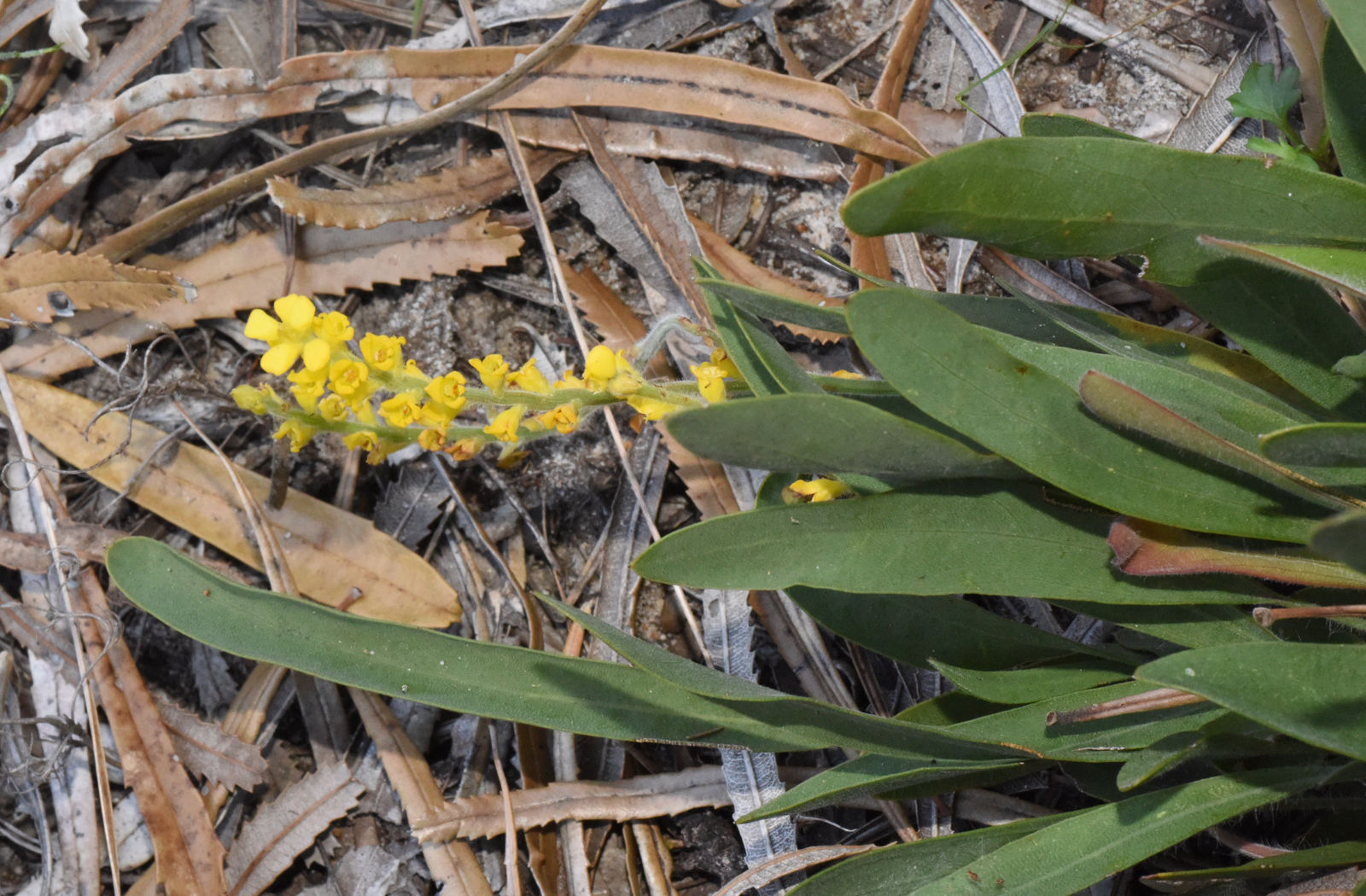
- Synaphea spinulosa subsp. spinulosa.JPG
Show 5 more facts
- Commons category
- Synaphea
- taxon name
- Synaphea
- taxon rank
- genus
- topic's main category
- Category:Synaphea
Sources (1)
via Wikidata · CC0
~4 min read
Encyclopedic overview
5 sectionsContents
- Description
- Taxonomy
- Species
- Distribution
- References
Synaphea is a genus of flowering plants in the macadamia family Proteaceae, endemic to the southwestern corner of Western Australia. It contains 56 species , which are mostly small shrubs with variably shaped leaves but consistently yellow flowers with an unusual pollination mechanism. The genus was erected by botanist Robert Brown in 1810.
==Description== Plants in the genus Synaphea are small shrubs, usually with deeply lobed (pinnatipartite) leaves, although some have simple leaves, others pinnate leaves, and have a petiole with a sheathing base. The flowers are relatively small, bright yellow, usually unscented, and arranged in a spike in leaf axils or on the ends of branchlets. The perianth is tube-shaped and zygomorphic, the tube opening in the upper third to half. As in many other members of the Proteaceae, the male anthers and female style are initially in contact and the end of the style is a pollen presenter. In synapheas (and in Conospermum), the anthers and stigma are held together under tension and only separate when touched by a pollinator, ejecting the pollen. The fruit is a hard-shelled nut, but in most species seed set is low.
Excerpted from Wikipedia’s “Synaphea” article, available under the CC BY-SA 4.0 licence.