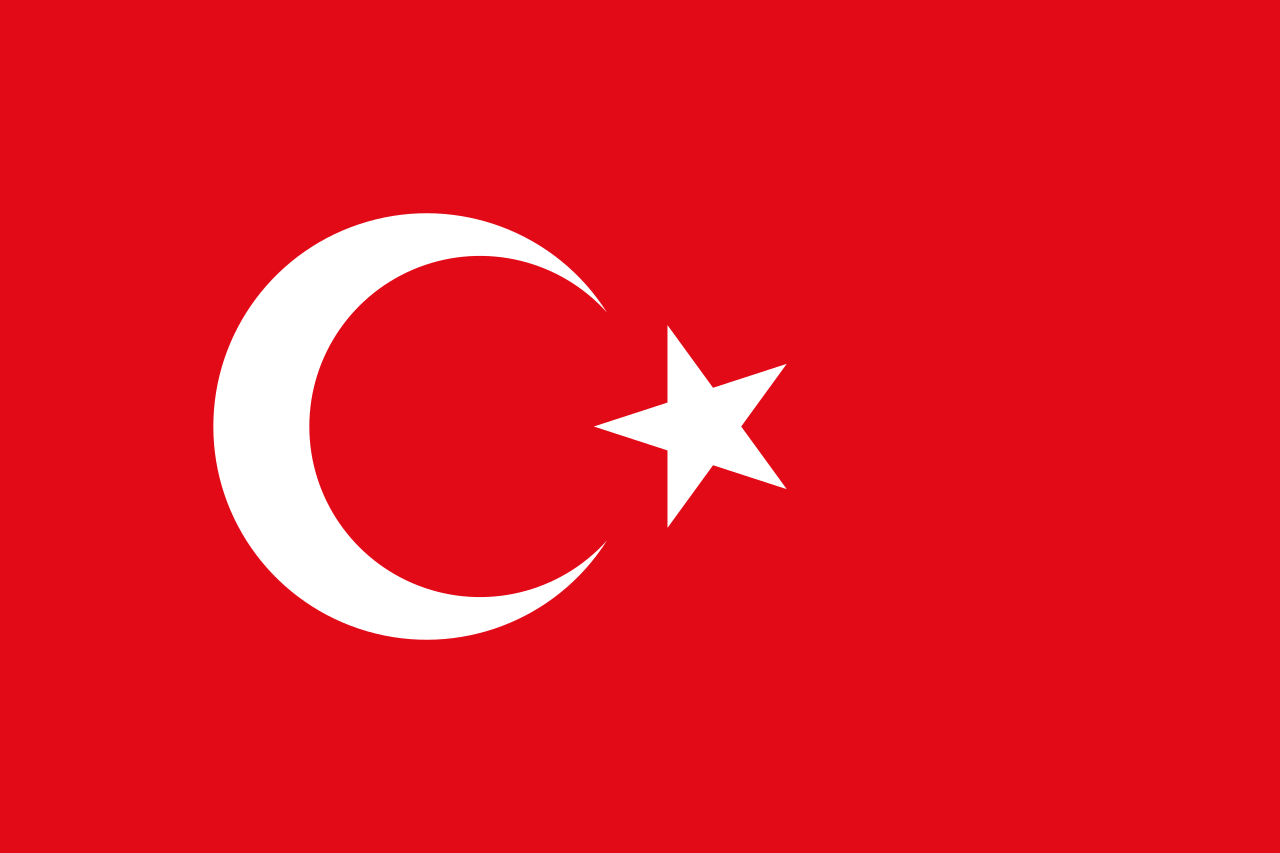
तुर्की
Also known as Republic of Türkiye, Republic of Turkey
यूरेशिया में स्थित एक देश
AI overview
Turkey is a country spanning Western Asia and Southeast Europe with over 86 million people, bordered by the Black Sea, Mediterranean, and Aegean Sea, and neighboring countries including Greece, Syria, Iran, and Georgia. It matters as a strategically important nation bridging Europe and Asia, with a Muslim-majority population and secular government, and major cities including the capital Ankara and Istanbul.
AI-generated from the Wikipedia summary — may contain errors.
Weather now
cached 9h ago21°clear sky
63% 2.2 m/s OpenWeatherMap
7-day forecast
via Open-Meteo
Country

- Capital
- Ankara
- Population
- 85,664,944
- Region
Travel guide
Understand
right|thumb|Mustafa Kemal Atatürk, the founding father of the Turkish state
See
Many museums and ancient sites in Turkey are closed on Mondays, although there are as many exceptions. The Turkish government offers a museum pass for many sights and museums in Turkey; there are also regional passes. Check out what is included, as they don't cover some sights and numerous others can still be seen for free.
Do
thumb|Tip of the [[Ölüdeniz beach]] thumb|Davraz Ski Resort in [[Isparta]] thumb|Women's volleyball team is the only 'perfect-season' scorer in sport's history. As their international fanbase would agree, they're definitely worth to watch. Beaches and summer sports – Beaches line the entire Mediterranean coast, but those with well-developed resorts are between Alanya to the east and Kuşadası on the Aegean coast to the west - the famous Turkish Riviera. There are scores more small places that only locals head for, such as the Gulf of Saros, is a favourite among scuba-divers. The Marmara and Black Sea beaches are not favorable for swimming because of the hard waves but perfect for surfing. Birdwatching – Both natural spots and preserves are found all over the country. Geographically being in the middle of migration routes of many species has its perks. Camping and trekking – Turkey hosts many sites and routes. A popular example being; a camping stop at Kabak cove during the Lycian Way trip. Cycling and running – The premier cycling race is the President's Tour of Turkey, held over a week in April. The annual Istanbul Marathon, the world's only intercontinental marathon, gets thousands of attendances. Hamams and geothermal spas – A visit to a hamam or Turkish bath is an essential part of any trip to Turkey and is something you'll be sure to repeat before leaving. There is at least one historical hamam in each neighborhood of Istanbul and other large…
Eat
thumb|Assortment of Turkish foods; baklava, sarma, yoğurt, etli nohut-pilav and komposto/hoşaf thumb|Assortment of meze Turkish cuisine combines Balkan, Mediterranean, Central Asian, Caucasian, and Levantine influences, and is extremely rich, reflecting the cultural and biological diversity of the land. Indeed, Turkish cuisine is often said to be not a single, unified national cuisine, but a collection of several distinctive regional cuisines, with preferences on cooking styles and ingredients overlapping in some cases, and diverging in others: e.g., olive oil and other vegetable oils common in the west vs butter elsewhere, some regions are vegetable-heavy while others are meat-heavy, beef is traditionally the most important red meat in the west but lamb and goat fill that niche elsewhere (pork, although not illegal, is very hard to find except the big cities due to its taboo status in Islam). Seafood, mainly fish, is common in the north and west, the south and southeast are heavy on spices while elsewhere is much more moderate and "bland", the main staple is rice in the north and west and is bulgur wheat elsewhere, bread is common everywhere but even it comes in a variety of shapes and forms, and so on. Of course, with the growth of internal immigration, and development of transport and communication technologies, the differences are often blurred and not as clear-cut as in the past, but the major distinctions are still there.
Gallery (39)
On the map
4 mapped locations
Connections
Categories
Countries and territories where Turkish is an official languageCountries in AsiaCountries in EuropeCountries in the BalkansCountries in West AsiaDeveloping 8 Countries member statesEastern MediterraneanG20 membersMembers of the International Organization of Turkic CultureMember states of NATOMember states of the Council of EuropeMember states of the Organisation of Islamic Cooperation