File:Sample_cross-section_of_high_tension_power_(pylon)_line.jpg · Wikimedia Commons · See Wikimedia Commons
wire
Sign in to saveAlso known as metal wire, metallic wire
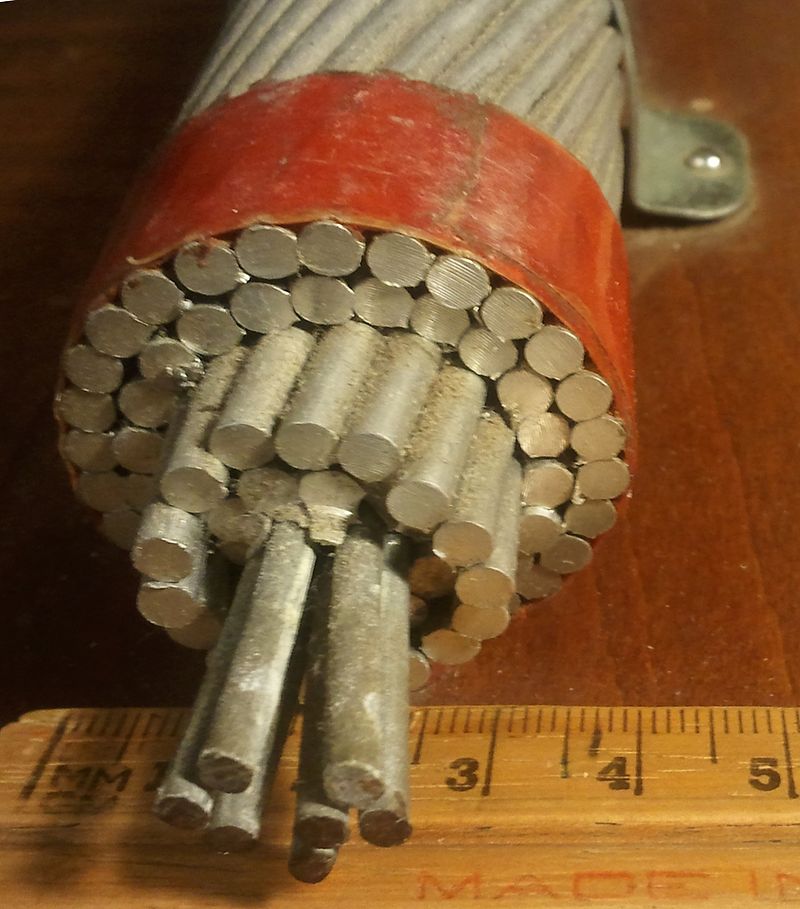
thumb|Overhead power cabling. The conductor consists of seven strands of steel (centre, high tensile strength), surrounded by four outer layers of aluminium (high conductivity). Sample diameter 40 mm
Wire is a thin strand of metal, like the power cables shown here that combine steel for strength with aluminum for conducting electricity efficiently. It matters because these materials working together allow wires to safely carry electrical power over long distances without breaking or losing too much energy.
AI-generated from the Wikipedia summary — may contain errors.
Wikidata facts
- Image
- Litz wire by Zureks.JPG
Show 2 more facts
- Commons category
- Wires
- Commons gallery
- Wire
Sources (1)
via Wikidata · CC0
~17 min read
Article
10 sectionsContents
- History
- Production
- Forms
- Solid
- Stranded
- Braided
- Uses
- See also
- References
- External links
thumb|Overhead power cabling. The conductor consists of seven strands of steel (centre, high tensile strength), surrounded by four outer layers of aluminium (high conductivity). Sample diameter 40 mm
A wire is a flexible, round bar of metal. Wires are commonly formed by drawing the metal through a hole in a die or draw plate. Wire gauges come in various standard sizes, as expressed in terms of a gauge number or cross-sectional area.
Gallery (27)
Available in 75 languages
- Español
- Français
- Deutsch
- 中文
- 日本語
- Русский
- Português
- Italiano
- العربية
- हिन्दी
- Afrikaans
- Albanian
- Aragonese
- Asturian
- Azerbaijani
- Bahasa Indonesia
- Bangla
- Basque
Show 56 more
- be_x_old
- Belarusian
- Breton
- Bulgarian
- Catalan
- Central Kurdish
- Chuvash
- Croatian
- Czech
- Danish
- Esperanto
- Estonian
- Filipino
- Galician
- Haitian Creole
- Hebrew
- Hungarian
- Ingush
- Javanese
- Kannada
- Kazakh
- Kyrgyz
- Latvian
- Lithuanian
- Malay
- Mazanderani
- Minangkabau
- Norwegian
- Occitan
- Piedmontese
- Polski
- Punjabi
- roa_rup
- Romanian
- Scottish Gaelic
- Serbian
- Serbian (Latin)
- Shona
- simple
- Slovak
- Slovenian
- Somali
- Sundanese
- Svenska
- Swahili
- Tamil
- Telugu
- Tiếng Việt
- Türkçe
- Ukrainian
- Uzbek
- Wu Chinese
- Yiddish
- zh_yue
- فارسی
- 한국어
via Wikidata sitelinks · CC0