Category
page 1Cereals

cereal
thumb|upright=1.35|Harvesting a cereal with a [[combine harvester accompanied by a tractor and trailer.]]

Avena sativa
The oat (Avena sativa), sometimes called the common oat, is a species of cereal grass (Avena) grown for fodder and for its seed, which is known by the same name (usually in the plural). Oats appear to have been domesticated as a secondary crop, as their seeds resembled those of other cereals closely enough for them to be included by early cultivators. Oats tolerate cold winters less well than cereals such as wheat, barley, and rye, but need less summer heat and more rain, making them important in areas such as Northwest Europe that have cool, wet summers. They can tolerate low-nutrient and aci

Secale cereale
Rye (Secale cereale) is a grass grown extensively as a grain, a cover crop and a forage crop. It is grown principally in an area from Eastern and Northern Europe into Russia. It is much more tolerant of cold weather and poor soil than other cereals, making it useful in those regions; its vigorous growth suppresses weeds and provides abundant forage for animals early in the year. It is a member of the wheat tribe (Triticeae) which includes the cereals wheat and barley. It is likely that rye arrived in Europe as a secondary crop, meaning that it was a minor admixture in wheat as a result of Vavi

Sorghum
genus of plants

Avena
Avena is a genus of Eurasian and African plants in the grass family. Collectively known as the oats, they include some species which have been cultivated for thousands of years as a food source for humans and livestock. They are widespread throughout Europe, Asia and northwest Africa. Several species have become naturalized in many parts of the world, and are regarded as invasive weeds where they compete with crop production. All oats have edible seeds, though they are small and hard to harvest in most species.

Sorghum bicolor
Sorghum bicolor, commonly called sorghum () and also known as broomcorn, great millet, Indian millet, Guinea corn, jowar, or milo, is a species in the grass genus Sorghum. It is typically an annual, but some cultivars are perennial. It grows in clumps that may reach over high. The grain is in diameter.

millet
thumb|Pearl millet

Setaria italica
species of plant

malt
thumb|A handful of malted barley, the white sprouts visible
thumb|Beer malt varieties from Bamberg, Germany

Panicum miliaceum
species of plant

bran
thumb|300x300px|Wheat bran structure (E: outer layer; I: intermediate layer; A: aleurone layer)
Bran, also known as '''miller's bran''', is the component of a cereal grain consisting of the outer hard layersthe combined aleurone and pericarpsurrounding the endosperm. Corn (maize) bran also includes the pedicel (tip cap). Along with the germ, it is an integral part of whole grains, and is often produced as a byproduct of milling in the production of refined grains. Bran is very nutritious, but is difficult to digest due to its high fiber content; its high fat content also reduces its shelf life

semolina
Semolina is a coarse flour traditionally made from durum wheat. Its high protein and gluten content make it especially suitable for pasta.

×Triticale
Triticale (; × Triticosecale) is a hybrid of wheat (Triticum) and rye (Secale) first bred in laboratories during the late 19th century in Scotland and Germany. Commercially available triticale is almost always a second-generation hybrid, i.e., a cross between two kinds of primary (first-cross) triticales. As a rule, triticale combines the yield potential and grain quality of wheat with the disease and environmental tolerance (including soil conditions) of rye. Only in 1970 did the first commercial variety become available. Depending on the cultivar, triticale can more or less resemble either o

Cenchrus americanus
species of plant

Eragrostis tef
Teff (), Eragrostis tef, also known as Williams lovegrass and annual bunch grass, is an annual species of lovegrass native to Ethiopia, where it originated in the Ethiopian Highlands. It has been cultivated for its edible seeds, also called teff, since at least 1000 BCE and possibly as long ago as 4000 BCE. It is one of Ethiopia's most important staple crops. As a modern crop, it is low-yielding and susceptible to lodging; the tef shoot fly is a major pest.

Echinochloa crus-galli
species of plant

Eleusine coracana
species of plant

Zizania
genus of plants, the wild rices

Coix lacryma-jobi
species of plant

groat
hulled kernels of various cereal grains

Fagopyrum tataricum
species of plant

Digitaria
Digitaria is a genus of plants in the grass family native to tropical and warm temperate regions but can occur in tropical, subtropical, and cooler temperate regions as well. Common names include crabgrass, finger-grass, and fonio. They are slender monocotyledonous annual and perennial lawn, pasture, and forage plants; some are often considered lawn pests. Digitus is the Latin word for "finger", and they are distinguished by the long, finger-like inflorescences they produce.
alt=Large crabgrass seedhead 2 - 9 spikelets|thumb|220x220px|Large crabgrass seedhead raceme

thatched roof
thumb|right|A thatched public house|pub (The Williams Arms) at [[Wrafton, North Devon, England]]
Thatching is the craft of building a roof with dry vegetation such as straw, water reed, sedge (Cladium mariscus), rushes, heather, or palm branches, layering the vegetation so as to shed water away from the inner roof. Since the bulk of the vegetation stays dry and is densely packed—trapping air—thatching also functions as insulation. It is a very old roofing method and has been used in both tropical and temperate climates. Thatch is still employed by builders in developing countries, usually with

Phalaris canariensis
species of plant

granola
Granola is a food consisting of a mix of rolled oats, nuts, seeds, honey (or other sweeteners such as brown sugar), and sometimes puffed rice that is usually baked with oil until crisp, toasted and golden brown, sometimes forming clumps. The mixture is stirred while baking to avoid burning and to maintain a loose breakfast cereal consistency. Dried fruit, such as raisins and dates, and confections such as chocolate are often added.
rolled oats
lightly processed whole-grain food made from oat
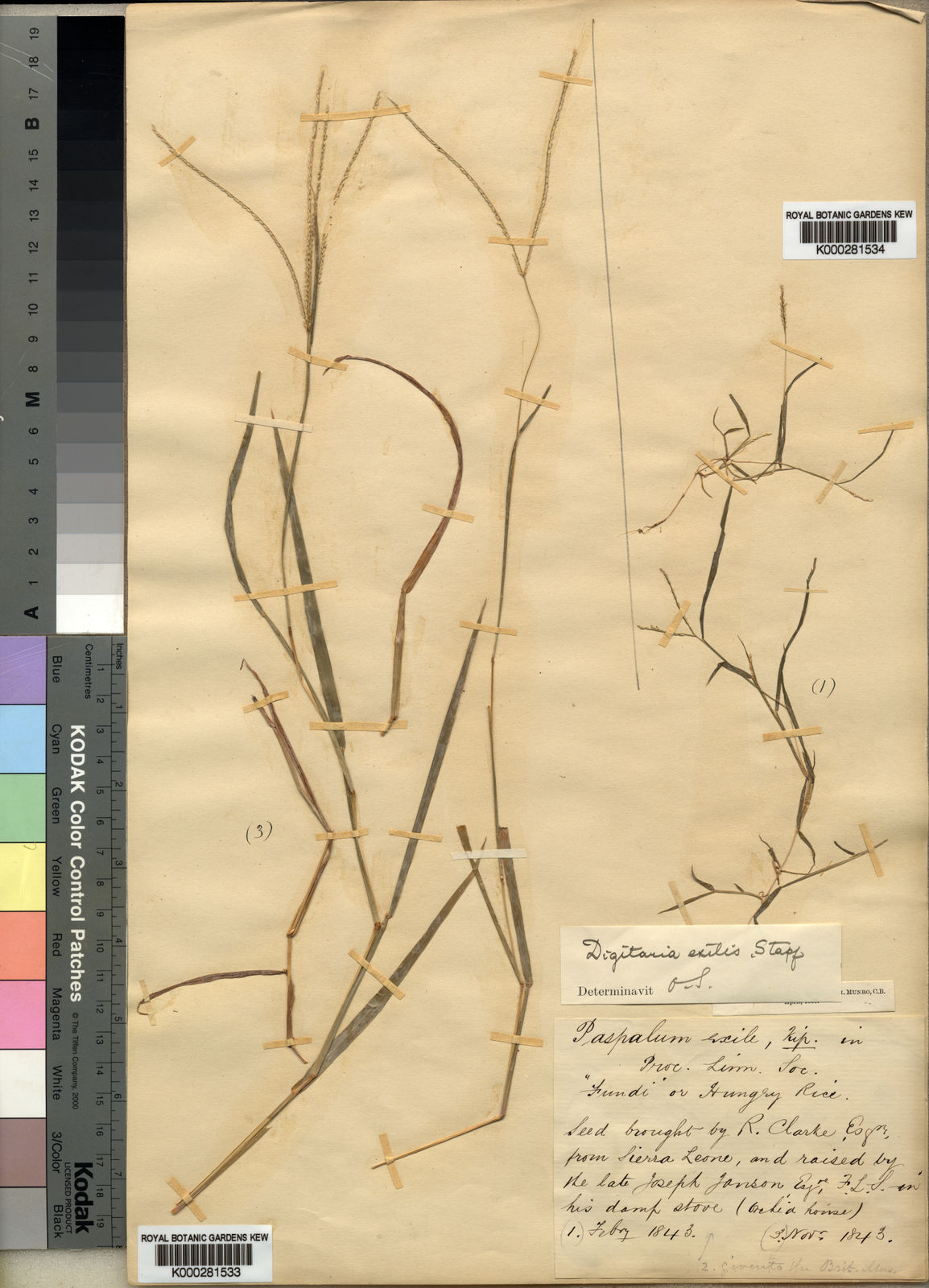
Digitaria exilis
species of plant
whole grain
cereal grain that contains the germ, endosperm, and bran

kasha
In English, kasha () is a porridge usually made from buckwheat, a pseudocereal. In the Slavic languages, kasha means porridge. In some varieties of Central and Eastern European cuisine, kasha can apply to any kind of cooked grain. It can be baked but most often is boiled, either in water or milk, but the word can also refer to the grain before preparation, which corresponds to the definition of 'groats'.

Digitaria sanguinalis
species of plant

Oryza glaberrima
species of plant

Avena strigosa
species of plant
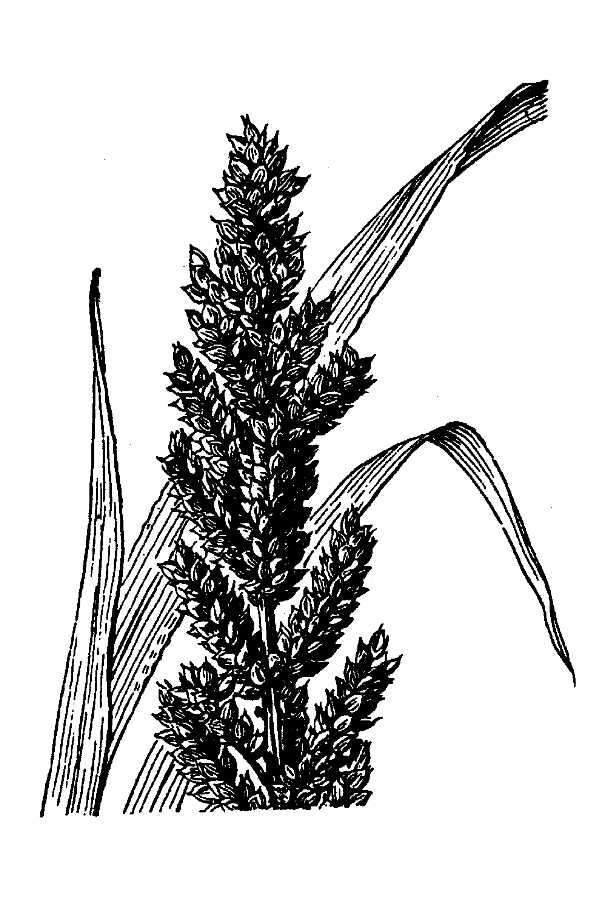
Echinochloa frumentacea
species of plant

Paspalum scrobiculatum
species of plant

Eragrostis pilosa
species of plant

oatmeal
Oatmeal is a preparation of oats that have been dehusked, steamed, and flattened, or a coarse flour of hulled oat grains (groats) that have either been milled (ground), rolled, or steel-cut. Ground oats are also called white oats. Steel-cut oats are known as coarse oatmeal, Irish oatmeal, or pinhead oats. Rolled oats were traditionally thick old-fashioned oats, but they can be made thinner or smaller and may be categorized as quick oatmeal or instant oatmeal depending on the cooking time required, which is determined by the size of the oats and the amount of precooking.

Urochloa
Urochloa, commonly known as signalgrass, is a genus of plants in the grass family, native to tropical and subtropical regions of Eurasia, Africa, Australia, the Americas, and various islands.

Panicum sumatrense
species of plant
winnowing pan
Agricultural tool for preparing grains

Dactyloctenium aegyptium
species of plant

farro
thumb|Farro soup from Tuscany, Italy
Farro () is a grain of any of three species of hulled wheat, namely einkorn, emmer, or spelt, sold dried and cooked in water until soft. It is used as a side dish and added to salads, soups and stews.

Triticeae
Triticeae is a botanical tribe within the subfamily Pooideae of grasses that includes genera with many domesticated species. Major crop genera found in this tribe include wheat (see wheat taxonomy), barley, and rye; crops in other genera include some for human consumption, and others used for animal feed or rangeland protection. Among the world's cultivated species, this tribe has some of the most complex genetic histories. An example is bread wheat, which contains the genomes of three species with only one being a wheat Triticum species. Seed storage proteins in the Triticeae are implicated i

Zizania latifolia
species of plant
grist
Grist is grain that has been separated from its chaff in preparation for grinding. It can also refer to grain that has been coarsely ground at a gristmill. The term derives from the Old English verb grindan, meaning "to grind."

grain chaff
right|thumb|Husk of Corylus colurna|Corylus colurna (Turkish Hazel), containing 7 nuts
In botany, a husk (or hull) is the outer shell or coating of a seed. In the United States, the term husk often refers to the leafy outer covering of an ear of maize (corn) as it grows on the plant. Literally, a husk or hull includes the protective outer covering of a seed, fruit, or vegetable.

Cenchrus biflorus
species of plant

Avena abyssinica
species of oat

Oryza barthii
species of plant

Thinopyrum intermedium
species of plant

Hordeum pusillum
species of plant
Falling Number
method for determining sprout damage
roasted cereal grain beverage
coffee substitute
winter cereal
biennial cereal crops sown in autumn

Echinochloa stagnina
species of plant
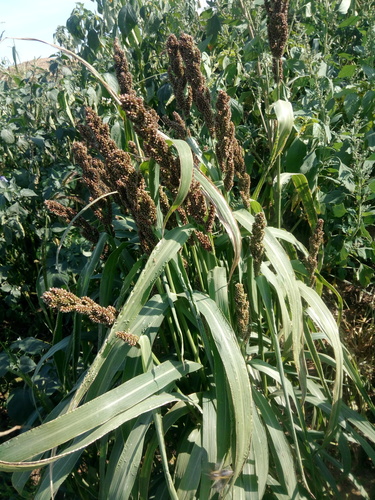
Echinochloa oryzoides
grass species
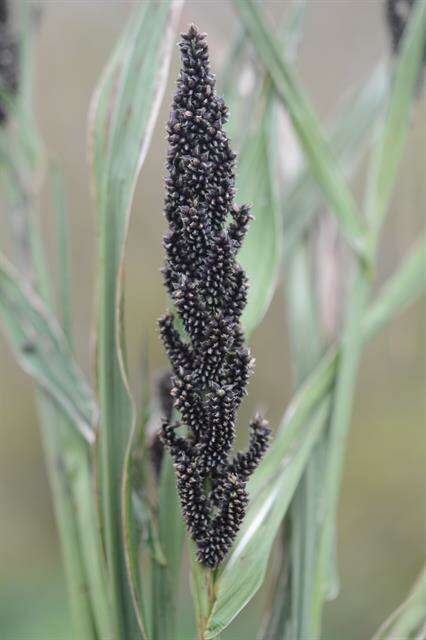
Echinochloa esculenta
species of plant

Digitaria iburua
species of plant
cereal germ
reproductive part that germinates to grow into a plant

Phalaris caroliniana
species of plant

Panicum hirticaule
species of plant