Category
page 1Chemicals without a PubChem CID

starch
thumb|Structure of the amylose molecule
thumb|Structure of the amylopectin molecule

kerosene
right|thumb|upright|A kerosene bottle, containing blue-dyed kerosene
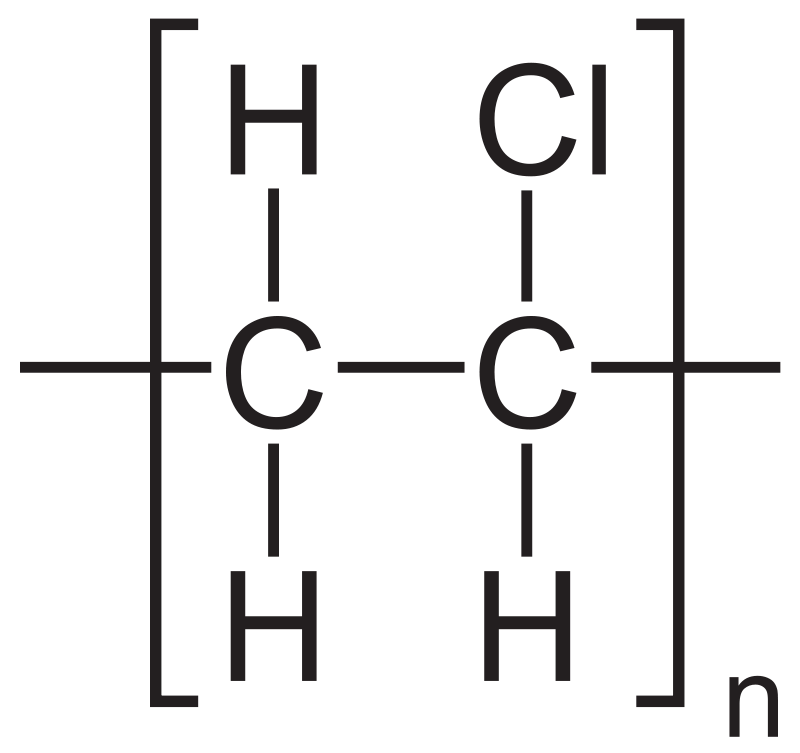
polyvinyl chloride
synthetic plastic polymer - A thermoplastic resin produced by the polymerization of vinyl chloride gas.

polystyrene
thumb|Expanded polystyrene packaging
thumb|A polystyrene yogurt container
thumb|Bottom of a vacuum forming|vacuum-formed cup; fine details such as the glass and fork [[food contact materials symbol and the resin identification code symbol are easily molded]]
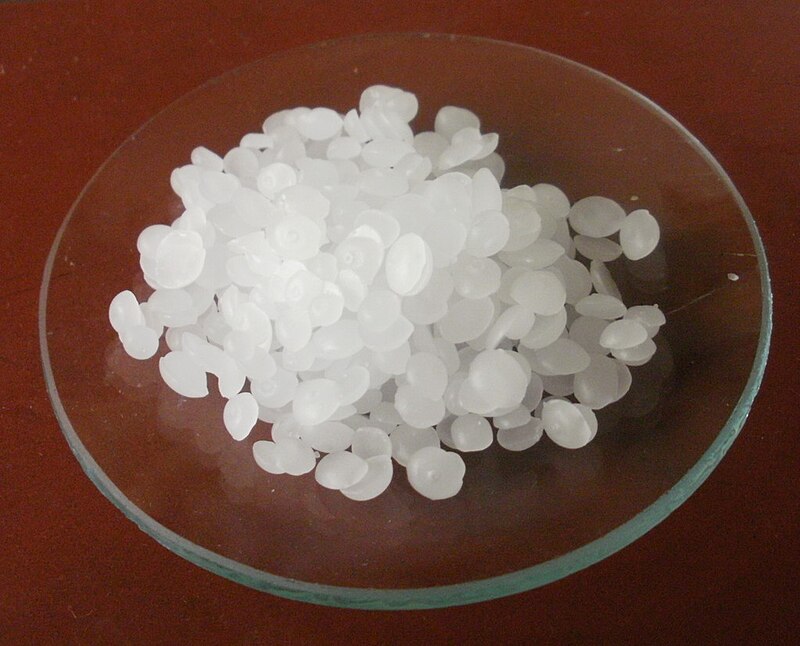
paraffin wax
waxy mixture of higher alkanes

polytetrafluoroethylene
Polytetrafluoroethylene (PTFE) is a synthetic fluoropolymer of tetrafluoroethylene, and has numerous applications because it is chemically inert. The commonly known brand name of PTFE-based composition is Teflon by Chemours, a spin-off from DuPont, which originally invented the compound in 1938.

polypropylene
Polypropylene (PP), also known as polypropene, is a thermoplastic polymer used in a wide variety of applications. It is produced via chain-growth polymerization from the monomer propylene.

Kevlar
Kevlar (para-aramid) is a strong, heat-resistant synthetic fiber, related to other aramids such as Nomex and Technora. Developed by Stephanie Kwolek at DuPont in 1965, the high-strength material was first used commercially in the early 1970s as a replacement for steel in racing tires. It is typically spun into ropes or fabric sheets that can be used as such, or as an ingredient in composite material components.

polyethylene terephthalate
type of polyester commonly used for bottles and clothing
Bakelite
Bakelite ( ), formally '''''', is a thermosetting phenol formaldehyde resin, formed from a condensation reaction of phenol with formaldehyde. The first plastic made from synthetic components, it was developed by Belgian chemist Leo Baekeland in Yonkers, New York, in 1907, and patented on December 7, 1909.

nitrocellulose
Nitrocellulose (also known as cellulose nitrate, flash paper, flash cotton, guncotton, pyroxylin and flash string, depending on form) is a highly flammable compound formed by nitrating cellulose through exposure to a mixture of nitric acid and sulfuric acid.

poly(methyl methacrylate)
transparent thermoplastic, commonly called acrylic

silica gel
granular, vitreous, porous form of silicon dioxide
amylose
Amylose is a polysaccharide made of α-D-glucose units, bonded to each other through α(1→4) glycosidic bonds. Together with amylopectin, it is one of the two components of starch, making up approximately 20–25% of it. Because of its tightly packed helical structure, amylose is more resistant to digestion than other starch molecules and is therefore an important form of resistant starch.
polychlorinated biphenyl
any chemical compound from a series of congeners based on biphenyl skeleton, differing from other compounds of this group by a number and position of chlorine atoms
cementite
Cementite (or iron carbide) is a compound of iron and carbon, more precisely an intermediate transition metal carbide with the formula Fe3C. By weight, it is 6.67% carbon and 93.3% iron. It has an orthorhombic crystal structure. It is a hard, brittle material, normally classified as a ceramic in its pure form, and is a frequently found and important constituent in ferrous metallurgy. While cementite is present in most steels and cast irons, it is produced as a raw material in the iron carbide process, which belongs to the family of alternative ironmaking technologies. The name cementite origin

neoprene
Neoprene (also polychloroprene) is a family of synthetic rubbers that are produced by polymerization of chloroprene. Neoprene exhibits good chemical stability and maintains flexibility over a wide temperature range. Neoprene is sold either as solid rubber or in latex form and is used in a wide variety of commercial applications, such as laptop sleeves, orthopaedic braces (wrist, knee, etc.), electrical insulation, medical gloves, liquid and sheet-applied elastomeric membranes or flashings, and automotive fan belts.
silver bromide
chemical compound
carbon black
chemical substance
oleum
Oleum (Latin oleum, meaning oil), or fuming sulfuric acid, is a term referring to solutions of various compositions of sulfur trioxide in sulfuric acid, or sometimes more specifically to disulfuric acid (also known as pyrosulfuric acid).
linear maltodextrin
thumb|Maltodextrin powder
Maltodextrin is a name shared by two different families of chemicals. Both families are glucose polymers (also called dextrose polymers or dextrins), but have little chemical or nutritional similarity.
xenon trioxide
chemical compound

Vantablack
Vantablack is a class of super-black coatings with total hemispherical reflectances (THR) below 1% in the visible spectrum. The name is a compound of the acronym VANTA (vertically aligned nanotube arrays) and black.
dextran
Dextran is a complex branched glucan (polysaccharide derived from the condensation of glucose), originally derived from wine. IUPAC defines dextrans as "Branched poly-α-d-glucosides of microbial origin having glycosidic bonds predominantly C-1 → C-6". Dextran chains are of varying lengths (from 3 to 2000 kilodaltons).
polylactic acid
polymer

polyoxymethylene
thumb|Ground glass joint#Joint clips|Keck clips made of polyoxymethylene
guar gum
thickening and stabilizing substance used in food and industrial applications
jet fuel
type of aviation fuel
alginic acid
polysaccharide found in brown algae
xanthan gum
food additive and thickener
.jpg)
yellowcake
thumb|Yellowcake
Yellowcake (also called urania) is a type of powdered uranium concentrate obtained from leach solutions, representing an intermediate step in the processing of uranium ores. This material is produced after uranium mining but before either fuel fabrication or uranium enrichment. Yellowcake concentrates are created through various extraction and refining methods that vary depending on the ore types. The production involves milling and chemical processing of uranium ore, resulting in a coarse powder with a pungent odor that is insoluble in water. Yellowcake typically contains abo

phosphatidyl serine
Phosphatidylserine (abbreviated Ptd-L-Ser or PS) is a phospholipid and is a component of the cell membrane. It plays a key role in cell cycle signaling, specifically in relation to apoptosis. It is a key pathway for viruses to enter cells via apoptotic mimicry. Its exposure on the outer surface of a membrane marks the cell for destruction via apoptosis.

polyvinylpyrrolidone
Polyvinylpyrrolidone (PVP), also commonly called povidone, is a water-soluble polymer compound made from the monomer N-vinylpyrrolidone. PVP is available in a range of molecular weights and related viscosities, and can be selected according to the desired application properties.
polyethylene glycol
polymer
carnauba wax
natural plant wax
xenon tetroxide
chemical compound of xenon and oxygen
petroleum ether
mixture of alkanes from oil
hydridohelium(1+)
onium ion of helium; protonated helium
benzyl benzoate
chemical compound
polyvinyl alcohol
water-soluble synthetic polymer
radium chloride
chemical compound
bone char
chemical compound
phenol formaldehyde resin
synthetic resin made by copolymerizing phenol and formaldehyde
benzalkonium chloride C8-18
mixture of chemical compounds
nitrile rubber
family of polymer
LK-99
tung oil
vegetable oil
Raney nickel
fine nickel powder used as a catalyst
radon difluoride
chemical compound
paraformaldehyde
Paraformaldehyde (PFA) is the smallest polyoxymethylene, the polymerization product of formaldehyde with a typical degree of polymerization of 8–100 units. Paraformaldehyde commonly has a slight odor of formaldehyde due to decomposition. Paraformaldehyde is a poly-acetal.
polyacrylonitrile
Polyacrylonitrile (PAN) is a synthetic, semicrystalline organic polymer resin, with the linear formula (CH2CHCN)n. Almost all PAN resins are copolymers with acrylonitrile as the main monomer. PAN is used to produce large variety of products including ultra filtration membranes, hollow fibers for reverse osmosis, fibers for textiles, and oxidized PAN fibers. PAN fibers are the chemical precursor of very high-quality carbon fiber. PAN is first thermally oxidized in air at 230 °C to form an oxidized PAN fiber and then carbonized above 1000 °C in inert atmosphere to make carbon fibers fo
sodium nitride
chemical compound

phosphatidylinositols
Phosphatidylinositol or inositol phospholipid is a biomolecule. It was initially called "inosite" when it was discovered by Léon Maquenne and Johann Joseph von Scherer in the late 19th century. It was discovered in bacteria but later also found in eukaryotes, and was found to be a signaling molecule.
carboxymethyl cellulose
cellulose derivative grafted with carboxymethyl groups
hypromellose
Hypromellose (INN), short for hydroxypropyl methylcellulose (HPMC), is a semisynthetic, inert, viscoelastic polymer used in eye drops, as well as an excipient and controlled-delivery component in oral medicaments, found in a variety of commercial products.
singlet oxygen
special electronic configuration of oxygen molecule
polyacrylamide
Polyacrylamide (abbreviated as PAM or pAAM) is a polymer with the formula (-CH2CHCONH2-). It has a linear-chain structure. PAM is highly water-absorbent, forming a soft gel when hydrated. In 2008, an estimated 750,000,000 kg were produced, mainly for water treatment and the paper and mineral industries.

styrene-butadiene
Styrene-butadiene or styrene-butadiene rubber (SBR) describe families of synthetic rubbers derived from styrene and butadiene (the version developed by Goodyear is called Neolite). These materials have good abrasion resistance and good aging stability when protected by additives. In 2012, more than 5.4 million tonnes of SBR were processed worldwide. About 50% of car tires are made from various types of SBR. The styrene/butadiene ratio influences the properties of the polymer: with high styrene content, the rubbers are harder and less rubbery. SBR is not to be confused with the thermoplastic el
xenon hexafluoroplatinate
chemical compound

cardiolipin
Cardiolipin (IUPAC name '1,3-bis(sn-3’-phosphatidyl)-sn-glycerol', "sn" designating stereospecific numbering) is an important component of the inner mitochondrial membrane, where it constitutes about 20% of the total lipid composition. It can also be found in the membranes of most bacteria. The name "cardiolipin" is derived from the fact that it was first found in animal hearts. It was first isolated from the beef heart in the early 1940s by Mary C. Pangborn. In mammalian cells, but also in plant cells, cardiolipin (CL) is found almost exclusively in the inner mitochondrial membrane, where it