Category
page 1Excipients

sugar
thumb|Sugars (clockwise from top-left): white refined, unrefined, brown sugar|brown, unprocessed cane sugar

starch
thumb|Structure of the amylose molecule
thumb|Structure of the amylopectin molecule

cellulose
Cellulose is an organic compound with the formula , a polysaccharide consisting of a linear chain of several hundred to many thousands of β(1→4) linked D-glucose units. Cellulose is an important structural component of the cell walls of green plants, many forms of algae, and the oomycetes. Some species of bacteria secrete it to form biofilms. Cellulose is the most abundant organic polymer on Earth. The cellulose content of cotton fibre is 90%, that of wood is 40–50%, and that of dried hemp is approximately 57%.

calcium carbonate
chemical compound

β-lactose
Lactose is a disaccharide composed of galactose and glucose and has the molecular formula C12H22O11. Lactose makes up around 2–8% of milk (by mass). The name comes from (gen. ), the Latin word for milk, plus the suffix -ose used to name sugars. The compound is a white, water-soluble, non-hygroscopic solid with a mildly sweet taste. It is used in the food industry.

silicon dioxide
chemical compound

acetone
Acetone (2-propanone or dimethyl ketone) is an organic compound with the formula . It is the simplest and smallest ketone (). It is a colorless, highly volatile, and flammable liquid with a characteristic pungent odor.

talc
Talc, or talcum, is a clay mineral composed of hydrated magnesium silicate, with the chemical formula . Talc in powdered form, often combined with corn starch, is used as baby powder. This mineral is used as a thickening agent and lubricant. It is an ingredient in ceramics, paints, and roofing material. It is a main ingredient in many cosmetics. It occurs as foliated to fibrous masses, and in an exceptionally rare crystal form. It has a perfect basal cleavage and an uneven flat fracture, and it is foliated with a two-dimensional platy form.

gelatin
thumb|right|Sheet (or leaf) gelatin for cooking.
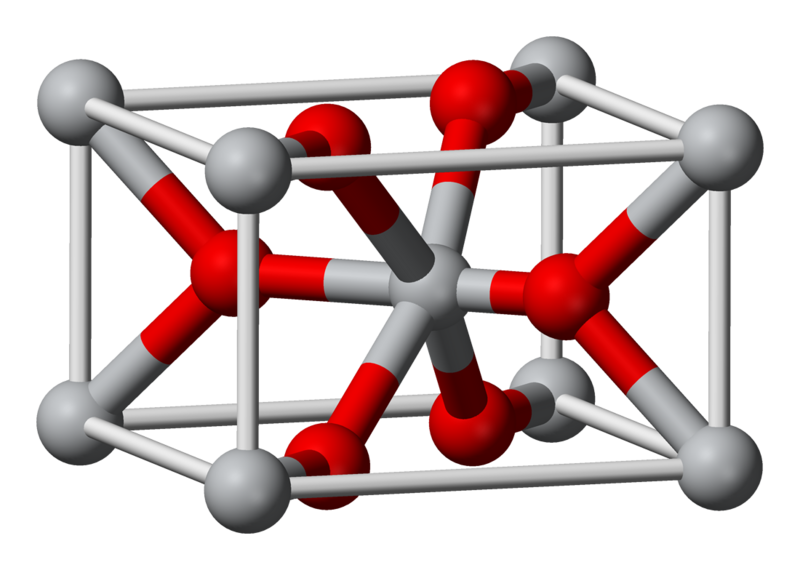
titanium dioxide
chemical compound

benzoic acid
chemical compound

oleic acid
monounsaturated omega-9 fatty acid, abbreviated with a lipid number of 18:1 cis-9

succinic acid
dicarboxylic acid

gum arabic
natural gum obtained from Acacia sensu lato tree sap

D-sorbitol
Sorbitol (), less commonly known as glucitol (), is a sugar alcohol with a sweet taste which the human body metabolizes slowly. It can be obtained by reduction of glucose, which changes the converted aldehyde group (−CHO) to a primary alcohol group (−CH2OH). Most sorbitol is made from potato starch, but it is also found in nature, for example in apples, pears, peaches, and prunes. It is converted to fructose by sorbitol-6-phosphate 2-dehydrogenase. Sorbitol is an isomer of mannitol, another sugar alcohol; the two differ only in the orientation of the hydroxyl group on carbon2. While similar, t

activated carbon
form of carbon processed to have small, low-volume pores that increase the surface area

shellac
right|thumb|upright=1.4|Some of the many different colors of shellac
thumb|right|Shellac in alcohol
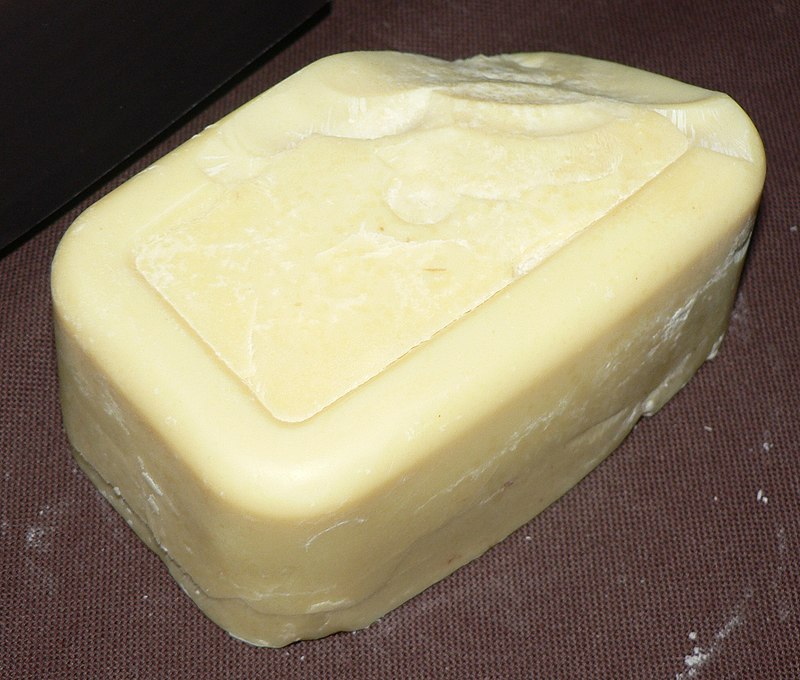
cocoa butter
pale-yellow, edible vegetable fat extracted from the cocoa bean

xylitol
Xylitol is an organic compound with the formula . Two other isomeric sugar alcohols exist. It is a colorless or white crystalline solid. It is classified as a polyalcohol and a sugar alcohol, specifically an alditol. Of the common sugar alcohols, only sorbitol is more soluble in water.

N-acetyl-L-cysteine
Acetylcysteine or '''N-acetylcysteine (NAC'; not to be confused with N''-acetylcarnosine, which is also abbreviated NAC) is a mucolytic that is used to treat paracetamol (acetaminophen) overdose and to loosen thick mucus in individuals with chronic bronchopulmonary disorders, such as pneumonia and bronchitis. It has been used to treat lactobezoar in infants. It can be taken intravenously, orally (swallowed by mouth), or inhaled as a mist by use of a nebulizer. It is also sometimes used as a dietary supplement.
acetophenone
Acetophenone is the organic compound with the formula C6H5C(O)CH3. It is the simplest aromatic ketone. This colorless, viscous liquid is a precursor to useful resins and fragrances.
(RS)-propylene glycol
pair of enantiomers

D-(-)-mannitol
Mannitol is a type of sugar alcohol used as a sweetener and medication. It is used as a low-calorie sweetener as it is poorly absorbed by the intestines. As a medication, it is used to decrease pressure in the eyes, as in glaucoma, and to lower increased intracranial pressure. Medically, it is given by injection or inhalation. Effects typically begin within 15 minutes and last up to 8 hours.
acesulfame potassium
Organic synthetic salt used as a low-calorie sweetener
sodium lauryl sulfate
chemical compound
allantoin
Allantoin is a chemical compound with formula C4H6N4O3. It is also called 5-ureidohydantoin or glyoxyldiureide. It is a diureide of glyoxylic acid. Allantoin is a major metabolic intermediate in most organisms including animals, plants and bacteria, though not humans. It is produced from uric acid, which itself is a degradation product of nucleic acids, by action of urate oxidase (uricase). Allantoin also occurs as a natural mineral compound (IMA symbol Aan).
maltitol
Maltitol is a sugar alcohol (a polyol) used as a sugar substitute and laxative. It has 75–90% of the sweetness of sucrose (table sugar) and nearly identical properties, except for browning. It is used to replace table sugar because it is half as calorific, does not promote tooth decay, and has a somewhat lesser effect on blood glucose. In chemical terms, maltitol is known as '4-O-α-glucopyranosyl--sorbitol'. It is used in commercial products under trade names such as Lesys, Maltisweet and SweetPearl.

norflurane
1,1,1,2-Tetrafluoroethane (also known as norflurane (INN), R-134a, Klea 134a, Freon 134a, Forane 134a, Genetron 134a, Green Gas, Florasol 134a, Suva 134a, HFA-134a, or HFC-134a) is a hydrofluorocarbon (HFC) and haloalkane refrigerant with thermodynamic properties similar to R-12 (dichlorodifluoromethane) but with insignificant ozone depletion potential and a lower 100-year global warming potential (1,430, compared to R-12's GWP of 10,900). It has the formula CFCHF and a boiling point of −26.3 °C (−15.34 °F) at atmospheric pressure. R-134a cylinders are colored light blue. A phaseout
iron(II,III) oxide
chemical compound
alginic acid
polysaccharide found in brown algae
denatured alcohol
ethanol with additives to discourage recreational consumption
polyethylene glycol
polymer

trichloroethane
1,1,1-Trichloroethane, also known as methyl chloroform and chlorothene, is a chloroalkane with the chemical formula . It is an isomer of 1,1,2-trichloroethane. A colourless and sweet-smelling liquid, it was once produced industrially in large quantities for use as a solvent. It is regulated by the Montreal Protocol as an ozone-depleting substance, and as such, use has declined since 1996. Trichloroethane should not be confused with the similar-sounding trichloroethene which is also commonly used as a solvent.

polyvinylpyrrolidone
Polyvinylpyrrolidone (PVP), also commonly called povidone, is a water-soluble polymer compound made from the monomer N-vinylpyrrolidone. PVP is available in a range of molecular weights and related viscosities, and can be selected according to the desired application properties.

thiomersal
Thiomersal (INN), or thimerosal (USAN, JAN), also sold under the name merthiolate, is an organomercury compound. It is a well-established antiseptic and antifungal agent.
calcium phosphate
class of chemical compounds
magnesium stearate
chemical compound
hypromellose
Hypromellose (INN), short for hydroxypropyl methylcellulose (HPMC), is a semisynthetic, inert, viscoelastic polymer used in eye drops, as well as an excipient and controlled-delivery component in oral medicaments, found in a variety of commercial products.
excipient
An excipient or inactive ingredient is a substance formulated alongside the active ingredient of a medication. They enhance the active ingredient's therapeutic properties; to facilitate drug absorption, to modify viscosity, to enhance solubility, to improve long-term stabilization (preventing denaturation and aggregation during the expected shelf life). During the manufacturing process, excipients can improve the handling of active substances and facilitate powder flow. The choice of excipients depends on factors such as the intended route of administration, the dosage form, and compatibility
triacetin
Triacetin is the organic compound with the formula . It is classified as a triglyceride, i.e., the triester of glycerol with acetic acid. It is a colorless, viscous, and odorless liquid with a high boiling point and a low melting point. It has a mild, sweet taste in concentrations lower than , but may appear bitter at higher concentrations. It is one of the glycerine acetate compounds.
purified water
water treated to remove dissolved solutes or suspended impurities
methyl cellulose
chemical compound
N-methyl-2-pyrrolidone
'''N-Methyl-2-pyrrolidone (NMP''') is an organic compound consisting of a 5-membered lactam. It is a colorless liquid, although impure samples can appear yellow. It is miscible with water and with most common organic solvents. It also belongs to the class of dipolar aprotic solvents such as dimethylformamide and dimethyl sulfoxide. It is used in the petrochemical, polymer and battery industries as a solvent, exploiting its nonvolatility and ability to dissolve diverse materials (including polyvinylidene difluoride, PVDF). It has a strong dipole moment and hydrogen bonding due to its cis-amide
triethyl citrate
chemical compound
ethyl cellulose
polymer
hydroxypropyl cellulose
pharmaceutical drug
humectant
A humectant is a hygroscopic (water-absorbing) substance used to keep things moist. They are used in many products, including food, cosmetics, medicines and pesticides. When used as a food additive, a humectant has the effect of keeping moisture in the food. Humectants are sometimes used as a component of antistatic coatings for plastics.

macrogol
Macrogol is the international nonproprietary name used for polyethylene glycol (PEG) as a medication ingredient. It is usually followed by a number indicating the average molecular weight, indicating the length of the polymer of the specific molecule in use. Macrogol is used as a laxative to treat constipation in children and adults. It is taken by mouth. Benefits usually occur within three days. It is also used as an excipient. It is also used to clear the bowels before a colonoscopy, when the onset of the laxative effect is more rapid, typically within an hour.
Polysorbate 20
chemical substance
liquid paraffin
mineral oil used in cosmetics and medicine
Acacia sensu lato
polyphyletic genus of shrubs and trees
polyvinylpolypyrrolidone
Polyvinylpolypyrrolidone (polyvinyl polypyrrolidone, PVPP, crospovidone, crospolividone, or E1202) is a highly cross-linked modification of polyvinylpyrrolidone (PVP).
acetyl tributyl citrate
Acetyltributylcitrate is an organic compound that is used as a plasticizer. As such, it is a potential replacement of DEHP and DINP. It is a colorless liquid that is soluble in organic solvents. It is found in nail polish and other cosmetics. It is prepared by acetylation of tributylcitrate.
feed additive
food additive for livestock