Category
page 1Italian Renaissance painters

Leonardo da Vinci
Italian Renaissance polymath (1452−1519)

Michelangelo
Michelangelo di Lodovico Buonarroti Simoni (6March 147518February 1564), known mononymously as Michelangelo, was an Italian sculptor, painter, architect, and poet of the High Renaissance. He was born in the Republic of Florence but was mostly active in Rome from his 30s onwards. His work was inspired by models from classical antiquity and had a lasting influence on Western art. Michelangelo's creative abilities and mastery in a range of artistic arenas define him as an archetypal Renaissance man, along with his rival and elder contemporary, Leonardo da Vinci. Given the sheer volume of survivin

Raphael
Raffaello Sanzio da Urbino (; March 28 or April 6, 1483April 6, 1520), now generally known in English as Raphael ( , ), was an Italian painter and architect of the High Renaissance. His work is admired for its clarity of form, ease of composition, and visual achievement of the Neoplatonic ideal of human grandeur. Together with Leonardo da Vinci and Michelangelo, he forms the traditional trinity of great masters of that period.
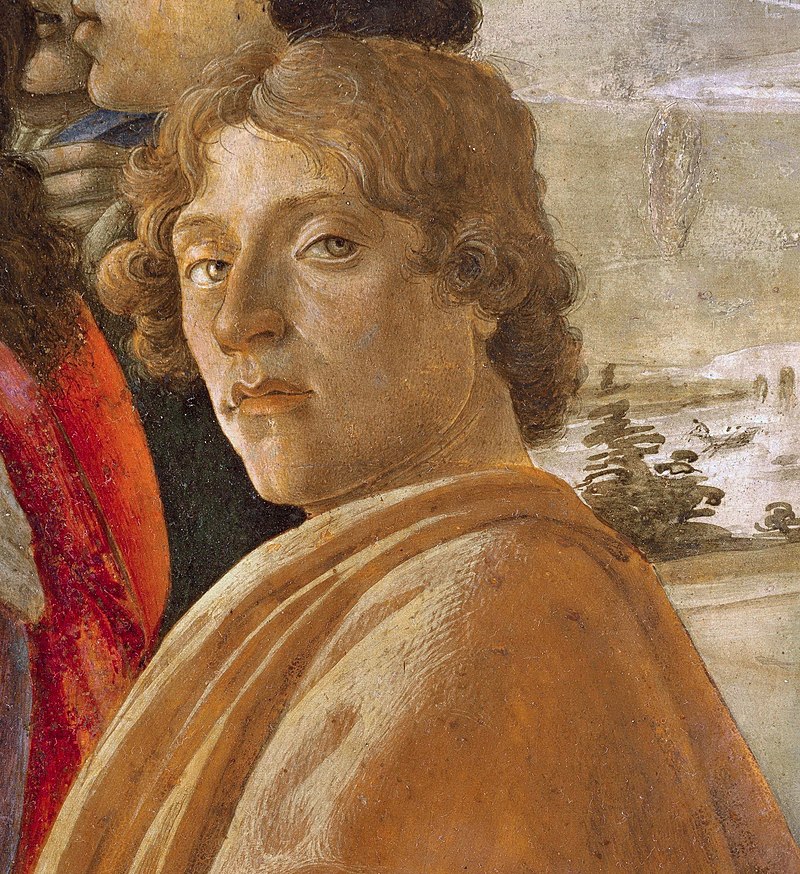
Sandro Botticelli
Italian painter (1445–1510)

Titian
Tiziano Vecellio (; 27 August 1576), Latinized as Titianus, hence known in English as Titian ( ), was an Italian Renaissance painter. The most important artist of Renaissance Venetian painting, he was born in Pieve di Cadore, near Belluno.

Leon Battista Alberti
Italian architect and writer (1404-1472)

Paolo Veronese
Italian painter of the Renaissance (1528–1588)

Masaccio
Masaccio (, ; ; December 21, 1401 – summer 1428), born Tommaso di Ser Giovanni di Simone, was a Florentine artist who is regarded as the first great Italian painter of the Quattrocento period of the Italian Renaissance. According to Vasari, Masaccio was the best painter of his generation because of his skill at imitating nature, recreating lifelike figures and movements as well as a convincing sense of three-dimensionality. He employed nudes and foreshortenings in his figures. This had seldom been done before him.

Fra Angelico
Italian Early Renaissance painter

Giovanni Bellini
15th- and 16th-century Italian Renaissance painter (1430–1516)

Domenico Ghirlandaio
Italian Renaissance painter from Florence (1448–1494)

Andrea Mantegna
Italian Renaissance painter (1431-1506)

Piero della Francesca
Italian painter and mathematician (c. 1416–1492)

Giorgione
Giorgio Barbarelli da Castelfranco (; 1470s – 17 September 1510), known as Giorgione, was an Italian painter of the Venetian school during the High Renaissance, who died in his thirties. He is known for the elusive poetic quality of his work, though only about six surviving paintings are firmly attributed to him. The uncertainty surrounding the identity and meaning of his work has made Giorgione one of the most mysterious figures in European art.

Andrea del Verrocchio
15th century Italian sculptor, goldsmith and painter (c.1435-1488)

Pietro Perugino
Italian Renaissance painter of the Umbrian school (1448-1523)

Andrea del Sarto
Italian painter (1486-1530)

Antonello da Messina
Italian Renaissance painter (1430–1479)

Antonio da Correggio
Italian Renaissance painter (1489–1534)

Filippo Lippi
Italian Renaissance painter (c. 1406–1469)

Luca Signorelli
Italian Renaissance painter (c.1450-1523)
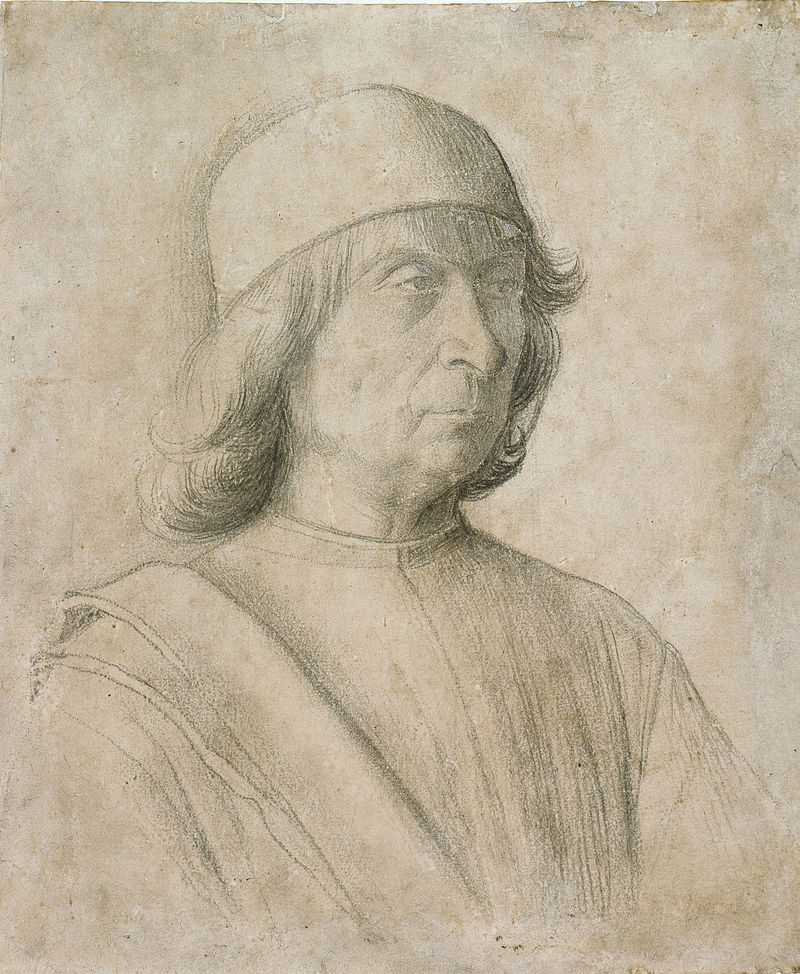
Gentile Bellini
Italian painter of the renaissance (1429–1507)

Filippino Lippi
Italian painter (1457–1504)

Vittore Carpaccio
Italian painter (1465-1526)

Pinturicchio
220px|thumb|Crucifixion between Sts. Jerome and Christopher|The Crucifixion with Sts. Jerome and Christopher, 1471, oil on wood, 59 × 40 cm, [[Galleria Borghese, Rome]]
220px|thumb|Fresco at Siena Cathedral depicting [[Pope Pius II]]
Pinturicchio, or Pintoricchio (, ; born Bernardino di Betto; 1454–1513), also known as Benetto di Biagio or Sordicchio, was an Italian Renaissance painter. He acquired his nickname (meaning "little painter") because of his small stature and he used it to sign some of his artworks that he produced during the fifteenth and sixteenth centuries.

Fra Bartolomeo
Italian Renaissance painter (1472-1517)
Quattrocento
The cultural and artistic events of Italy during the period 1400 to 1499 are collectively referred to as the Quattrocento ( , , ), from the Italian word for the number '400', in turn from , '1400'. The Quattrocento encompasses the artistic styles of the late Middle Ages (most notably International Gothic), the early Renaissance (beginning around 1425), and the start of the High Renaissance, generally asserted to begin between 1495 and 1500.

Piero di Cosimo
Italian painter (1462–1522)

Lorenzo Lotto
Italian painter (1480–1556)

Lavinia Fontana
Italian painter (1552–1614)

Il Sodoma
Italian Renaissance painter (1477-1549)

Cosimo Rosselli
Italian painter (1439-1507)

Benozzo Gozzoli
Italian painter (c.1421-1497)
Andrea del Castagno
Italian painter (1420–1457)

Jacopo Bellini
Italian painter

Baldassare Peruzzi
Italian painter (1481–1536)

Cosimo Tura
Italian painter (1430-1495)

Sebastiano del Piombo
Italian painter (c.1485-1547)

Antonio del Pollaiuolo
Italian painter, sculptor and engraver (1429-1498)
Lorenzo di Credi
Italian Renaissance painter and sculptor (c.1459-1537)
Dosso Dossi
Italian painter; (c.1490-1542)

Lorenzo Costa
Italian painter (1460–1535)

Carlo Crivelli
Italian Renaissance painter (c. 1430–c. 1495)

Palma Vecchio
Italian painter (c.1480–1528)
Bernardino Luini
16th century Italian painter (1475-1532)
Giovanni Battista Moroni
Italian painter (1525-1578)
Domenico Veneziano
Italian Renaissance painter (1410-1461)

Domenico Beccafumi
Italian painter (1486–1551)

Fede Galizia
Italian painter (1574c-1630c)
Mariotto Albertinelli
Italian painter (1474-1515)
Trecento
The Trecento ( , , ; short for , "1300") refers to the 14th century in Italian cultural history. The Trecento is considered to be the beginning of the Italian Renaissance or at least the Proto-Renaissance in art history. The Trecento was also famous as a time of heightened literary activity, with writers working in the vernacular instead of Latin. In music, the Trecento was a time of vigorous activity in Italy, as it was in France, with which there was a frequent interchange of musicians and influences.

Sassetta
Stefano di Giovanni di Consolo, known as il Sassetta (–1450) was a Tuscan painter of the Renaissance, and a significant figure of the Sienese School. While working within the Sienese tradition, he innovated the style by introducing elements derived from the decorative Gothic style and the realism of contemporary Florentine innovators as Masaccio.

Francesco di Giorgio
Italian Renaissance architect, sculptor and painter (1439-1502)

Melozzo da Forlì
Italian Renaissance painter and architect (1438-1494)
Alesso Baldovinetti
Italian painter (1425-1499)
Giovanni Battista Cima da Conegliano
Italian Renaissance painter (c. 1459–d. 1517)
Cennino Cennini
Italian painter (c. 1360 – before 1427)
Cinquecento
The cultural and artistic events of Italy during the period 1500 to 1599 are collectively referred to as the Cinquecento ( , ), from the Italian for the number '500', in turn from , '1500'. Cinquecento encompasses the styles and events of the High Italian Renaissance, and Mannerism.
Jacopo de' Barbari
Italian painter and engraver (1460-1516)
Francesco Melzi
Italian painter (1490-1570)