Category
page 1Mediterranean cuisine

Q7540

pizza
Pizza is an Italian dish typically consisting of a flat base of leavened wheat-based dough topped with tomato, cheese, and other ingredients, baked at a high temperature, traditionally in a wood-fired oven.

Olea europaea
The olive (botanical name Olea europaea, "European olive") is a species of subtropical evergreen tree in the family Oleaceae. Originating in Asia Minor, it is abundant throughout the Mediterranean Basin, with wild subspecies in Africa and western Asia; modern cultivars are traced primarily to the Near East, Aegean Sea, and Strait of Gibraltar. The olive is the type species for its genus, Olea, and lends its name to the Oleaceae plant family, which includes lilac, jasmine, forsythia, and ash. The olive fruit is classed botanically as a drupe, similar in structure and function to the cherry or p

Foeniculum vulgare
Fennel (Foeniculum vulgare) is a flowering plant species in the carrot family. It is a hardy, perennial herb with yellow flowers and feathery leaves. It is indigenous to the shores of the Mediterranean but has become widely naturalized in many parts of the world, especially on dry soils near the sea coast and on riverbanks.
basil
Basil (Ocimum basilicum), also called great basil, is a culinary herb of the family Lamiaceae (mints). It is a tender plant, and is used in cuisines worldwide. In Western cuisine, the generic term "basil" refers to the variety also known as Genovese basil or sweet basil. Basil is native to tropical regions from Central Africa to Southeast Asia. In temperate climates basil is treated as an annual plant, but it can be grown as a short-lived perennial or biennial in warmer horticultural zones with tropical or Mediterranean climates.

Salvia rosmarinus
Salvia rosmarinus, synonym Rosmarinus officinalis, commonly known as rosemary, is a shrub with fragrant, evergreen, needle-like leaves and purple or sometimes white, pink, or blue flowers. It is a member of the mint family, Lamiaceae.

pasta
Pasta (, ; ) is a type of food typically made from an unleavened dough of wheat flour mixed with water or eggs, and formed into sheets or other shapes, then cooked by boiling or baking. Pasta was originally only made with durum, although the definition has been expanded to include alternatives for a gluten-free diet, such as rice flour, or legumes such as beans or lentils. Pasta is believed to have developed independently in Italy and is a staple food of Italian cuisine, with evidence of Etruscans making pasta as early as 400 BCE in Italy.

olive oil
liquid fat extracted by pressing olives

Origanum vulgare
Oregano (, ; Origanum vulgare) is a species of flowering plant in the mint family, Lamiaceae. It was native to the Mediterranean region, but widely naturalised elsewhere in the temperate Northern Hemisphere.

Castanea
Chestnuts are the deciduous trees and shrubs in the genus Castanea, in the beech family Fagaceae. The name also refers to the edible nuts they produce. They are native to temperate regions of the Northern Hemisphere.

marjoram
thumb|Growing tip with flower buds
thumb|Dried marjoram herb for flavoring
Marjoram (, Origanum majorana) is a cold-sensitive perennial herb or undershrub with sweet pine and citrus flavours. In some Middle Eastern countries, marjoram is synonymous with oregano, and there the names sweet marjoram and knotted marjoram are used to distinguish it from other plants of the genus Origanum. It is also called pot marjoram, although this name is also used for other cultivated species of Origanum.

couscous
Couscous () is a traditional North African dish of small steamed granules of rolled semolina that is often served with a stew spooned on top. Pearl millet, sorghum, bulgur, and other cereals are sometimes cooked in a similar way in other regions, and the resulting dishes are also sometimes called couscous.

Italian cuisine
culinary traditions of Italy

Salvia officinalis
species of plant, for the culinary/medicinal herb use Q67206399

Parmesan
Parmesan (, ) is an Italian hard, granular cheese produced from cow's milk and aged at least 12 months. It is a grana-type cheese, along with Grana Padano, the historic , and others.
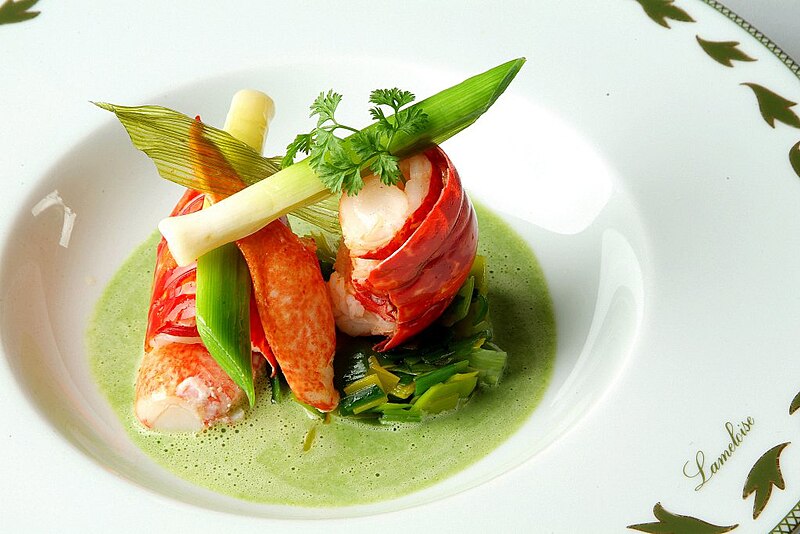
French cuisine
сulinary traditions of France

Rhus
Sumac or sumach ( , )—not to be confused with poison sumac—is any of the roughly 35 species of flowering plants in the genus Rhus (and related genera) of the cashew and mango tree family, Anacardiaceae. However, it is Rhus coriaria that is most commonly used for culinary purposes. Sumac is prized as a spice—especially in Arab cuisine, and other Eastern cuisines—and used as a dye and holistic remedy. The plants grow in subtropical and temperate regions, on nearly every continent except Antarctica and South America.
It holds cultural significance as a symbolic item on the Haft-sin table during N

Satureja
Satureja is a genus of aromatic plants of the family Lamiaceae, related to rosemary and thyme. It is native to southern and southeastern Europe, North Africa, the Middle East, and Central Asia. Historically, Satureja was defined broadly and many species of the subtribe Menthinae from throughout the world were included in it. In the modern cladistic era of botany, Satureja was redefined to a narrower monophyletic genus whose species are all native to Eurasia. Several species are cultivated as culinary herbs called savory, and they have become established in the wild in a few places.

smoothie
thumb|Kiwifruit smoothie

Turkish cuisine
culinary traditions of Turkey

Arak
Middle Eastern distilled spirit

börek
Börek (also burek or byrek) is a family of pastries or pies made in the Middle East and Southeast Europe. The pastry is made of a thin flaky dough such as filo with a variety of fillings, such as meat, cheese, spinach, or potatoes. A börek may be prepared in a large pan and cut into portions after baking, or as individual pastries. They are usually baked but some varieties can be fried. Börek is sometimes sprinkled with sesame or nigella seeds, and it can be served hot or cold.

Greek cuisine
culinary tradition of Greece

Hyssopus officinalis
species of plant

Spanish cuisine
culinary traditions of Spain
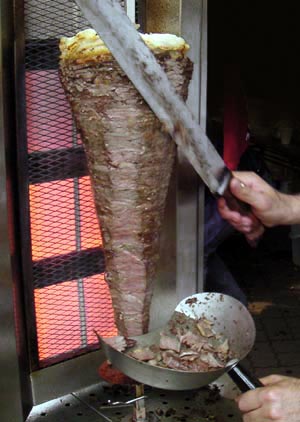
doner kebab
Turkish dish

bulgur
thumb|Coarse bulgur

tajine
thumb|A Portuguese-made tagine pot
A tagine or tajine, also tajin or tagin () is a Maghrebi dish, and the earthenware pot in which it is cooked. It is also called or .
.jpg)
Tabbouleh
Tabbouleh (), also transcribed tabouleh, tabbouli, tabouli, or taboulah, is a Levantine salad of finely chopped parsley, soaked bulgur, tomatoes, mint, and onion, seasoned with olive oil, lemon juice, salt and sweet pepper. Some variations add lettuce, or use semolina instead of bulgur.

gyros
Gyros, sometimes anglicized as a gyro (; , ), is meat cooked on a vertical rotisserie, then sliced and served wrapped or stuffed in pita bread, along with other ingredients such as tomato, onion, fried potatoes, and tzatziki. In Greece and Cyprus, it is normally made with pork or sometimes with chicken, whilst ground beef and lamb are sometimes used in other countries.
mastic
resin obtained from the mastic tree
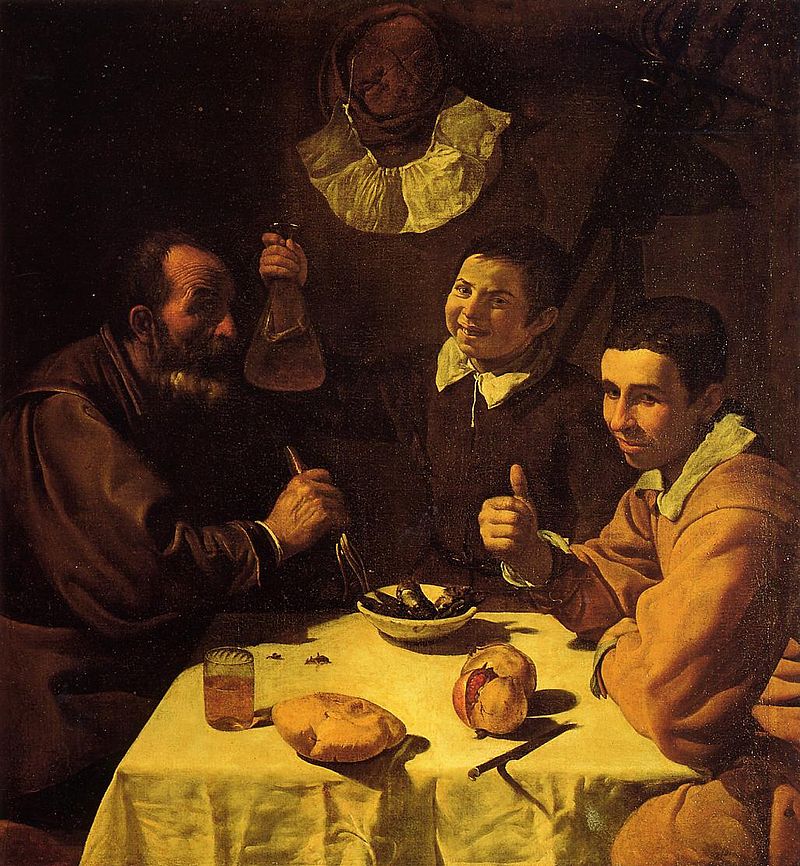
Mediterranean cuisine
culinary traditions of the Mediterranean
sour cream
dairy product produced by fermenting a regular cream with certain kinds of lactic acid bacteria

Arab cuisine
cuisine of the Arabs

Harissa
Harissa (, from Tunisian Arabic) is a hot chili pepper paste, native to Tunisia. Peppers in the country were first grown in the Cape Bon Peninsula, birthplace of the condiment, with Nabeul famous for being the primary center for its production. The main ingredients are roasted red peppers, Baklouti peppers, spices and herbs such as garlic paste, caraway seeds, coriander seeds, cumin and olive oil to carry the oil-soluble flavors.

Egyptian cuisine
culinary traditions of Egypt

Harira
Harira () is a traditional North African soup prepared in Morocco and Algeria, with many variations. Harira is popular as a starter, and is also eaten on its own as a light snack. It is mostly served during Ramadan, although it can be made throughout the year.
Israeli cuisine
culinary traditions of Israel
koshari
Koshary, kushari or koshari ( ) is Egypt's national dish and a widely popular street food. It is a traditional Egyptian staple, mixing pasta, Egyptian fried rice, vermicelli and brown lentils, and topped with chickpeas, a garlicky tomato sauce, garlic vinegar, and crispy fried onions. Sprinklings of garlic vinegar and hot sauce are optional.
Albanian cuisine
culinary traditions of Albania
Middle Eastern cuisine
type of regional cuisine

Maqluba
Maqluba (also attested by a variety of other spellings in English; ) is a traditional Levantine dish, a variety of Pilaf that is popular across Palestine, Jordan, Syria, Lebanon, Israel, and Iraq. It consists of meat, rice, and fried vegetables placed in a pot which is flipped upside down when served, hence the name.
ras el hanout
food spice

za'atar
'''Za'atar' ( ; , ) is a versatile herb blend and family of wild herbs native to the Levant, central to Middle Eastern cuisine and culture. The term refers both to aromatic plants of the Origanum and Thymbra genera (including Origanum syriacum, known as Bible hyssop) and to the prepared spice mixture of dried herbs (traditionally Origanum syriacum''), toasted sesame seeds, sumac, and salt. With roots stretching back to ancient Egypt and classical antiquity, za'atar has been used for millennia as a seasoning, folk remedy, and cultural symbol.
Lebanese cuisine
culinary traditions of Lebanon
Bosnia and Herzegovina cuisine
culinary traditions of Bosnia and Herzegovina
Croatian cuisine
culinary traditions of Croatia
Slovenian cuisine
culinary traditions of Slovenia

Botargo
Bottarga is salted, cured fish roe pouch, typically of the grey mullet or the bluefin tuna (). The best-known version is produced around the Mediterranean; similar foods are the Japanese and Taiwanese , which is softer, and Korean , from mullet or freshwater drum. It has many names and is prepared in various ways. Due to its scarcity and involved preparation it is expensive and regarded as a delicacy.

Gibanica
Gibanica (, ) is a traditional pastry dish popular all over the Balkans. It is usually made with cottage cheese and eggs. Recipes can range from sweet to savoury, and from simple to festive and elaborate multi-layered cakes.
Palestinian cuisine
culinary traditions of Palestine
Balkan cuisine
regional cuisine

thyme
Thyme () is a culinary herb consisting of the dried aerial parts of some members of the genus Thymus of flowering plants in the mint family Lamiaceae. Thymes are native to Eurasia and North Africa. Thymes have culinary, medicinal, and ornamental uses. The species most commonly cultivated and used for culinary purposes is Thymus vulgaris, native to Southeast Europe.
Kurdish cuisine
cuisine of the Kurdish people
Cypriot cuisine
culinary traditions of Cyprus
orange flower water
clear, perfumed distillation of fresh bitter-orange blossoms
Maltese cuisine
culinary traditions of Malta

Pastilla
Pastilla (, also called a bastilla or a North African pie) is a meat or seafood pie in Maghrebi cuisine made with warqa dough (), which is similar to filo. It is a specialty of Morocco, Algeria, and Tunisia, where its variation is known as malsouka. It has more recently been spread by emigrants to France, Israel, and North America.
thumb|Poultry pastilla ornately dusted with powdered sugar and cinnamon
Syrian cuisine
culinary traditions of Syria
Brik
Brik ( ; ) or burek is the North African version of borek, a stuffed malsouka pastry which is commonly deep fried. The best-known version is the Tunisian egg brik, known as Brik à l'œuf; a whole egg in a triangular pastry pocket with chopped onion, tuna, harissa and parsley. With a slightly different shape, but with identical ingredients and method of preparation, the brik is known in Algeria and Libya as bourek (). It is often filled with a raw egg and herbs or tuna, harissa and olives and is sometimes served in a pita. This is also known as a boreeka. It is also widespread in Eastern Algeria