Category
page 1Palestinian cuisine

falafel

couscous
Couscous () is a traditional North African dish of small steamed granules of rolled semolina that is often served with a stew spooned on top. Pearl millet, sorghum, bulgur, and other cereals are sometimes cooked in a similar way in other regions, and the resulting dishes are also sometimes called couscous.

shawarma
Shawarma (; ) is a Middle Eastern dish that originated during the Ottoman Empire, consisting of meat that is cut into thin slices, stacked in an inverted cone, and roasted on a slow-turning vertical spit. Traditionally made with lamb or mutton, it may also be made with chicken, turkey meat, beef, falafel or veal. The surface of the rotisserie meat is routinely shaved off once it cooks and is ready to be served. Shawarma is a popular street food throughout the Arab world, Israel and the Greater Middle East.

semolina
Semolina is a coarse flour traditionally made from durum wheat. Its high protein and gluten content make it especially suitable for pasta.

tandoor
upright=1.2|thumb|Modern ceramic wood-fired tandoors

tehina
Tahini (; , or, in Iraq, ) is a Middle Eastern condiment (a seed butter) made from ground sesame seeds. The most common variety comes from hulled seeds, but unhulled ones can also be used; the latter variety is slightly bitter, but more nutritious. The seeds are more commonly roasted than raw. Tahini can be served by itself (as a dip), made into a salad dressing, or used as a major ingredient in hummus, baba ghanoush, or halva.
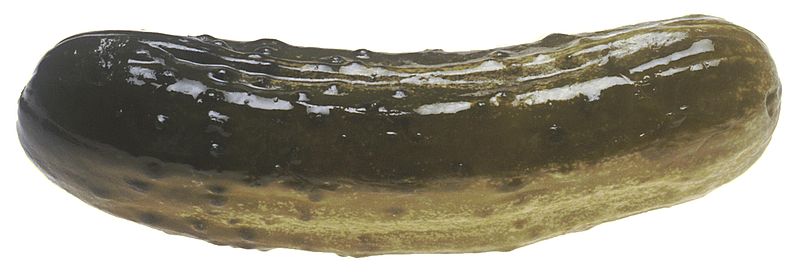
pickled cucumber
cucumber preserved in vinegar

shakshuka
thumb|Individual portion of shakshouka

bulgur
thumb|Coarse bulgur

cabbage roll
dish of cabbage leaves with a filling
.jpg)
Tabbouleh
Tabbouleh (), also transcribed tabouleh, tabbouli, tabouli, or taboulah, is a Levantine salad of finely chopped parsley, soaked bulgur, tomatoes, mint, and onion, seasoned with olive oil, lemon juice, salt and sweet pepper. Some variations add lettuce, or use semolina instead of bulgur.

baba ghanoush
Levantine appetizer consisting of finely chopped roasted eggplant, olive oil, lemon juice, various seasonings, and tahini

kibbeh
Kibbeh (, also kubba and other spellings; ; ) is a popular dish in the Arab world and the Levant in particular, made of spiced lean ground meat and bulgur wheat. Kibbeh is considered to be a national dish of Lebanon and Syria.

Kabsa
Kabsa (), also known as Makboos () or Machboos ( ), is an Arab mixed rice dish that originates from Saudi Arabia or Yemen. It is commonly regarded as a national dish in all the countries of the Gulf Cooperation Council. It can also be found in regions such as southern Iran and Gaza in Palestine.

salep
Salep, also spelled sahlep, salepi or sahlab, is a flour made from the tubers of the orchid genus Orchis (including species Orchis mascula and Orchis militaris). These tubers contain a nutritious, starchy polysaccharide called glucomannan. Salep flour is consumed in beverages and desserts, especially in the cuisines of the former Byzantines and Ottoman, notably in the Levant where it is a traditional winter beverage. An increase in consumption is causing local extinctions of orchids in parts of Greece, Turkey, and Iran.

Maqluba
Maqluba (also attested by a variety of other spellings in English; ) is a traditional Levantine dish, a variety of Pilaf that is popular across Palestine, Jordan, Syria, Lebanon, Israel, and Iraq. It consists of meat, rice, and fried vegetables placed in a pot which is flipped upside down when served, hence the name.

za'atar
'''Za'atar' ( ; , ) is a versatile herb blend and family of wild herbs native to the Levant, central to Middle Eastern cuisine and culture. The term refers both to aromatic plants of the Origanum and Thymbra genera (including Origanum syriacum, known as Bible hyssop) and to the prepared spice mixture of dried herbs (traditionally Origanum syriacum''), toasted sesame seeds, sumac, and salt. With roots stretching back to ancient Egypt and classical antiquity, za'atar has been used for millennia as a seasoning, folk remedy, and cultural symbol.
.jpg)
Kurt
Kashk, kishk, ( Kašk, ), () qurut, qurt, kurut, kurt, qqet, jameed, shilanch (Tuvan and , , , , , Tajik: қурут, ), chortan ( chort’an), aaruul or khuruud (Mongolian: ааруул or хурууд) is a range of dairy products popular in Iranian cuisine, Caucasian cuisine, and Central Asian cuisine. Kashk is made from strained yogurt, drained buttermilk (in particular, drained qatiq) or drained sour milk by shaping it and letting it dry. It can be made in a variety of forms: rolled into balls, sliced into strips, and formed into chunks.
shish kebab
skewered meat dish

Mansaf
Mansaf ( /ˈman.saf/) is a traditional Jordanian dish made of lamb, cooked in a sauce of fermented dried yogurt and served with rice or bulgur.

joshpara
Joshpara is a kind of dumpling popular in Central Asia, South Caucasus and the Middle East. They are made of unleavened wheat dough squares filled with ground meat and condiments.
Palestinian cuisine
culinary traditions of Palestine
mujadara
Mujaddara ( mujaddarah, with alternative spellings in English majadra, mejadra, moujadara, mudardara, and megadarra) is a dish consisting of cooked lentils together with groats, generally rice, and garnished with sautéed onions. It is especially popular in the Levant.

musakhan
Musakhan (), also known as muhammar (), is a Palestinian dish composed of roasted chicken baked with onions, sumac, allspice, saffron, and fried pine nuts served over taboon bread. Originating in the Tulkarm and Jenin area, musakhan is often considered the national dish of Palestine. The dish is particularly popular among Palestinians and Jordanians. It is also eaten by Druze in the Galilee, especially around Iksal and Sandala, and in the Triangle. The dish can be found in Syria, Lebanon and Jordan as well. The dish owes its name to the practice of Palestinian farmers reheating old taboon brea

Mulukhiyah
Mulukhiyah (Arabic: ملوخية, romanized: mulūkhiyyah), also known as mulukhiyya , molokhiyya, melokhiyya, molohiya or ewédú, is a type of jute plant and a dish made from the leaves of Corchorus olitorius, commonly known in English as jute, '''Jew's-mallow, nalta jute, or tossa jute'. It is used as a vegetable and is mainly eaten in Egypt, the Levant (Lebanon, Syria, Palestine, Jordan and Israel), Sudan, Cyprus, Libya, Tunisia, Nigeria, and Algeria. It is called saluyot in the Philippines. Mulukhiyah'' is rather bitter, and when boiled, the resulting liquid is a thick, highly mucilaginous broth;

harees
Harees, haresa, hareesa, arizah, harise, jarish, jareesh, (), harisa (), or korkot () is a dish of boiled, cracked, or coarsely-ground cracked wheat or bulgur, mixed with meat and seasoned. Its consistency varies between a porridge and a gruel. Harees is known throughout Armenia where it is served on Easter, and the Arab world, where it is commonly eaten in Arab states of the Persian Gulf in the month of Ramadan, and in Iraq, Lebanon and Bahrain during Ashura by Shia Muslims.
khubz
Khubz () is the usual word for "bread" in Standard Arabic and in many of the vernaculars. Among the breads popular in Middle Eastern countries are "pocket" pita bread in the Levant and Egypt, and the flat tannur bread in Iraq.
taboon bread
type of bread
freekeh
Freekeh (sometimes spelled frikeh) or farik ( / ALA-LC: farīkah; pronounced free-kah /ˈfɹiːkə/) is a cereal food made from green durum wheat (Triticum turgidum var. durum) that is roasted and rubbed to create its flavour. It is an ancient dish derived from Levantine and North African cuisines, remaining popular in many countries of the eastern Mediterranean Basin, where durum wheat originated.

baharat
thumb|right|100px|A small jar of homemade Gulf-style baharat
Fesikh
Fesikh (, ) is a traditional Egyptian dish. It is consumed primarily, though not exclusively, during the Sham el-Nessim festival, a spring celebration that traces its origins to ancient Egyptian times and is observed as a national holiday in Egypt. Fesikh consists of salted, pickled, fermented and dried gray mullet of the genus Mugil, a saltwater fish that lives in both the Mediterranean and the Red Seas. In western Egypt, whitefish is used as an alternative.
Mandi
Yemeni dish
shish taouk
dish of Levantine cuisine, skewers of marinated chicken pieces

sfiha
Sfiha, esfiha, esfirra, sfija, sfihah, sfeeha or fatay () is a Levantine dish consisting of flatbread cooked with a minced meat topping, often a mix of sheep and veal, and flavored with onions, tomatoes, pine nuts, and spices. It is traditionally found in the countries of the Levant, and is closely related to manakish and lahmacun. Sfiha is particularly associated with Baalbek, a city located in the Beqaa Valley of Lebanon.
Bissara
Bissara () is a dish in Egyptian and Moroccan cuisine. The dish contains split fava beans, onions, garlic, fresh aromatic herbs and spices. All ingredients are slowly cooked and then blended to yield a creamy and fragrant dip or side dish.
date honey
syrup extracted from dates
Jallab
Jallab or jellab () is a type of fruit syrup popular in the Levant made from carob, dates, grape molasses, and rose water.

makdous
thumb|A Syrian meal, with makdous at the lower left of center. Continuing clockwise are a salad, hummus, haloumi and baba ganouj, with pita bread partially visible at the upper right corner.
Makdous ( or sometimes ) is a dish of oil-cured aubergines. Part of Levantine cuisine (Syria, Jordan, Lebanon, and Palestine), they are miniature, tangy eggplants stuffed with walnuts, red pepper, garlic, olive oil, and salt. Sometimes chilli powder is added.

Ka'ak
'''Ka'ak' ( , also transliterated ), is a baked good of varying types produced throughout the Arab world and the Near East. The bread, in Middle Eastern countries, is similar to a dry and hardened biscuit and mostly ring-shaped. A similar pastry called "kue kaak''" is also popular in Indonesia.
Duqqa
Duqqa, dukka, '''du'ah, do'a, or dukkah''' (, , ) is an Egyptian and Middle Eastern condiment consisting of a mixture of herbs, nuts (usually hazelnut), and spices. It is typically used as a dip with bread or fresh vegetables for an hors d'œuvre.
Arab salad
Salad dishes within Arabic cuisine
fatayer
Fatayer (; ; ) are meat pies that can alternatively be stuffed with spinach or cheese such as feta or akkawi. They are part of Arab and Levantine cuisine and are eaten in Lebanon, Syria, Palestine, Jordan, Iraq, Egypt, Fatayer are also popular in Argentina, where they are considered a variety of empanada under the name (singular form ), and in Brazil, where they are known as ("closed sfihas", singular form ).
leblebi
Leblebi (; ; ; ; ; ; ) is a snack made from roasted chickpeas, common and popular in Iran, Palestine, Jordan, Syria, Lebanon, Iraq, Greece, Turkey and Bulgaria and sometimes seasoned with salt, hot spices, dried cloves, or candy coated.

sumaghiyyeh
Sumaghiyyeh () is a Palestinian dish native to Gaza City, prepared traditionally on holidays. It receives its name from the spice sumac. It is a traditional Arab dish, already mentioned in the 11th century, among other dishes by '' in the story Ḥikāyat Abū al-Qāsim''.
kibbeh nayeh
Levantine dish made of raw meat

Fatteh
Fatteh ( meaning crushed or crumbs, also romanized as fette, fetté, fatta or fattah) is a dish eaten in the Arab world consisting of pieces of fresh, toasted, grilled, or fried flatbread covered with other ingredients that vary according to region. It is also some times referred to as shâmiyât ( "Damascene") in the Levant area.
stuffed squash
dish common in the former Ottoman Empire
leben
milk product

Bssisa
thumb|right|Tunisian bsisa of Msaken with grilled wheat, olive oil and dried fruits
Bsisa (, Berber aḍemmin, ), also known as bsissa, is a fine powder made from roasted barley and legumes, typical in North African cuisine, prepared and served either as a paste or drink. It dates back to Pharos times. Its history goes back a long way, and travellers and nomads used to take bsisa with them on their journeys since it was both full of nutritional value and easy to carry in its ground powder form.
Msabbaha
Musabbaḥa (), also known as msabbaḥa, mashausha (), is a runnier variation of hummus made up of whole garbanzo beans and tahini. It is popular in the Levant.
rummaneyye
Rummaniyeh () is an Arab dish made from lentils and pomegranate juice. Its origins date back to at least the 10th century.
galayet bandora
Levantine dish of tomatoes
Tabun oven
clay oven used in the Middle East to make bread
ka'ak al-Quds
Israeli bread
mfarakeh
Mfarakeh (, also spelled mofarakah or mufaraqah also known as batata wa bayd () is an Arab dish made of potato, egg, ghee, cumin powder, salt and pepper, in addition chopped coriander leaf for garnish. This dish is very simple to make for breakfast, lunch or dinner. It is eaten with Arabic bread (Pita) and Arabic tea.
eggplant salad
salad based on eggplant
stuffed dates
Heated dates filled with meat, mint, and parsley
Helbah
Palestinian bread
list of Palestinian dishes
Wikimedia list article