Category
page 3Protein pages needing a picture
diphtheria toxin
exotoxin
matrix metalloproteinases
family of zinc-dependent metalloendopeptidases that is involved in the degradation of the extracellular matrix
interleukin 12
interleukin that is produced by dendritic cells, macrophages, neutrophils, and human B-lymphoblastoid cells in response to antigenic stimulation
sex hormone binding globulin
mammalian protein found in Homo sapiens
nitrate reductase
class of enzymes
Chorionic somatomammotropin hormone 1
mammalian protein found in Homo sapiens
MYC proto-oncogene, bHLH transcription factor
Myc is a family of regulator genes and proto-oncogenes that code for transcription factors. The Myc family consists of three related human genes: c-myc (MYC), l-myc (MYCL), and n-myc (MYCN). c-myc (also sometimes referred to as MYC) was the first gene to be discovered in this family, due to homology with the viral gene v-myc.

beta-galactosidase
β-Galactosidase (EC 3.2.1.23, beta-gal or β-gal; systematic name β-D-galactoside galactohydrolase) is a glycoside hydrolase enzyme that catalyzes hydrolysis of terminal non-reducing β-D-galactose residues in β-D-galactosides. (This enzyme digests many β-Galactosides, not just lactose. It is sometimes loosely referred to as lactase but that name is generally reserved for mammalian digestive enzymes that break down lactose specifically.)
DNA polymerase processivity factor complex
protein complex which is capable of increasing the processivity of nucleotide polymerization by DNA polymerase as a part of DNA replication
Histone H3/CENP-A
one of the five main histone proteins
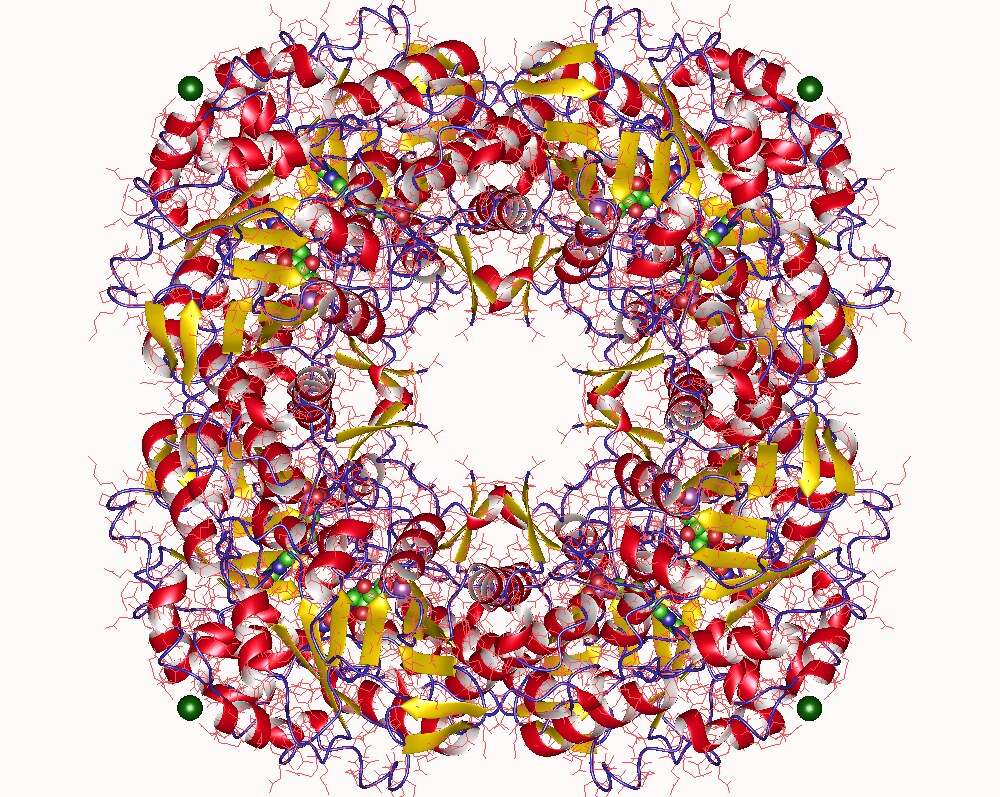
Thermus thermophilus
species of bacterium
peroxisome proliferator-activated receptor
InterPro Family
collagenase
Collagenases are enzymes that break the peptide bonds in collagen. They assist in destroying extracellular structures in the pathogenesis of bacteria such as Clostridium. They are considered a virulence factor, facilitating the spread of gas gangrene. They normally target the connective tissue in muscle cells and other body organs.
opioid peptide
class of peptides that bind to opioid receptors
human interleukin 17
group of proteins
fibrillin
Fibrillin is a glycoprotein, which is essential for the formation of elastic fibers found in connective tissue.
Fibrillin is secreted into the extracellular matrix by fibroblasts and becomes incorporated into the insoluble microfibrils, which appear to provide a scaffold
for deposition of elastin.
hypoxia-inducible factor
family of protein complexes
UOX
pseudogene in the species Homo sapiens
glutenin
Glutenin (a type of glutelin) is a major protein within wheat flour, making up 47% of the total protein content. The glutenins are protein aggregates of high-molecular-mass (HMW) and low-molecular-mass (LMW) subunits with molar masses from about 200,000 to a few million, which are stabilized by intermolecular disulfide bonds, hydrophobic interactions and other forces. Glutenin is responsible for the strength and elasticity of dough.
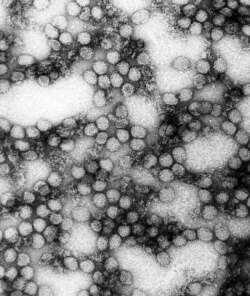
Alphavirus
Alphavirus is a genus of RNA viruses, the sole genus in the Togaviridae family. Alphaviruses belong to group IV of the Baltimore classification of viruses, with a positive-sense, single-stranded RNA genome. There are 32 alphavirus species, which infect various vertebrates such as humans, rodents, fish, birds, and larger mammals such as horses, as well as invertebrates. Alphaviruses that can infect both vertebrates and arthropods are referred to as dual-host alphaviruses, while insect-specific alphaviruses such as Eilat virus and Yada yada virus are restricted to their competent arthropod vecto
Solute carrier family 40 member 1
Ferroportin-1, also known as solute carrier family 40 member 1 (SLC40A1) or iron-regulated transporter 1 (IREG1), is a protein that in humans is encoded by the SLC40A1 gene. Ferroportin is a transmembrane protein that transports iron from the inside of a cell to the outside of the cell. Ferroportin is the only known iron exporter.

phycoerythrin
Phycoerythrin (PE) is a red protein-pigment complex from the light-harvesting phycobiliprotein family, present in cyanobacteria, red algae and cryptophytes, accessory to the main chlorophyll pigments responsible for photosynthesis.The red pigment is due to the prosthetic group, phycoerythrobilin, which gives phycoerythrin its red color.

flagellin
Flagellins are a family of proteins present in flagellated bacteria which arrange themselves in a hollow cylinder to form the filament in a bacterial flagellum. Flagellin has a mass on average of about 40,000 daltons. Flagellins are the principal component of bacterial flagella that have a crucial role in bacterial motility.
glutaminase
Glutaminase (, glutaminase I, L-glutaminase, glutamine aminohydrolase) is an amidohydrolase enzyme that generates glutamate from glutamine. Glutaminase has tissue-specific isoenzymes. Glutaminase has an important role in glial cells.
DNA methyltransferase
class of enzymes
CD1
CD1 (cluster of differentiation 1) is a family of glycoproteins expressed on the surface of various human antigen-presenting cells. CD1 glycoproteins are structurally related to the class I MHC molecules, however, in contrast to MHC class 1 proteins, they present lipids, glycolipids and small molecules antigens, from both endogenous and pathogenic proteins, to T cells and activate an immune response.
ribonucleotide reductase
class of enzymes
Proteinase K
class of enzymes
thyroid hormone receptor
InterPro Family
phosphofructokinase 2
class of enzymes

secreted phosphoprotein 1
Osteopontin (OPN), also known as bone /sialoprotein I (BSP-1 or BNSP), early T-lymphocyte activation (ETA-1), secreted phosphoprotein 1 (SPP1), 2ar and Rickettsia resistance (Ric), is a protein that in humans is encoded by the SPP1 gene (secreted phosphoprotein 1). The murine ortholog is Spp1. Osteopontin is a SIBLING (glycoprotein) that was first identified in 1986 in osteoblasts.
RNA-DNA hybrid ribonuclease
enzyme family that degrades the RNA strand of RNA:DNA hybrids
signal recognition particle
protein-RNA complex facilitating translocation of proteins across membranes
glutamate decarboxylase
class of enzymes
CD3 complex
protein complex and T cell co-receptor

Glycogenin
Glycogenin is an enzyme involved in converting glucose to glycogen. It acts as a primer, by polymerizing the first few glucose molecules, after which other enzymes take over. It is a homodimer of 37-kDa subunits and is classified as a glycosyltransferase.

crystallins
thumb|Crystal structure of Duck Delta 1 Crystallin, based on the Protein Data Bank|PDB file 1HY0.
In anatomy, a crystallin is a water-soluble structural protein found in the lens and the cornea of the eye accounting for the transparency of the structure. It has also been identified in other places such as the heart, and in aggressive breast cancer tumors.
The physical origins of eye lens transparency and its relationship to cataract are an active area of research. Since it has been shown that lens injury may promote nerve regeneration,
crystallin has been an area of neural research. So far, it

ankyrin
Ankyrins are a family of proteins that mediate the attachment of integral membrane proteins to the spectrin-actin based membrane cytoskeleton. Ankyrins have binding sites for the beta subunit of spectrin and at least 12 families of integral membrane proteins. This linkage is required to maintain the integrity of the plasma membranes and to anchor specific ion channels, ion exchangers and ion transporters in the plasma membrane. The name is derived from the Greek word ἄγκυρα (ankyra) for "anchor".
pectinase
Pectinases are a group of enzymes that breaks down pectin, a polysaccharide found in plant cell walls, through hydrolysis, transelimination and deesterification reactions. Commonly referred to as pectic enzymes, they include pectolyase, pectozyme, and polygalacturonase, one of the most studied and widely used commercial pectinases. It is useful because pectin is the jelly-like matrix which helps cement plant cells together and in which other cell wall components, such as cellulose fibrils, are embedded. Therefore, pectinase enzymes are commonly used in processes involving the degradation of pl

Chlorosome
thumb|Schematic of the chlorosome (rod hypothesis)
sericin
Sericin is a protein created by Bombyx mori (silkworms) in the production of silk. Silk is a fibre produced by the silkworm in production of its cocoon. It consists mainly of two proteins, fibroin and sericin. Silk consists of 70–80% fibroin and 20–30% sericin; fibroin being the structural center of the silk, and sericin being the gum coating the fibres and allowing them to stick to each other.
envelope glycoprotein GP120
protein family
Aspartate carbamoyltransferase
InterPro Family
activin and inhibin
regulators of feedback on FSH-production
rho factor
prokaryotic protein

Cell division protein FtsZ
FtsZ is a protein encoded by the ftsZ gene that assembles into a ring at the future site of bacterial cell division (also called the Z ring). FtsZ is a prokaryotic homologue of the eukaryotic protein tubulin. The initials FtsZ mean "Filamenting temperature-sensitive mutant Z." The hypothesis was that cell division mutants of E. coli would grow as filaments due to the inability of the daughter cells to separate from one another. FtsZ is found in almost all bacteria, many archaea, all chloroplasts and some mitochondria, where it is essential for cell division. FtsZ assembles the cytoskeletal sca
Thioredoxin reductase (NADPH)
class of enzymes
Rossmann fold
protein structural motif found in proteins that bind nucleotides
antifreeze proteins
proteins that bind to ice and modify the growth of ice crystals
glutathione S-transferase
class of enzymes
respiratory chain complex I
enzyme of the respiratory chain consisting of several polypeptide chains; L-shaped with a horizontal arm lying in the membrane, and a vertical arm that projects into the cytoplasm of prokaryotes, or the matrix of mitochondria.
NADPH oxidase complex
enzyme complex of which the core is a heterodimer composed of a light (alpha) and heavy (beta) chain, and requires several other water-soluble proteins of cytosolic origin for activity
Galanin and GMAP prepropeptide
Galanin is a neuropeptide encoded by the GAL gene, that is widely expressed in the brain, spinal cord, and gut of humans as well as other mammals. Galanin signaling occurs through three G protein-coupled receptors.
ornithine decarboxylase
class of enzymes
protease inhibitor
compound which inhibits or antagonizes the biosynthesis or actions of proteases (endopeptidases).
protein disulfide-isomerase
class of enzymes
monellin
Monellin, a sweet protein, was discovered in 1969 in the fruit of the West African shrub known as serendipity berry (Dioscoreophyllum cumminsii); it was first reported as a carbohydrate. The protein was named in 1972 after the Monell Chemical Senses Center in Philadelphia, U.S.A., where it was isolated and characterized.
EZR
Ezrin, also known as cytovillin or villin-2, is a protein that in humans is encoded by the EZR gene.
DNA recombination and repair protein RecA
RecA is a 38 kilodalton protein essential for the repair and maintenance of DNA in bacteria. Structural and functional homologs to RecA have been found in all kingdoms of life. RecA serves as an archetype for this class of homologous DNA repair proteins. The homologous protein is called RAD51 in eukaryotes and RadA in archaea.
streptolysin
Streptolysins are two homogenous exotoxins from Streptococcus pyogenes. Types include streptolysin O (SLO; slo), which is oxygen-labile, and streptolysin S (SLS; sagA), which is oxygen-stable.