Category
page 1Soy-based foods

tofu
or bean curd is a food prepared by pressing the curds of coagulated soy milk into solid white blocks of varying softness: silken, soft, firm, and extra (or super) firm.
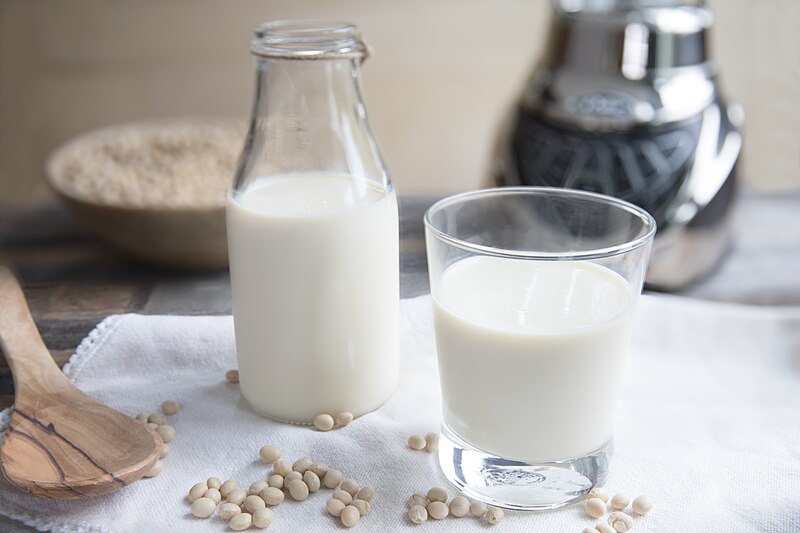
soy milk
beverage made from soybeans

miso soup
Japanese soup flavored with miso
%203.jpg)
Tempeh
thumb|right|Tempeh being sold in a traditional market in Indonesia

soybean oil
oil from the seeds of Glycine max
.jpg)
edamame
is an East Asian dish prepared with immature soybeans in their pods, which are boiled or steamed, and may be served with salt or other condiments. It is consumed in many world regions. Edamame is a common side dish in Chinese cuisine, Japanese cuisine and as an appetizer to alcoholic beverages, such as beer or shōchū. As an ingredient, edamame is used in both sweet and savory dishes, such as takikomi gohan, tempura, and zunda-mochi.
kinako
Kinako ( or "yellow flour") is roasted soybean flour, used in Japanese cuisine. In English, it is usually called "roasted soy flour". Kinako is mostly used as a topping to flavor rice cakes like mochi.
tofu skin
Chinese and Japanese food product made from soybeans
abura-age
is a Japanese food product made from tofu. Thin slices of tofu are deep-fried, and the product can then be split open to form pouches. is often used to wrap , and it is added to miso soup. It is also added to udon noodle dishes, which are called because of legends that foxes () like deep-fried tofu. can also be stuffed, e.g. with , before frying again. There is a thicker variety known as or .
soy pulp
byproduct of tofu production
textured vegetable protein
defatted seed flour product, usually made from soy
agedashi dōfu
Japanese tofu dish
soy sauce chicken
traditional Cantonese dish
soybean meal
ground soybeans used for food
soybean sprout
culinary vegetable
kong-guksu
Kong-guksu () or noodles in cold soybean soup is a seasonal Korean noodle dish served in a cold soy milk broth. It comprises noodles made with wheat flour and soup made from ground soybeans. It is unknown when Korean people started eating kongguksu; however, in accordance with the mention of the dish along with kkaeguksu () in Siui jeonseo, a Joseon-era cookbook published around the late 19th century, it is presumed to have originated at least as early as the 19th century. It is served with salt or sugar depending on the region.
dry-fried beef ho fun
a beef and noodle Cantonese dish
Kongbap
Kongbap () is a Korean dish of white or brown rice cooked together with one or more varieties of soybeans. Kongbap may be made from scratch by combining and cooking together dried rice and soybeans—usually black soybeans. Outside Korea, the word "kongbap" is commercially used in premixed multi-grain packages in dried form. In Korea, multigrain rice consisting of grains other than soybeans is called japgok-bap (mixed cereal rice).
Dougan
thumb|Dougan
thumb|Dougan served at a restaurant in Taipei
Dougan () is a very firm variety of tofu () popular in Chinese cuisine. It differs from regular tofu in that it is firm whereas tofu is soft. It is made from soybeans with added calcium sulfate, and sometimes flavored with salt, soy sauce, and five-spice powder.
injo-gogi-bap
Injo-gogi-bap () is a North Korean dish, made of rice, kimchi, soy bean paste and soy bean oil. It is made by wrapping steamed rice in a light skin made from leftover soybean paste and dressed with a chili sauce. This creates a meat-like texture.
Soy formula
Substitute for human breast milk
Mamenori
, or soybean paper, also referred to as , are thin wrappers used as a substitute for nori in sushi. They are usually made from soybeans, starch such as soy flour, and water, and are frequently colored green, pink, yellow, or other fluorescent shades with turmeric, paprika, spinach, or artificial coloring.
Koya-dofu
thumb|Koya-dofu
Koya-dofu (kōya-dōfu, 高野豆腐 in Japanese) also known as Shimi-dofu, Kori-dofu, or Koyasan-dofu is frozen-dried tofu, a Japanese pantry staple and an important ingredient in Buddhist vegetarian cookery. It originated from Japan. It is made of soy, coagulants, and baking soda. It looks like a hard sponge and needs to be soaked before use. It is mainly used in stews and soups.