Category
page 1Toxicology

barium
Barium is a chemical element; it has symbol Ba and atomic number 56. It is the fifth element in group 2 and is a soft, silvery alkaline earth metal. Because of its high chemical reactivity, barium is never found in nature as a free element.

ammonia

carbon monoxide
chemical compound
%20(6009043040).jpg)
toxicology
thumb|right|255px|A toxicologist working in a lab (United States, 2008)

herbicide
thumb|A field after application of a herbicide
thumb|Weeds controlled with herbicide

cyanide
In chemistry, cyanide () is an inorganic chemical compound that contains a functional group. This group, known as the cyano group, consists of a carbon atom triple-bonded to a nitrogen atom.

toxin
thumb|336x336px|The Amanita muscaria mushroom, an iconic toxic mushroom.

sarin
Sarin (NATO designation GB short for G-series, B) is an extremely toxic organophosphorus compound that has been often used as a chemical weapon due to its extreme potency as a nerve agent.

toxicity
Toxicity is the degree to which a chemical substance or a particular mixture of substances can damage an organism. Toxicity can refer to the effect on a whole organism, such as an animal, bacterium, or plant, as well as the effect on a substructure of the organism, such as a cell (cytotoxicity) or an organ such as the liver (hepatotoxicity). Sometimes the word is more or less synonymous with poisoning in everyday usage.

intoxication
thumb|Visible symptoms of arsenic poisoning following exposure.
Poisoning is the harmful effect which occurs when toxic substances are introduced into the body. The term "poisoning" is a derivative of poison, a term describing any chemical substance that may harm or kill a living organism upon ingestion. Poisoning can be brought on by swallowing, inhaling, injecting or absorbing toxins through the skin. Toxicology is the practice and study of symptoms, mechanisms, diagnoses, and treatments correlated to poisoning.

gas chamber
sealed room into which gas is pumped in, causing death by poisoning or asphyxiation

triiodothyronine
Triiodothyronine, also known as T3, is a thyroid hormone. It affects almost every physiological process in the body, including growth and development, metabolism, body temperature, and heart rate.
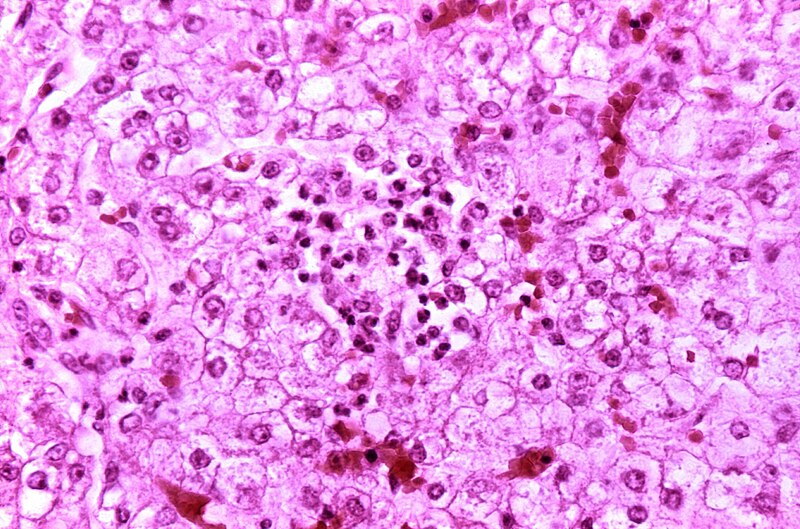
Reye syndrome
syndrome characterized by acute brain damage and liver function problems

gentamicin
Gentamicin is an aminoglycoside antibiotic used to treat several types of bacterial infections. This may include bone infections, endocarditis, pelvic inflammatory disease, meningitis, pneumonia, urinary tract infections, and sepsis among others. It can be given intravenously, by intramuscular injection, or topically. Topical formulations may be used in burns or for infections of the outside of the eye. It is often only used for two days until bacterial cultures determine what specific antibiotics the infection is sensitive to. The dose required should be monitored by blood testing.

cisplatin
Cisplatin is a chemical compound with formula cis-. It is a coordination complex of platinum that is used as a chemotherapy medication used to treat a number of cancers. These include testicular cancer, ovarian cancer, cervical cancer, bladder cancer, head and neck cancer, esophageal cancer, lung cancer, mesothelioma, brain tumors and neuroblastoma. It is given by injection into a vein.
median lethal dose
a measure of the lethal dose of a toxin, radiation, or pathogen required to kill half of a tested population

trichloroethene
Trichloroethylene (TCE, IUPAC name: trichloroethene) is an organochloride with the formula C2HCl3, commonly used as an industrial degreaser. It is a clear, colourless, non-flammable, volatile liquid with a sweet chloroform-like pleasant mild smell and burning sweet taste. Trichloroethylene has been sold under a variety of trade names. Under the trade names Trimar and Trilene, it was used as a volatile anesthetic and as an inhaled obstetrical analgesic. Industrial abbreviations include trichlor, Trike, Tricky and tri. It should not be confused with the similar 1,1,1-trichloroethane, which was c

safety data sheet
standardized data sheet describing a substance or product's hazards and safe handling procedures
dose
quantity of something (chemical, physical, or biological) that may impact an organism biologically

squalene
Squalene is an organic compound. It is a triterpene with the formula C30H50. It is a colourless oil, although impure samples appear yellow. It was originally obtained from shark liver oil (hence its name, as Squalus is a genus of sharks). An estimated 12% of bodily squalene in humans is found in sebum. Squalene has a role in topical skin lubrication and protection.
lethal dose
sufficient amount to kill
cytotoxicity
Cytotoxicity refers to the capacity of a substance or agent to cause damage or death to living cells, reflecting a critical parameter in pharmacology, toxicology, and biomedicine. It is distinct from cytostatic effects, which inhibit cell growth and proliferation without causing cell death. Cytotoxic agents can induce a range of cellular responses, including inhibition of cell growth, induction of apoptotic or necrotic cell death, and disruption of metabolic or structural cellular integrity. Assessing cytotoxicity is fundamental for evaluating the safety and efficacy of pharmaceutical compound

pollutant
thumb|Surface runoff, also called [[nonpoint source pollution, from a farm field in Iowa, the United States during a rainstorm. Topsoil, as well as farm fertilizers and other potential pollutants, runoff unprotected farm fields when heavy rains occur.|400x400px]]
Registration, Evaluation, Authorisation and Restriction of Chemicals
European Union regulation
drug metabolism
biochemical modification of drugs or foreign compounds by living organisms
sodium fluoroacetate
chemical compound
arsenic poisoning
arsenic affecting human life
list of poisonous plants
Wikimedia list article
methanol poisoning
hazardous chemical exposure

hormesis
thumb|Hormesis is a biological phenomenon wherein an organism that is exposed to a known harmful stressor has an adaptive response that may be beneficial to the organism
Hormesis is a two-phased dose-response relationship whereby low-dose exposures have a beneficial effect and high-dose amounts are either inhibitory to function or toxic. Within the hormetic zone, the biological response to low-dose amounts of some stressors is generally favorable. An example is the breathing of oxygen, which is needed in certain concentrations for respiration in aerobic animals. Exposure to elevated levels of
Miracle Mineral Supplement
toxic solution of 28% sodium chlorite in distilled water

hepatotoxicity
{| class="infobox" style="font-size: 88%; text-align: center; width: 22em; line-height: 1.5em"
! Synonyms
|-
|
Drug-induced liver injury (DILI)
Toxin-induced hepatitis
Drug-induced hepatitis
Drug-induced hepatic necrosis
Drug-induced hepatic fibrosis
Drug-induced hepatic granuloma
Toxic liver disease with hepatitis
Toxic liver disease with cholestasisToxic hepatitis
Toxic liver diseaseToxin-induced liver diseaseDrug-induced liver diseaseDrug-induced liver damageHepatogenous poisoning
|}

superantigen
thumb|right|Staphylococcal Enterotoxin B|SEB, a typical bacterial superantigen (PDB:3SEB). The β-grasp domain is shown in red, the β-barrel in green, the "[[disulfide loop" in yellow.]]
thumb|right|SEC3 (yellow) complexed with an MHC class II molecule (green & cyan). The SAgs binds adjacent to the antigen presentation cleft (purple) in the MHC-II.
thumb|Schematic representation of MHC class II.
thumb|The T-cell receptor complex with TCR-α and TCR-β chains, CD3 and ζ-chain accessory molecules.
acceptable daily intake
measure

Toxicofera
Toxicofera (Latin for "toxin-bearers") is a clade of scaled reptiles (squamates) that includes the Serpentes (snakes), Anguimorpha (monitor lizards, beaded lizards, and alligator lizards) and Iguania (iguanas, agamas, and chameleons). Toxicofera contains about 4,600 species (nearly 60%) of extant Squamata. It encompasses all venomous reptile species, as well as numerous related non-venomous species. There is little morphological evidence to support this grouping; however, it has been recovered by all molecular analyses as of 2012.
ototoxicity
Ototoxicity is the property of being toxic to the ear (oto-), specifically the cochlea or auditory nerve and sometimes the vestibular system, for example, as a side effect of a drug. The effects of ototoxicity can be reversible and temporary, or irreversible and permanent.
It has been recognized since the 19th century.
There are many well-known ototoxic drugs used in clinical situations, and they are prescribed, despite the risk of hearing disorders, for very serious health conditions.
Ototoxic drugs include aminoglycoside antibiotics (such as gentamicin, streptomycin, tobramycin), loop diu
Ethylene glycol poisoning
medical condition from too much ethylene glycol
neurotoxicity
Neurotoxicity is a form of toxicity in which a biological, chemical, or physical agent produces an adverse effect on the structure or function of the central and/or peripheral nervous system. It occurs when exposure to a substance – specifically, a neurotoxin or neurotoxicant– alters the normal activity of the nervous system in such a way as to cause permanent or reversible damage to nervous tissue. This can eventually disrupt or even kill neurons, which are cells that transmit and process signals in the brain and other parts of the nervous system. Neurotoxicity can result from organ transplan

chloracne
Chloracne is an acneiform eruption of blackheads, cysts, and pustules associated with exposure to certain halogenated aromatic compounds, such as chlorinated dioxins and dibenzofurans. The lesions are most frequently found on the cheeks, behind the ears, in the armpits and groin region.

toxidrome
{| class="wikitable" style = "float: right; margin-left:15px; text-align:center"
|+ Toxidrome
|-
!Symptoms|| BP || HR || RR || Temp || Pupil size|| Bowel sounds ||Diaphoresis
|-
| anticholinergic || up || up || up || up || up || down || down
|-
| cholinergic || ~ || ~ || ~ || ~ || down || up || up
|-
| hallucinogenic || up || up || up || ~ || up || up || ~
|-
| sympathomimetic || up || up || up || up || up || up || up
|-
| sedative–hypnotic || down || down || down || down || ~ || down || down
|}
A toxidrome (a portmanteau of toxic and syndrome, coined in 1970 by Mofenson and Gree
activated charcoal
medication used to treat ingested poisonings
dose–response relationship
change on an organism caused by differing levels of exposure (or doses) to a stressor after a certain exposure time
Cave of Dogs
cave in Italy
metal poisoning
toxic and harmful effects of certain metals and their compounds to living organisms
bongkrek acid
chemical compound
Phototoxicity
Phototoxicity is a chemically induced skin irritation, requiring light, that does not involve the immune system. It is a type of photosensitivity.

glucuronide
thumb|right|150px|Morphine-6-glucuronide, a major metabolite of [[morphine]]
A glucuronide, also known as glucuronoside, is any substance produced by linking glucuronic acid to another substance via a glycosidic bond. The glucuronides belong to the glycosides.

Tarantism
thumb|Lycosa tarantula carrying her offspring
thermostability
thumb|Crystal structure of β-[[glucosidase from Thermotoga neapolitana (PDB: 5IDI). Thermostable protein, active at 80°C and with unfolding temperature of 101°C.]]

half maximal effective concentration
right|thumb|400px|The tissue response (y-axis) to an agonist, in log concentration (x-axis), in the presence of different antagonist concentrations. The EC50 of the agonist is represented by the x co-ordinate that corresponds with the half-maximum of the leftmost curve. This is denoted by [A]
Half maximal effective concentration (EC50) is a measure of the concentration of a drug, antibody or toxicant which induces a biological response halfway between the baseline and maximum after a specified exposure time. More simply, EC50 can be defined as the concentration required to obtain a 50% [...] e
antimycin A1b
chemical compound
hexazinone
Hexazinone is an organic compound that is used as a broad spectrum herbicide. It is a colorless solid. It exhibits some solubility in water but is highly soluble in most organic solvents except alkanes. A member of the triazine class herbicides, it is manufactured by DuPont and sold under the trade name Velpar.
grape syrup
condiment

nanotoxicology
Nanotoxicology is the study of the toxicity of nanomaterials. Because of quantum size effects and large surface area to volume ratio, nanomaterials have unique properties compared with their larger counterparts that affect their toxicity. Of the possible hazards, inhalation exposure appears to present the most concern, with animal studies showing pulmonary effects such as inflammation, fibrosis, and carcinogenicity for some nanomaterials. Skin contact and ingestion exposure are also a concern.
inert gas asphyxiation
form of asphyxiation which results from breathing a physiologically inert gas with no or low oxygen content
(S)-(+)-bulbocapnine
Bulbocapnine is an alkaloid found in Corydalis (notably the European species C. cava) and Dicentra, genera of the plant family Fumariaceae which have caused (notably the American species Corydalis caseana) the fatal poisoning of sheep and cattle. It has been shown to act as an acetylcholinesterase inhibitor, and inhibits biosynthesis of dopamine via inhibition of the enzyme tyrosine hydroxylase. Like apomorphine, it is reported to be an inhibitor of amyloid beta protein (Aβ) fiber formation, whose presence is a hallmark of Alzheimer's disease (AD). Bulbocapnine is thus a potential therapeutic
xenohormone
Xenohormones or environmental hormones are compounds produced outside of the human body that exhibit endocrine hormone-like properties. They may be either of natural origin, such as phytoestrogens, which are derived from plants, or of synthetic origin. These compounds can cause endocrine disruption by multiple mechanisms including acting directly on hormone receptors, affecting the levels of natural hormones in the body, and by altering the expression of hormone receptors. The most commonly occurring xenohormones are xenoestrogens, which mimic the effects of estrogen. Other xenohormones includ
lithium toxicity
medical condition
furylfuramide
Furylfuramide (also known as AF-2) is a synthetic nitrofuran derivative which was widely used as a food preservative in Japan since at least 1965, but withdrawn from the market in 1974 when it was observed to be mutagenic to bacteria in vitro and thus suspected of carcinogenicity. This was confirmed later when animal testing found it to cause benign and malignant tumors in the mammary glands, stomachs, esophagi, and lungs of rodents of both sexes, although insufficient evidence exists in human exposure.
no observable adverse effect level
denotes the level of exposure of an organism