Category
page 1Zoonotic viral diseases

COVID-19
Coronavirus disease 2019 (COVID-19) is a contagious disease caused by the coronavirus SARS-CoV-2. Starting in January 2020, the disease spread worldwide, resulting in the COVID-19 pandemic. In March 2020, the World Health Organization declared COVID-19 a global health emergency; they declared the end of the emergency in May 2023.

influenza
Influenza, commonly known as the flu, is an infectious disease caused by influenza viruses. Symptoms range from mild to severe and often include fever, runny nose, sore throat, muscle pain, headache, coughing, and fatigue. These symptoms begin one to four (typically two) days after exposure to the virus and last for about two to eight days. Diarrhea and vomiting can occur, particularly in children. Influenza may progress to pneumonia from the virus or a subsequent bacterial infection. Other complications include acute respiratory distress syndrome, meningitis, encephalitis, and worsening of pr

rabies
Rabies is a zoonotic viral disease that causes acute and severe encephalitis in humans and other mammals. It was historically referred to as hydrophobia ("fear of water") because its victims panic when offered liquids to drink. Early symptoms can include fever and abnormal sensations at the site of exposure, which are followed by nausea, vomiting, violent movements, uncontrolled excitement, fear of water, an inability to move parts of the body, confusion, and/or loss of consciousness. Once symptoms appear, the result is virtually always death. The time period between contracting the disease an

Ebola hemorrhagic fever
Ebola, also known as Ebola virus disease (EVD) and Ebola hemorrhagic fever (EHF), is a zoonotic viral hemorrhagic fever in humans and other primates, caused by four of the six known ebolaviruses. Symptoms typically start anywhere between two days and three weeks after infection. The first symptoms are usually fever, sore throat, muscle pain, and headaches. These are usually followed by vomiting, diarrhoea, rash, hepatic and renal dysfunction, at which point some people begin to bleed both internally and externally. The disease causes a mortality rate of anywhere between 25 and 90%, averaging o

SARS-CoV-2
Severe acute respiratory syndrome coronavirus 2 (SARS‑CoV‑2) is a coronavirus that causes COVID-19, the respiratory illness responsible for the COVID-19 pandemic that began in late 2019. The virus previously had the provisional name 2019 novel coronavirus (2019-nCoV), and has also been called human coronavirus 2019 (HCoV-19 or hCoV-19). First identified in the city of Wuhan, Hubei, China, the World Health Organization designated the outbreak a public health emergency of international concern from January 30, 2020, to May 5, 2023. SARS‑CoV‑2 is a positive-sense single-stranded RNA virus that is

HIV
Human immunodeficiency viruses (HIVs) are two species of Lentivirus (a subgroup of retrovirus) that infect humans. Over time, they cause acquired immunodeficiency syndrome (AIDS), a condition in which progressive failure of the immune system allows life-threatening opportunistic infections and cancers to thrive. Without treatment, the average survival time after infection with HIV is estimated to be 9 to 11 years, depending on the HIV subtype.

dengue fever
tropical disease caused by the dengue virus, transmitted by mosquito
avian influenza
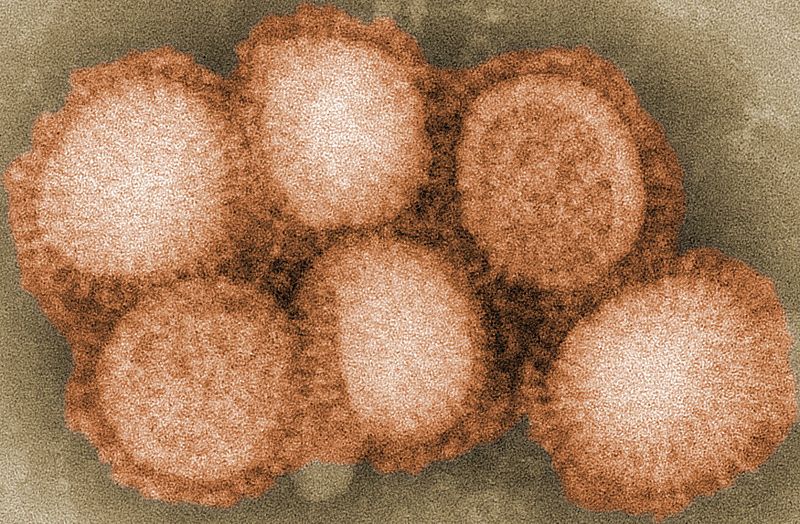
influenza caused by viruses adapted to birds

swine influenza
infection caused by any one of several types of swine influenza viruses
yellow fever
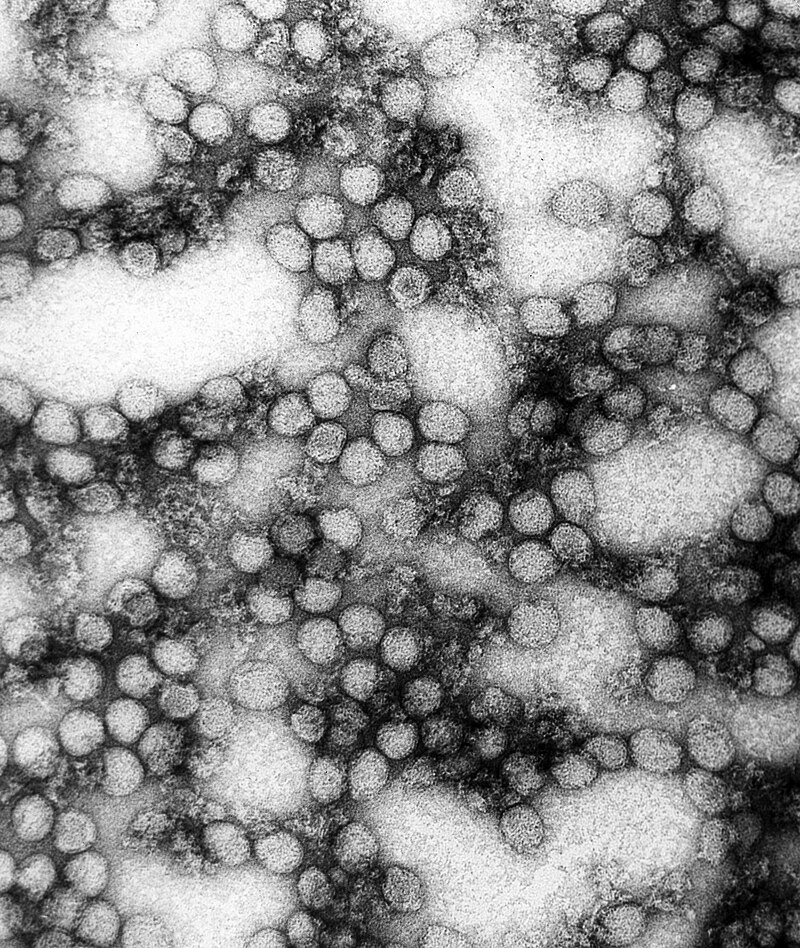
viral disease

chikungunya
Chikungunya is an infection caused by the chikungunya virus. The most common symptoms are fever and joint pain, typically occurring four to eight days after the bite of an infected mosquito. The pain has been described as "excruciating"; however some people may be infected without showing any symptoms. Other symptoms may include headache, muscle pain, joint swelling, and a rash. Symptoms usually improve within a week; however, occasionally the joint pain may last for months or years. The very young, old, and those with other health problems are at risk of more severe disease.

Rift Valley fever
human disease
Nipah virus
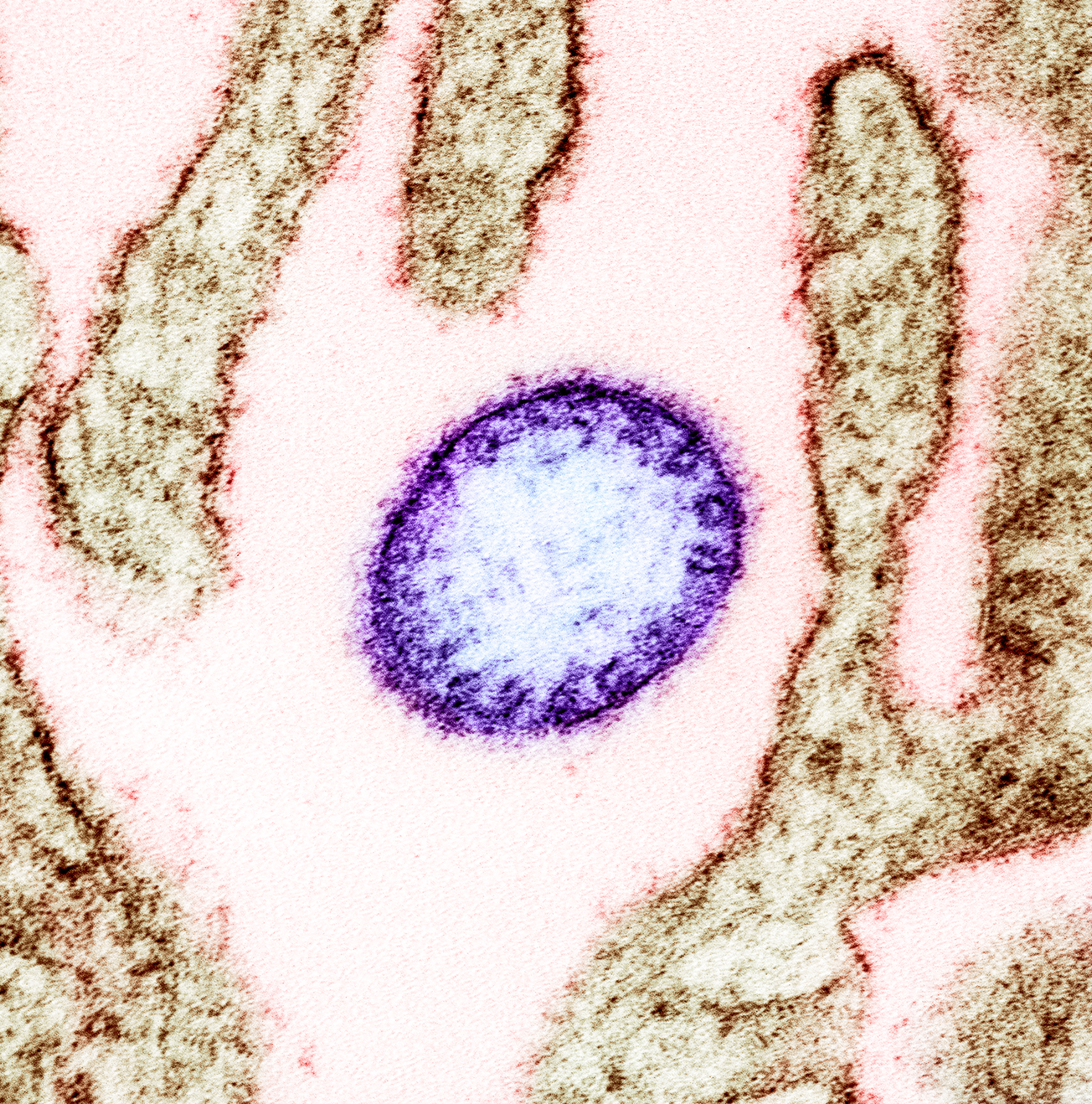
Nipah virus is a bat-borne, zoonotic virus that causes Nipah virus infection in humans and other animals, a disease with a very high case fatality rate (40–75%). Numerous disease outbreaks caused by the Nipah virus have occurred in India, Malaysia, and Singapore. Nipah virus belongs to the genus Henipavirus along with the Hendra virus, which has also caused disease outbreaks.
hepatitis E
an inflammation of the liver caused by infection with the hepatitis E virus
Nipah virus infection
disease caused by Nipah virus

Middle East respiratory syndrome coronavirus
species of virus

West Nile virus
species of virus
West Nile fever
human disease
.png)
Middle East respiratory syndrome
Middle East respiratory syndrome (MERS) is a viral respiratory infection caused by Middle East respiratory syndrome–related coronavirus (MERS-CoV). Symptoms may range from none, to mild, to severe depending on age and risk level. Typical symptoms include fever, cough, diarrhea, and shortness of breath. The disease is typically more severe in those with other health problems.
Lassa fever
viral disease

influenza A virus
species of virus
Filoviridae
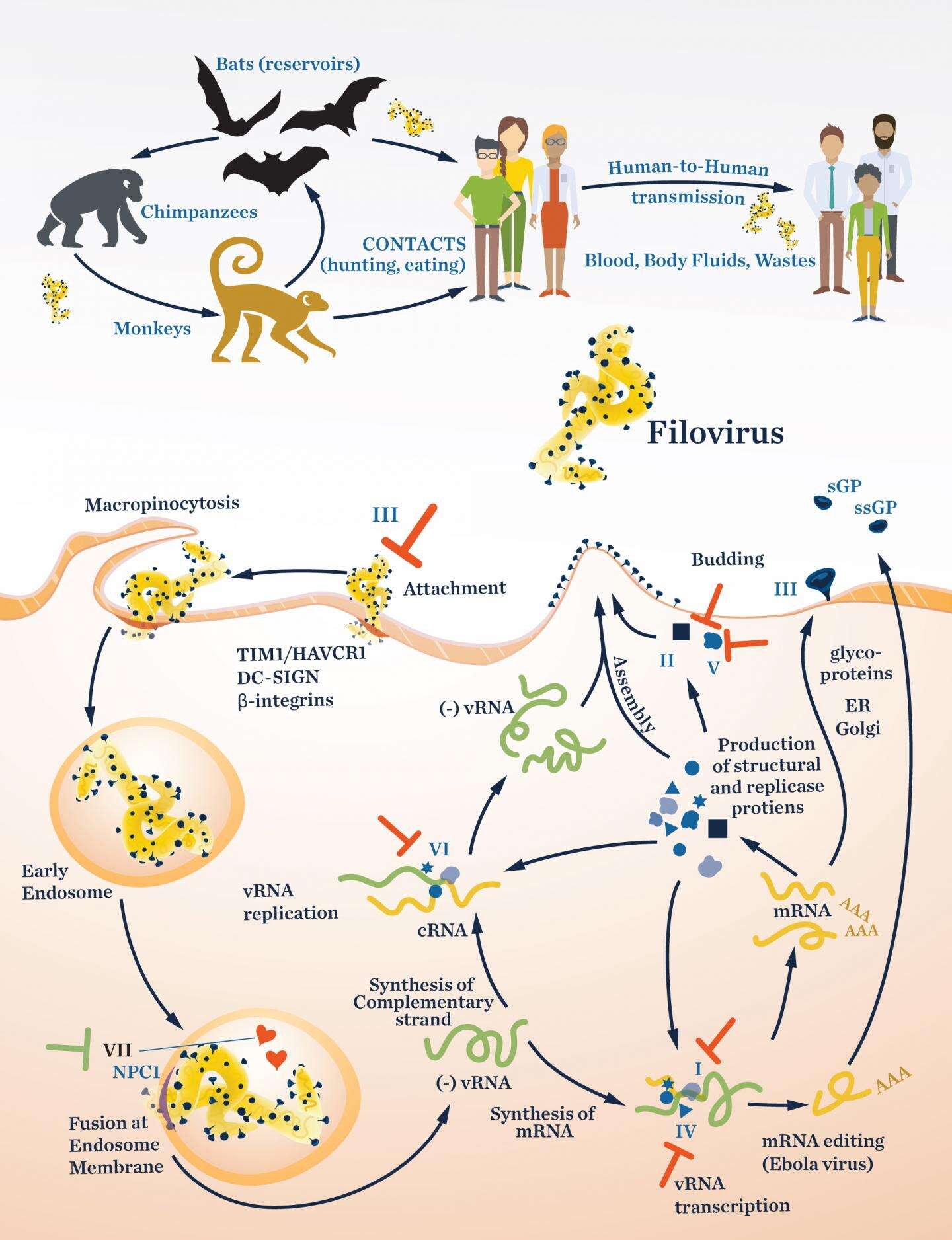
Filoviridae () is a family of single-stranded negative-sense RNA viruses in the order Mononegavirales. Two members of the family that are commonly known are Ebola virus and Marburg virus. Both viruses, and some of their lesser known relatives, cause severe disease in humans and nonhuman primates in the form of viral hemorrhagic fevers.

Ebolavirus
thumb|Phylogenetic tree comparing ebolaviruses and marburgviruses. Numbers indicate percent confidence of branches.
.png)
cowpox
Cowpox is an infectious disease caused by Cowpox virus (CPXV). It presents with large blisters in the skin, a fever and swollen glands, historically typically following contact with an infected cow, though in the last several decades more often (though overall rarely) from infected cats. The hands and face are most frequently affected and the spots are generally very painful.
Marburg virus disease
human disease

Mononegavirales
Mononegavirales is an order of negative-strand RNA viruses which have nonsegmented genomes. Some members that cause human disease in this order include Ebola virus, human respiratory syncytial virus, measles virus, mumps virus, Nipah virus, and rabies virus. Important pathogens of nonhuman animals and plants are also in the group. The order includes eleven virus families: Artoviridae, Bornaviridae, Filoviridae, Lispiviridae, Mymonaviridae, Nyamiviridae, Paramyxoviridae, Pneumoviridae, Rhabdoviridae, Sunviridae, and Xinmoviridae.
Marburg virus
virus in the species Marburg marburgvirus
coronavirus disease
diseases caused by coronaviruses
Langya henipavirus
species of virus

Zaire ebolavirus
species within the genus Ebolavirus
Lassa mammarenavirus
species of virus
hantavirus pulmonary syndrome
human disease

Hendra virus
species of virus
Marburgvirus
The genus Marburgvirus is the taxonomic home of Marburg marburgvirus, whose members are the two known marburgviruses, Marburg virus (MARV) and Ravn virus (RAVV). Both viruses cause Marburg virus disease in humans and nonhuman primates, a form of viral hemorrhagic fever. Both are select agents, World Health Organization Risk Group 4 Pathogens (requiring Biosafety Level 4-equivalent containment), National Institutes of Health/National Institute of Allergy and Infectious Diseases Category A Priority Pathogens, Centers for Disease Control and Prevention Category A Bioterrorism Agents, and are list
Oropouche fever
Human disease
lymphocytic choriomeningitis
rodent-borne viral infectious disease that presents as aseptic meningitis, encephalitis or meningoencephalitis
Borna disease
horse disease

louping ill
animal disease
Puumala orthohantavirus
human virus discovered in 1980
Colorado tick fever
human disease
RaTG13
Bat coronavirus RaTG13 is a SARS-like betacoronavirus identified in the droppings of the horseshoe bat Rhinolophus affinis. It was discovered in 2013 in bat droppings from a mining cave near the town of Tongguan in Mojiang county in Yunnan, China. In February 2020, it was identified as the closest known relative of SARS-CoV-2, the virus that causes COVID-19, sharing 96.1% nucleotide identity. However, in 2022, scientists found three closer matches in bats found 530 km south, in Feuang, Laos, designated as BANAL-52 (96.8% identity), BANAL-103 and BANAL-236.
Reston virus
species of virus
SFTS virus
species of virus
Thogotovirus
Thogotovirus is a genus of enveloped RNA viruses in the virus family Orthomyxoviridae. Their single-stranded, negative-sense RNA genome has six or seven segments. Thogotoviruses are distinguished from most other orthomyxoviruses by being arboviruses – viruses that are transmitted by arthropods, in this case usually ticks. Thogotoviruses can replicate in both tick cells and vertebrate cells; one subtype has also been isolated from mosquitoes. A consequence of being transmitted by blood-sucking vectors is that the virus must spread systemically in the vertebrate host – unlike influenza viruses,
Lyssavirus australis
species of virus
emergent virus
virus that is newly evolved or rapidly increasing in incidence or range
Ravn virus
virus that causes hemorrhagic fever
severe fever with thrombocytopenia syndrome
medical condition
Bat SARS-like coronavirus WIV1
species of virus
Mojiang henipavirus
species of virus
Lujo virus
species of virus
Dobrava-Belgrade orthohantavirus
Viral disease
La Crosse encephalitis
Human disease
California encephalitis virus
species of virus
Sudan ebolavirus
species of virus
Chandipura vesiculovirus
species of virus
Tai Forest ebolavirus
species of virus
bovine papular stomatitis
animal disase
Lloviu viruses
taxon containing Lloviu cuevavirus