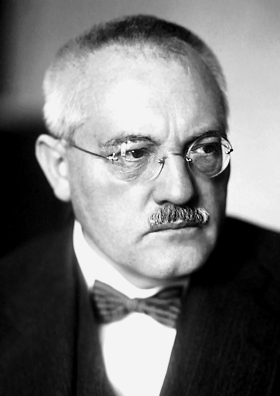
File:Carl_Bosch.jpg · Wikimedia Commons · See Wikimedia Commons
Carl Bosch
Sign in to saveGerman chemical engineer (1874–1940)
OverviewAI-generated
Carl Bosch was a German chemist, inventor, academic, and engineer born in Cologne in 1874 and died in Heidelberg in 1940. He worked for BASF and IG Farben, holding the position of Geheimrat. His professional interests centered on chemistry, and he was educated at Technische Universität Berlin and Leipzig University.
Bosch received the Nobel Prize in Chemistry, as well as the Werner von Siemens Ring, Goethe Prize of the City of Frankfurt, and Wilhelm Exner Medal. He was a member of the Royal Prussian Academy of Sciences, German Academy of Sciences Leopoldina, Heidelberg Academy of Sciences and Humanities, and Royal Swedish Academy of Sciences. He is recognized in the Nobel Laureates, Nobel Chemistry, and National Inventors Hall Of Fame collections.
Synthesized by Vinony from 30 facts across 4 sources: Wikidata, Open Library, Nobel Prize, Vinony collections. Generated from structured data (not the Wikipedia text) and checked against those facts — may still contain errors.
Person · Open Library
- Born
- 1874
- Works
- 3
Top works
- Charles C. Scalione, appellant vs. Carl Bosch and Heinrich Heimann
- Untersuchung von Elektronenzählrohren
- Über die Kondensation von Dinatriumacetondicarbonsäurediäthylester mit Bromacetophenon
- Handelspolitische Notwendigkeiten
via Open Library + Wikidata
Nobel Prize
- The Nobel Prize in Chemistry1931
“in recognition of their contributions to the invention and development of chemical high pressure methods”
Shared · 1/2 portion
Wikidata facts
- Instance of
- human
- Given name
- Carl
- Family name
- Bosch
- Gender
- male
- Citizenship
- German Reich
- Place of birth
- Cologne
- Place of death
- Heidelberg
- Position held
- Geheimrat
- Educated at
- Leipzig University
- Employer
- IG Farben
- Languages spoken
- German
- Field of work
- chemistry
- Image
- Carl Bosch.jpg
Show 10 more facts
- Commons category
- Carl Bosch
- date of birth
- 1874-08-27
- date of death
- 1940-04-26
- member of
- Royal Swedish Academy of Sciences
- nominated for
- Nobel Prize in Chemistry
- name in native language
- Carl Bosch
- ethnic group
- Germans
- on focus list of Wikimedia project
- Wikipedia:Vital articles/Level/4
- interested in
- chemistry
- maintained by WikiProject
- WikiProject Biography
via Wikidata · CC0
~9 min read
Encyclopedic overview
Carl Bosch ( German pronunciation: [kaʁl ˈbɔʃ] ; 27 August 1874 – 26 April 1940) was a German chemist and engineer and Nobel Laureate in Chemistry. He was a pioneer in the field of high-pressure industrial chemistry and founder of IG Farben, at one point the world's largest chemical company.
He also developed the Haber–Bosch process, important for the large-scale synthesis of fertilizers and explosives. It is estimated that one-third of annual global food production uses ammonia from the Haber–Bosch process, and that this supports nearly half of the world's population. In addition, he co-developed the so-called Bosch-Meiser process for the industrial production of urea.
Excerpted from Wikipedia’s “Carl Bosch” article, available under the CC BY-SA 4.0 licence.
Gallery (5)
On the map
Available in 71 languages
- Español
- Français
- Deutsch
- 中文
- 日本語
- Русский
- Português
- Italiano
- العربية
- Afrikaans
- Albanian
- Armenian
- Asturian
- azb
- Bahasa Indonesia
- Bangla
- Basque
- Belarusian
Show 52 more
- Bulgarian
- Catalan
- Croatian
- Czech
- Danish
- Egyptian Arabic
- Esperanto
- Estonian
- Finnish
- Galician
- Georgian
- Hakka Chinese
- Hebrew
- Hungarian
- Ido
- Irish
- Kannada
- Latin
- Latvian
- Lithuanian
- Malagasy
- Malay
- Maltese
- Mazanderani
- Mingrelian
- Nederlands
- Norwegian
- Occitan
- Polski
- Romanian
- Scottish Gaelic
- Serbian
- Serbian (Latin)
- simple
- Slovak
- Slovenian
- Svenska
- Swahili
- Tatar
- Tiếng Việt
- Türkçe
- Ukrainian
- Urdu
- Uzbek
- Waray
- Western Panjabi
- Wu Chinese
- Yoruba
- zh_min_nan
- zh_yue
- فارسی
- 한국어
via Wikidata sitelinks · CC0