Image from GBIF · CC BY
Evernia prunastri
Sign in to saveAlso known as oakmoss
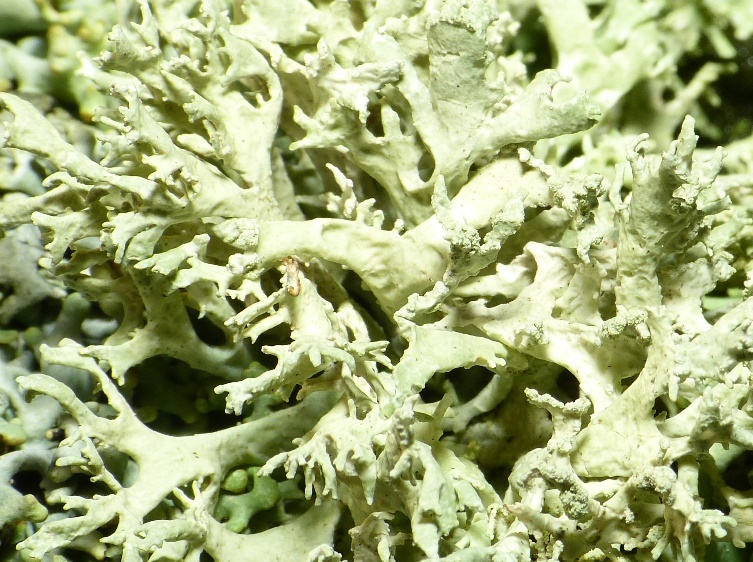
Oakmoss (scientific name Evernia prunastri) is a species of lichen. It can be found in many mountainous temperate forests throughout the Northern Hemisphere. Oakmoss grows primarily on the trunk and branches of oak trees, but is also commonly found on the bark of other deciduous trees and conifers such as fir and pine. The thalli of oakmoss are short and bushy, and grow together on bark to form large clumps. Oakmoss thallus is flat and strap-like. They are also highly branched, resembling the form of antlers. The colour of oakmoss ranges from green to a greenish-white when dry, and dark olive-
Species
bleiktjafs
SPECIES
- KingdomFungi
- PhylumAscomycota
- ClassLecanoromycetes
- OrderLecanorales
- FamilyParmeliaceae
Evernia prunastri ist eine Flechtenart aus der Gattung Evernia in der Familie der Parmeliaceae. Die Art ist auch als Eichenmoos bekannt. Inhaltsverzeichnis 1 Beschreibung 2 Standort 3 Besonderheiten 4 Literatur 5 Weblinks 6 Anmerkungen Beschreibung Evernia prunastri ist eine Strauchflechte. Sie wird bis zu 10 cm groß. Ihr kurzstrauchiger, mehr oder weniger reich verzweigter und kurz hängender und abstehender Thallus besteht aus (1–) 2–3 (–5) Millimeter breiten, weichen, oberseits grau- bis gelbgrünen und unterseits weißlichen, dort stellenweise grünlich gefleckten, schwach rinnigen bis runzeligen, strauchig verzweigten Bändern. An den Rändern brechen diese mehlig-körnig auf (Sorale). Apothecien (mit glänzend brauner Scheibe) werden selten gebildet.[1] Evernia prunastri var. prunastri enthält Usninsäure, Evernsäure und Atranorin. Evernia prunastri var. herinii (Duv.) Maas G. unterscheidet sich durch oberseits blaugrünliche Töne und das Fehlen von Usninsäure.[1] Standort In Europa ist sie vom nördlichen Fennoskandien bis in den Mittelmeerraum bis zur Waldgrenze häufig auf saurer Rinde (Stamm und Äste) von Laub- und Nadelbäumen, besonders Eichen (Quercus), anzutreffen. An windoffenen
via GBIF
Museum specimens
- Specimen records
- 6,744
- With media
- 3,204
- Family
- Parmeliaceae
- Collections
- LSU, YPM, US, CHSC, DAV, ASU
- Recorded in
- United States, France, Netherlands, Spain, Germany, Belgium
Wikidata facts
Show 6 more facts
- taxon rank
- species
- taxon name
- Evernia prunastri
- Commons category
- Evernia prunastri
- Commons gallery
- Evernia prunastri
- taxon common name
- valkohankajäkälä
- short name
- E. prunastri
via Wikidata · CC0
~4 min read
Encyclopedic overview
9 sectionsContents
- Description
- Similar species
- Commercial uses
- Health and safety information
- Ecology and Habitat
- Conservation status
- Gallery
- See also
- References
Oakmoss (scientific name Evernia prunastri) is a species of lichen. It can be found in many mountainous temperate forests throughout the Northern Hemisphere. Oakmoss grows primarily on the trunk and branches of oak trees, but is also commonly found on the bark of other deciduous trees and conifers such as fir and pine. The thalli of oakmoss are short and bushy, and grow together on bark to form large clumps. Oakmoss thallus is flat and strap-like. They are also highly branched, resembling the form of antlers. The colour of oakmoss ranges from green to a greenish-white when dry, and dark olive-green to yellow-green when wet. The texture of the thalli is rough when dry and rubbery when wet. It is used extensively in modern perfumery.
== Description == Thallus fruticose or technically foliose (by virtue of having differentiated upper and lower surfaces), erect or drooping, to 7(13) cm long, dichotomously branched; branches flattened, 1–5(10) mm wide, ± flaccid; upper surface greenish or yellowish green; lower surface whitish; soredia present (though soredia occasionally very sparse); apothecia not seen.
Excerpted from Wikipedia’s “Evernia prunastri” article, available under the CC BY-SA 4.0 licence.