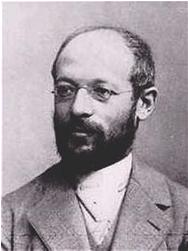
File:Simmel_01.JPG · Wikimedia Commons · See Wikimedia Commons
Georg Simmel
Sign in to saveGerman sociologist, philosopher, and critic (1858–1918)
Georg Simmel was a German sociologist and philosopher who lived from 1858 to 1918 and made important contributions to understanding how people interact in society. His work matters because he developed new ways of thinking about social relationships and group dynamics that helped shape modern sociology as an academic field.
AI-generated from the Wikipedia summary — may contain errors.
Wikidata facts
- Instance of
- human
- Given name
- Georg
- Gender
- male
- Citizenship
- Kingdom of Prussia
- Place of birth
- Berlin
- Place of death
- Strasbourg
- Occupation
- university teacher
- Educated at
- Humboldt-Universität zu Berlin
- Employer
- Humboldt-Universität zu Berlin
- Languages spoken
- German
- Native language
- German
- Religion
- atheism
- Notable work
- The Philosophy of Money
- Field of work
- sociology of religion
- Movement
- Neo-Kantianism
- Image
- Simmel 01.JPG
Show 13 more facts
- unmarried partner
- Gertrud Kantorowicz
- Commons category
- Georg Simmel
- date of death
- 1918-00-00
- date of birth
- 1858-00-00
- Commons gallery
- Georg Simmel
- name in native language
- Georg Simmell
- influenced by
- Max Weber
- cause of death
- liver cancer
- student
- Karl Mannheim
- writing language
- German
- Commons Creator page
- Georg Simmel
- manner of death
- natural causes
- archives at
- Leo Baeck Institute
via Wikidata · CC0
~26 min read
Encyclopedic overview
Georg Simmel (/ˈzɪməl/; German: [ˈzɪml̩]; 1 March 1858 – 26 September 1918) was a German sociologist, philosopher, and critic. A founding figure of sociology, his neo-Kantian approach helped establish sociological antipositivism, asking "What is society?" in analogy to Kant's "What is nature?". He pioneered analyses of individuality and social fragmentation.
Simmel discussed social and cultural phenomena in terms of "forms" and "contents" with a transient relationship, wherein form becomes content, and vice versa dependent on context. In this sense, Simmel was a forerunner to structuralist styles of reasoning in the social sciences.
Excerpted from Wikipedia’s “Georg Simmel” article, available under the CC BY-SA 4.0 licence.