同源
Also known as homologous organs
existence of shared ancestry between a pair of structures, or genes, in different taxa
AI overview
Homology is the similarity between structures or genes in different species that exists because they inherited them from a common ancestor. It matters because recognizing these shared features helps scientists understand how different species are related to each other and how life evolved over time.
AI-generated from the Wikipedia summary — may contain errors.
Wikidata facts
Show 2 more facts
- Commons category
- Homology
- Commons gallery
- Homology
via Wikidata · CC0
Article · 中文
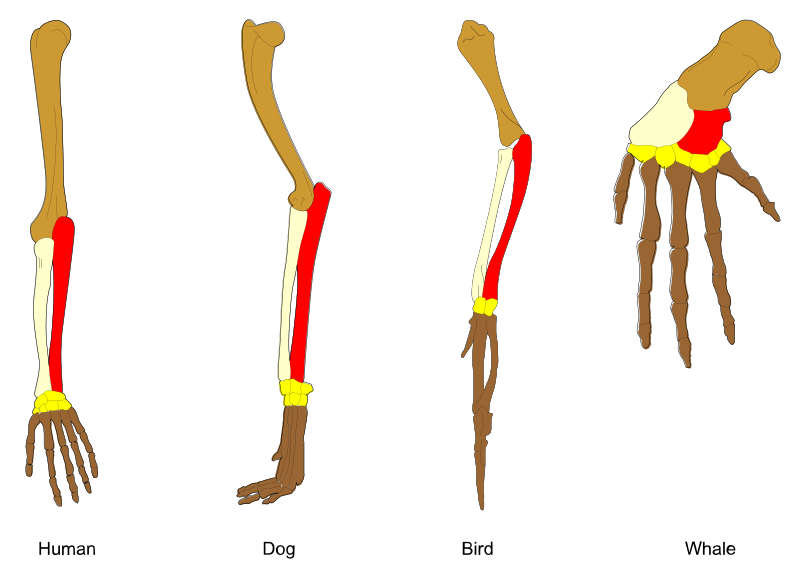
在生物学种系发生理论中,若两个或多个结构具有相同的祖先,则称它们同源(Homology)。这里相同的祖先既可以指演化意义上的祖先,即两个结构由一个共同的祖先演化而来(在这个意义上,蝙蝠的翅膀与人类的手臂是同源的),也可以指发育意义上的祖先,即两个结构由胚胎时期的同一组织发育而来(在这个意义上,人类女性的卵巢与男性的睾丸同源)。 同源这一概念需与相似区分开来。比如说,昆虫的翅膀、蝙蝠的翅膀和鸟类的翅膀是相似的,但却不同源,这种现象被称为(或同形质,英文:Homoplasy)。这些相似的结构由不同的渠道演化而来,这种演化过程叫做趋同演化(Convergency)。
Abstract from DBpedia / Wikipedia · CC BY-SA