Duellman, William E.;Marion, Angela B.;Hedges, Blair
Hyloscirtus
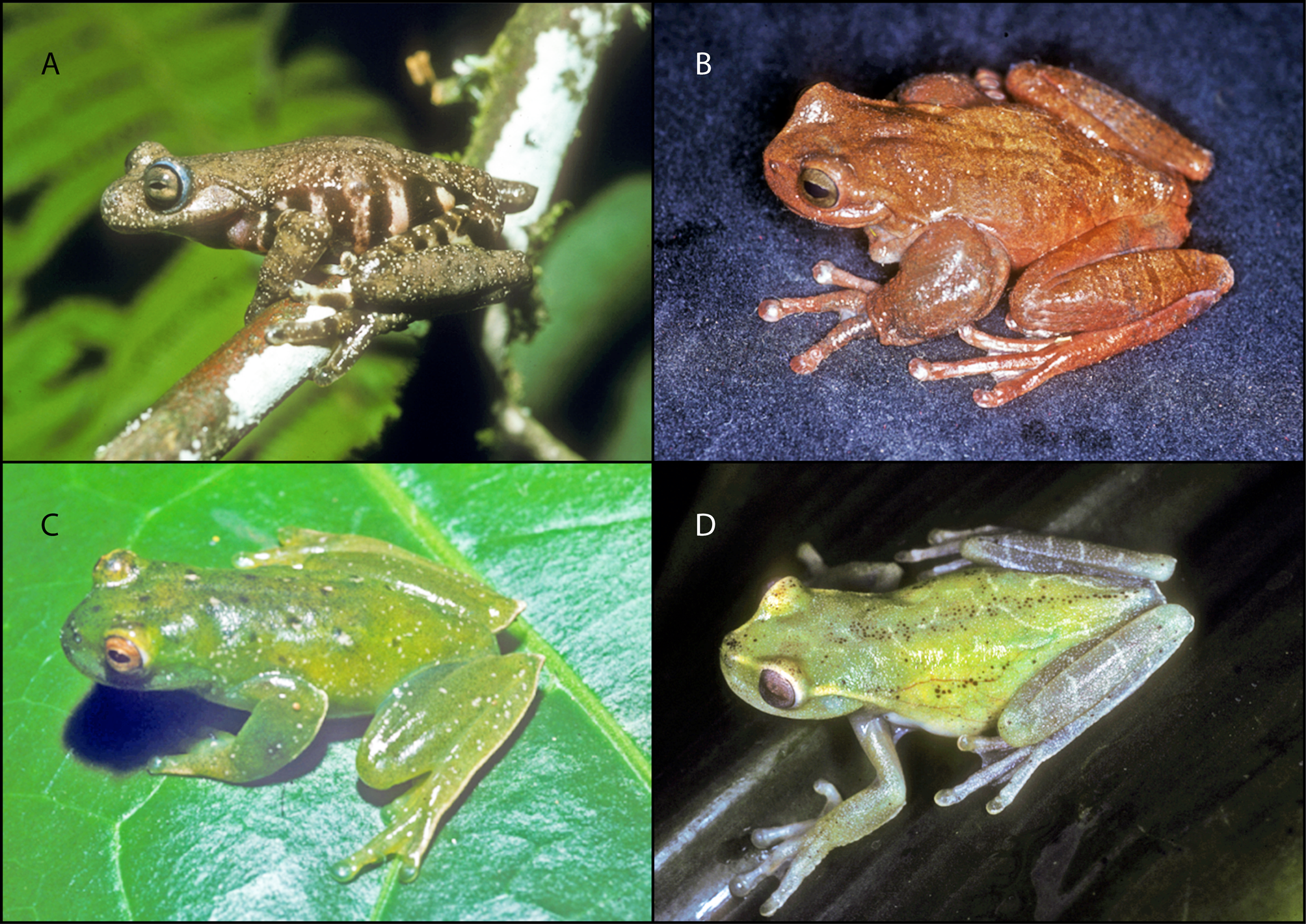
Sign in to saveHyloscirtus is a genus of Neotropical frogs in the family Hylidae. This genus was resurrected in 2005 following a major revision of the Hylidae, with the distinguishing features being 56 transformations in nuclear and mitochondrial proteins and ribosomal genes. Of these species, 28 species, previously placed in the genus Hyla, were moved to this genus. The fingers and toes of these frogs have wide dermal fringes.
Species
GENUS
- KingdomAnimalia
- PhylumChordata
- ClassAmphibia
- OrderAnura
- FamilyHylidae
Herpetologie Hyloscirtus is een geslacht van kikkers uit de familie boomkikkers (Hylidae).[1] De groep werd voor het eerst wetenschappelijk beschreven door Wilhelm Peters in 1882. Later werd de wetenschappelijke naam Hylonomus gebruikt. De soort Hyloscirtus princecharlesi is vernoemd naar Prins Charles. Er zijn negentien soorten, vroeger was het soortenaantal hoger maar veel soorten worden tegenwoordig tot het geslacht Colomascirtus gerekend. Alle soorten komen voor in Midden- en Zuid-Amerika.[2] De soorten komen voor in de landen Bolivia, Colombia, Costa Rica, Ecuador, Peru en Venezuela. Soorten Geslacht Hyloscirtus Soort Hyloscirtus albopunctulatus Soort Hyloscirtus alytolylax Soort Hyloscirtus bogotensis Soort Hyloscirtus callipeza Soort Hyloscirtus colymba Soort Hyloscirtus denticulentus Soort Hyloscirtus diabolus Soort Hyloscirtus estevesi Soort Hyloscirtus jahni Soort Hyloscirtus lascinius Soort Hyloscirtus lynchi Soort Hyloscirtus mashpi Soort Hyloscirtus palmeri Soort Hyloscirtus phyllognathus Soort Hyloscirtus piceigularis Soort Hyloscirtus platydactylus Soort Hyloscirtus sarampiona Soort Hyloscirtus simmonsi Soort Hyloscirtus torrenticola Referenties ↑ Darrel R. Frost - A
via GBIF
Museum specimens
- Specimen records
- 38
- Family
- Hylidae
- Collections
- USNM, UTA
- Recorded in
- Peru, Ecuador
Wikidata facts
- Instance of
- taxon
- Parent taxon
- Cophomantinae
- Image
- Hyloscirtus palmeri.jpg
Show 4 more facts
- Commons category
- Hyloscirtus
- taxon name
- Hyloscirtus
- taxon rank
- genus
- topic's main category
- Category:Hyloscirtus
Sources (1)
via Wikidata · CC0
~1 min read
Encyclopedic overview
2 sectionsContents
- Species
- References
Hyloscirtus is a genus of Neotropical frogs in the family Hylidae. This genus was resurrected in 2005 following a major revision of the Hylidae, with the distinguishing features being 56 transformations in nuclear and mitochondrial proteins and ribosomal genes. Of these species, 28 species, previously placed in the genus Hyla, were moved to this genus. The fingers and toes of these frogs have wide dermal fringes.
They are primarily found in foothill and mountain forests in the Andes, ranging from Bolivia to Venezuela, but a few species occur in adjacent lowlands or páramo, and two (H. colymba and H. palmeri) are found in Panama and Costa Rica. They are typically found near streams where they breed. Several species in this genus are seriously threatened by habitat loss, pollution, introduced species (predation by introduced trout), and the chytrid fungus Batrachochytrium dendrobatidis.
Excerpted from Wikipedia’s “Hyloscirtus” article, available under the CC BY-SA 4.0 licence.