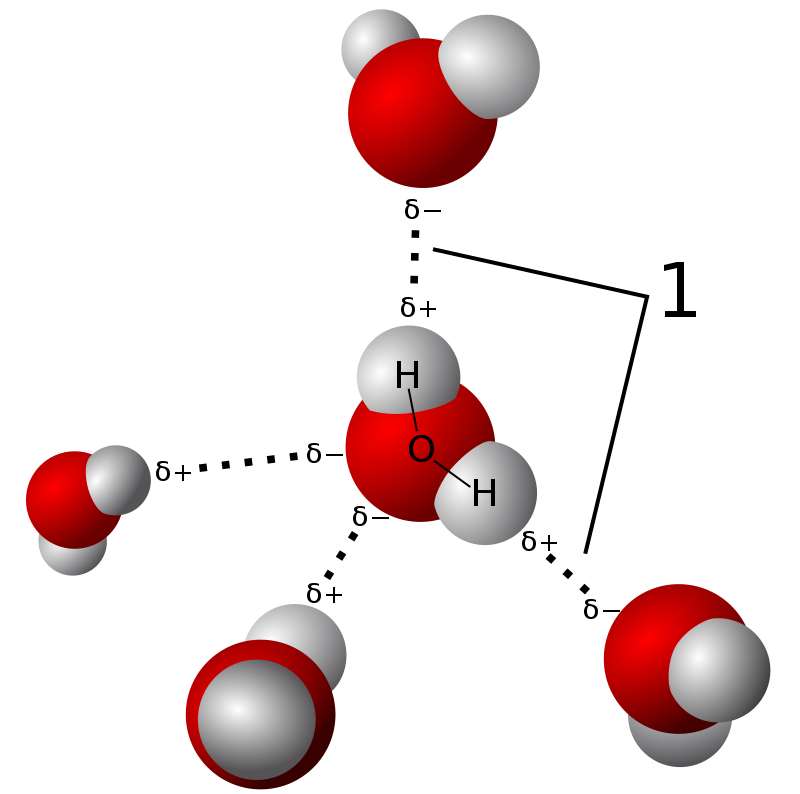
File:3D_model_hydrogen_bonds_in_water.svg · Wikimedia Commons · See Wikimedia Commons
intermolecular force
Sign in to saveAlso known as IMFs, intermolecular forces, physical bonds, secondary bonds
forces of attraction or repulsion which act between neighboring particles
Wikidata facts
- Subclass of
- force
- Has part
- Van der Waals' force
Show 4 more facts
- opposite of
- intramolecular force
- topic's main category
- Category:Intermolecular forces
- Commons category
- Intermolecular forces
- on focus list of Wikimedia project
- Wikipedia:Vital articles/Level/4
Sources (2)
via Wikidata · CC0
~18 min read
Encyclopedic overview
3D model of hydrogen bonding between water molecules, an example of intermolecular force
An intermolecular force (IMF; also secondary force) is the force that mediates interaction between molecules, including the electromagnetic forces of attraction or repulsion which act between atoms and other types of neighbouring particles (e.g. atoms or ions). Intermolecular forces are weak relative to intramolecular forces – the forces which hold a molecule together. For example, the covalent bond, involving sharing electron pairs between atoms, is much stronger than the forces present between neighboring molecules. Both sets of forces are essential parts of force fields frequently used in molecular mechanics.
Excerpted from Wikipedia’s “intermolecular force” article, available under the CC BY-SA 4.0 licence.