Category
page 1Chemical bonding

chemical bond
lasting attraction between atoms that enables the formation of chemical compounds
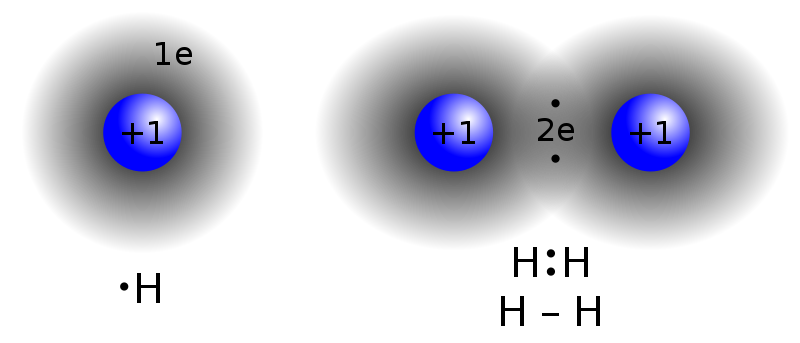
covalent bond
chemical bond that involves the sharing of electron pairs between atoms

ionic bond
chemical bond involving electron transfer

electronegativity
thumb|alt=A water molecule is put into a see-through egg shape, which is color-coded by electrostatic potential. A concentration of red is near the top of the shape, where the oxygen atom is, and gradually shifts through yellow, green, and then to blue near the lower-right and lower-left corners of the shape where the hydrogen atoms are.|upright=1.5|right|Electrostatic potential map of a water molecule, where the oxygen atom has a more negative charge (red) than the positive (blue) hydrogen atoms
Electronegativity, symbolized as χ, is the tendency for an atom of a given chemical element to att

valence
measure of an element's combining capacity with other atoms when it forms chemical compounds or molecules

Pauli exclusion principle
quantum mechanical principle that two identical fermions cannot occupy the same quantum state simultaneously

radical
atom, molecule, or ion that has an unpaired valence electron; typically highly reactive
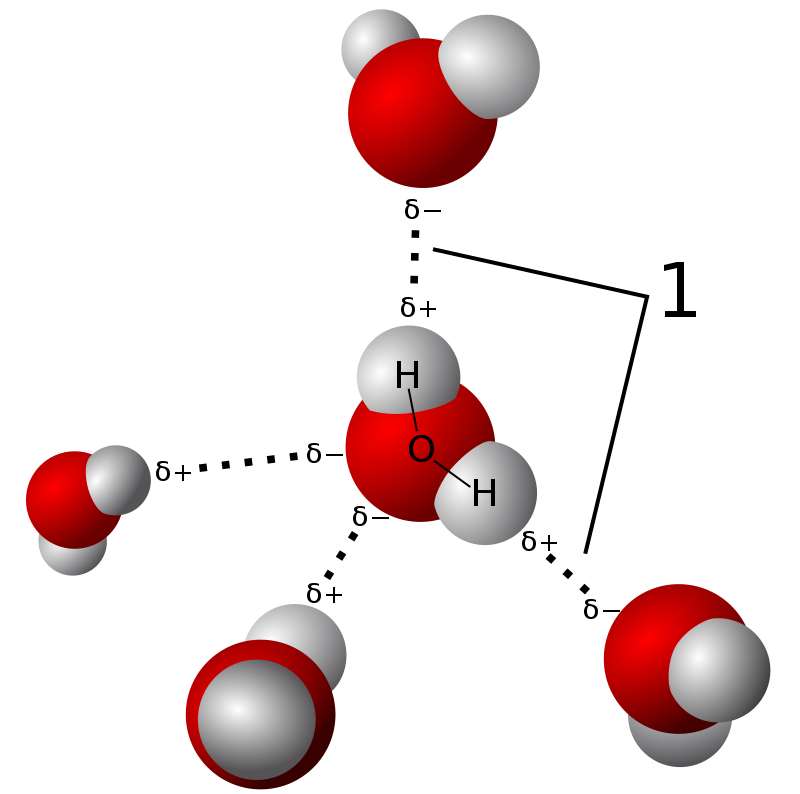
hydrogen bond
form of association between an electronegative atom and a hydrogen atom attached to a second, relatively electronegative atom

atomic orbital
mathematical function describing the location and behavior of an electron within an atom

electron shell
principal energy levels in atomic physics

metallic bond
type of chemical bond in metals, sharing conduction electrons among a lattice of cations

valence electron
outer shell electron that is associated with an atom, and that can participate in the formation of a chemical bond if the outer shell is not closed

covalent radius
measure of the size of an atom that forms part of one covalent bond

peptide bond
covalent chemical bond linking two consecutive amino acid monomers along a peptide or protein chain

octet rule
chemical rule of thumb

orbital hybridization
mixing (superposition) of atomic orbitals in chemistry
intermolecular force
forces of attraction or repulsion which act between neighboring particles

ligand
thumb|200px|Cobalt complex cobalt tetracarbonyl hydride|HCo(CO)4 with five ligands

electron affinity
amount of energy released when an electron is attached to a neutral atom or molecule in the gaseous state to form a negative ion
double bond
chemical bond involving four bonding electrons; has one sigma plus one pi bond
resonance
chemistry term; way of describing bonding in molecules or ions by the combination of several contributing structures into a resonance hybrid in valence bond theory
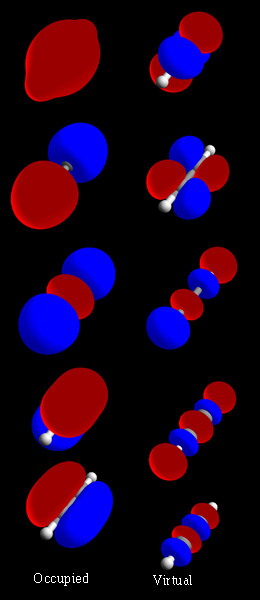
molecular orbital
wave-like behavior of an electron in a molecule

triple bond
chemical bond involving six bonding electrons; one sigma plus two pi bonds

Lewis structure
diagrams for the bonding between atoms of a molecule and lone pairs of electrons

coordinate covalent bond
covalent bond in a coordination complex in which the shared electrons are donated by one of the atoms and also known as dative bond

sigma bond
strongest type of covalent chemical bond; formed by head-on overlapping between atomic orbitals.

molecular orbital theory
method for describing the electronic structure of molecules using quantum mechanics

pi bond
type of covalent chemical bond
coordination number
number of atoms, molecules or ions bonded to in a molecule or crystal
valence bond theory
one of two foundational theories of quantum chemistry
electron pair
two electrons that occupy the same orbital but have opposite spins
glycosidic bond
covalent bond joining a sugar molecule to another group
ligand
substance that forms a complex with a biomolecule
lone pair
pair of valence electrons that are not shared with another atom; concept used in valence shell electron pair repulsion theory (VSEPR theory) which explains the shapes of molecules
Aufbau principle
principle of atomic physics
delocalized electron
electron in a molecule not associated with a single atom or covalent bond
single bond
chemical bond between two atoms involving two valence electrons (atoms share one pair of electrons where the bond forms, therefore, a single bond is a type of covalent bond); usually a sigma bond
London dispersion force
type of force acting between atoms and molecules
Lennard-Jones potential
mathematical model that approximates the interaction between a pair of neutral atoms or molecules
Jahn–Teller effect
mechanism of spontaneous symmetry breaking in molecular and solid-state systems
delta bond
type of chemical bond
inductive effect
local change in the electron density of a molecule due to electron-withdrawing or electron-donating groups elsewhere in the molecule, resulting in a permanent dipole in a bond
crystal field theory
model that describes the breaking of degeneracies of electron orbital states, usually d or f orbitals, due to a static electric field produced by a surrounding charge distribution (anion neighbors)
phi bond
type of chemical bond
Hydrophobic effect
aggregation of non-polar molecules in aqueous solutions
antibonding molecular orbital
type of molecular orbital (MO) that weakens the bond between two atoms and helps to raise the energy of the molecule relative to the separated atom; is normally higher in energy than bonding molecular orbital
carbon–carbon bond
covalent bond between two carbon atoms
formal charge
number of valence electrons of an atom in isolation
quadruple bond
type of chemical bond between two atoms involving eight electrons
linear combination of atomic orbitals
technique in quantum chemistry
effective nuclear charge
Net positive charge experienced by an electron in a polyelectronic atom
lanthanide contraction
decrease of ionic radii across the lanthanide series
18-electron rule
rule used primarily for predicting formulae for stable metal complexes
ring strain
instability in molecules with bonds at unnatural angles
binding site
region on a protein or piece of DNA or RNA to which ligands may form a chemical interaction
carbon–hydrogen bond
covalent bond between carbon and hydrogen
three-center two-electron bond
electron-deficient chemical bond where three atoms share one of two electrons
sextuple bond
a covalent bond involving 12 bonding electrons
stacking
attractive, noncovalent interactions between aromatic rings
ligand field theory
molecular orbital theory applied to transition metal complexes