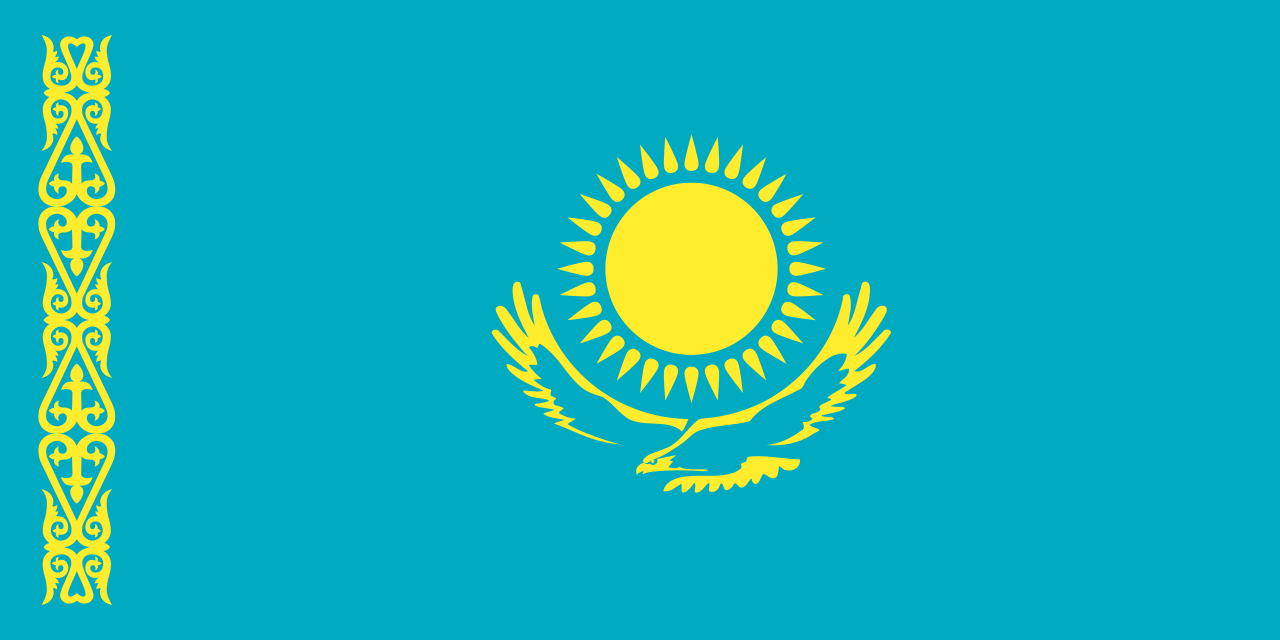
Kazajistán
Also known as Republic of Kazakhstan, kz, Qazaqstan, Republic of Qazaqstan
país de Asia Central y Europa Oriental
AI overview
Kazakhstan is a large landlocked country in Central Asia that borders Russia, China, and several other nations, with its capital in Astana and major economic center in Almaty. It matters as a significant regional player in Central Asia, positioned between major powers and serving as an important hub for trade and resources in the region.
AI-generated from the Wikipedia summary — may contain errors.
Weather now
cached 3h ago27°scattered clouds
32% 2.5 m/s OpenWeatherMap
7-day forecast
via Open-Meteo
Country
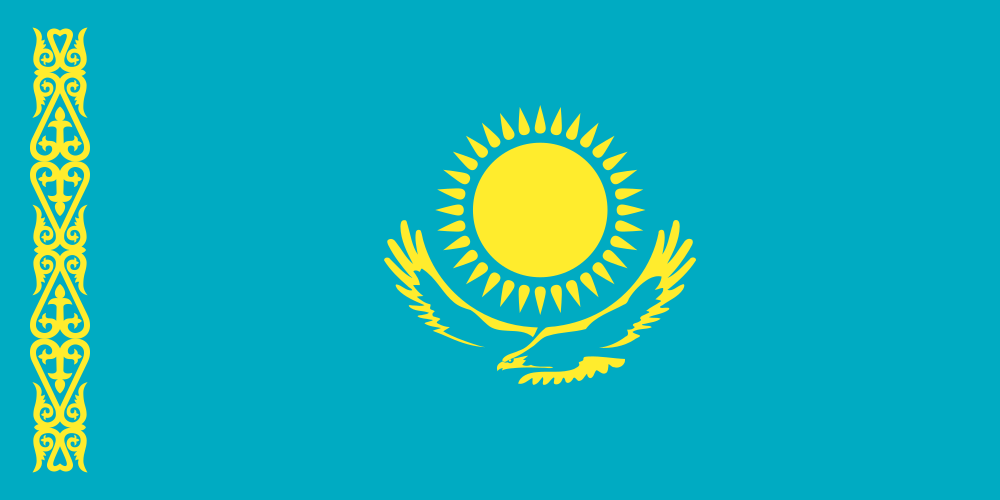
- Capital
- Astana
- Population
- 20,426,568
- Region
Travel guide
Get in
Entering Kazakhstan is no longer the hassle it used to be. The Kazakh government is keen on opening up Kazakhstan to the rest of the world, and most people can enter the country without a visa.
Get around
thumbnail|Road sign pointing to Uzbek Khan's grave near [[Aktau]] You can travel within the country using taxis, buses, trains and planes, it depends on your budget and demands.
See
As the Kazakhs were traditionally nomads who lived on horseback, Kazakhstan for the most part lacks the monumental Islamic architecture of neighboring Uzbekistan. However, Kazakhstan makes up for this with its wealth of natural beauty, which can be seen in the wide open spaces between its cities.
Visitors wanting to experience the traditional Kazakh nomadic lifestyle will likely be disappointed. Under Stalin's collectivization policy during the period of Soviet rule, the Kazakhs were forced to sedentarize and become farmers, all but wiping out the nomadic tradition within the borders of modern Kazakhstan. There are opportunities for tourists to stay in Kazakh yurts, but these were re-created in the post-Soviet era as tourist attractions, and are not an authentic part of the daily lives of regular Kazakh people. Nevertheless, traditional Kazakh clothing still reflects that nomadic heritage and traditional life on horseback, the horse remains an important part of Kazakh culture, which visitors can see on display in its full glory during major traditional festivals. Perhaps ironically, the traditional Kazakh nomadic lifestyle is better preserved among the ethnic Kazakh minorities in Western Mongolia and China's Xinjiang province than in Kazakhstan, making those better destinations if that is what you are looking to experience.
Various tour companies operate in Almaty and Astana year-round, shuttling tourists to nature and scenic destinations outside of urban centres. These co…
Do
Many attractions in Kazakhstan are closed on Monday as a "sanitary day", so that uninterrupted cleaning and maintenance can occur. Saunas: Because of its cold and windy weather, visiting saunas with friends is very popular in Kazakhstan. Saunas (Russian banyas or Finnish steam rooms) are an excellent place to discuss business issues or just socialize with friends. Having parties (birthdays, New Year, etc.) in saunas is a normal practice. In fact many modern sauna complexes in Almaty and Astana are usually fully equipped with karaoke, billiards, swimming pools, relax rooms, massage rooms, etc. Some saunas are a cover for sex services, and many will include a "happy end" option when taking a massage. Football: Kazakhstan is about as central in Asia as you can get, but does have some territory west of the Ural River (considered to be the continental border between Europe and Asia) and chooses to affiliate to UEFA. That means its national and leading club soccer teams are often involved in tournaments with better-known western teams, involving a very long journey. The domestic playing season is March-Nov to escape the rigours of the steppes winter. The men's national team usually play in Astana. The domestic top tier is the Premier League with 14 clubs, two in Astana and one in Almaty.
Article · Español
Kazajistán (ocasionalmente escrito como Kazajstán, Kazakstán o Kazajia; en kazajo, Qazaqstan/Қазақстан pronunciado [qɑzɑqˈstɑn]; en ruso, Казахстан), cuyo nombre oficial es República de Kazajstán, es un país transcontinental, con la mayor parte de su territorio situado en Asia Central y una menor (al oeste del río Ural) en Europa Oriental. Con una superficie de 2 724 900 km², es el noveno país más grande del mundo, así como el Estado sin litoral marítimo más extenso del mundo (considerando el mar Caspio como un lago). Kazajistán es uno de los seis Estados túrquicos independientes junto a Azerbaiyán, Turquía, Kirguistán, Turkmenistán y Uzbekistán; comparte fronteras con los tres últimos y con Rusia y China, a la vez que posee costas en el mar Caspio y el mar de Aral. La capital fue trasladada en 1997 de Almatý, la ciudad más poblada del país, a Astaná. Kazajistán pertenece a la región natural denominada Asia Central, formada además, junto con Tayikistán, por tres de los países ya citados, Kirguistán, Uzbekistán y Turkmenistán. Vasto en tamaño, el territorio de Kazajistán abarca llanuras, estepas, taigas, cañones, colinas, deltas, montañas nevadas y desiertos. Con 18,3 millones de habitantes (estimado para 2015), Kazajistán se ubica en el puesto número 61 por población en el mundo, adicionalmente cuenta con una baja densidad poblacional, siendo apenas mayor a 7 habitantes por kilómetro cuadrado. Durante la mayor parte de su historia, el territorio del actual Kazajistán ha sido habitado por nómadas. Hacia el siglo XVI los kazajos emergieron como un grupo diferenciado, dividido en tres hordas. Los rusos comenzaron a avanzar en la estepa kazaja en el siglo XVIII, y a mediados del siglo XIX todo Kazajistán era parte del Imperio ruso. Tras la Revolución rusa de 1917 y a la subsecuente guerra civil, el territorio de Kazajistán se reorganizó en varias ocasiones antes de convertirse en la República Socialista Soviética de Kazajistán en 1936, como parte de la URSS. Durante el siglo XX, Kazajistán fue sede de importantes proyectos soviéticos, entre ellos la campaña de las Tierras Vírgenes de Jrushchov, el Cosmódromo de Baikonur y el sitio de pruebas de Semipalátinsk, el mayor centro de pruebas nucleares de la URSS. Kazajistán se declaró país independiente el 16 de diciembre de 1991, siendo la última república soviética en hacerlo. Su presidente desde la era comunista, Nursultán Nazarbáyev, se convirtió en el nuevo presidente del país en 1991 y se mantuvo en el poder de forma continua e ininterrumpida, hasta su renuncia en marzo de 2019. Según el gobierno kazajo, Nazarbáyev ganó todas las elecciones presidenciales con porcentajes aplastantes de votos, pero sus críticos denuncian que las elecciones son una mera farsa. Desde su independencia, Kazajistán ha dedicado buena parte de su esfuerzo al desarrollo de su industria de hidrocarburos. El presidente Nazarbáyev mantuvo un estricto control sobre la política nacional a lo largo de más de 20 años en el poder. Kazajistán es ahora considerado el estado dominante en Asia Central. El país es miembro de varias organizaciones internacionales, incluyendo las Naciones Unidas, la Comunidad de Estados Independientes y la Organización de Cooperación de Shanghái. Kazajistán es uno de los seis estados post-soviéticos que han implementado un Plan de Acción Individual de Asociación con la OTAN. En 2010, Kazajistán ocupó la presidencia de la Organización para la Seguridad y la Cooperación en Europa. Kazajistán es diversa étnica y culturalmente, debido en parte a las deportaciones masivas de varios grupos étnicos enviados a este país durante el gobierno de Stalin. Los kazajos son el grupo más extenso. Kazajistán tiene 131 nacionalidades incluyendo kazajos, rusos, uigures, uzbekos, ucranianos y tártaros. Alrededor del 63% del total de la población es kazaja. Kazajistán permite la libertad de culto, muchas creencias diferentes están representadas en el país. El islam es la religión de cerca de tres cuartos de los habitantes, y el cristianismo la fe de la mayor parte de los restantes. El kazajo es el idioma oficial, mientras que el ruso es también utilizado oficialmente como un idioma paralelo al kazajo en las instituciones del país.La capital es Astaná
Gallery (59)
On the map
12 mapped locations
Connections
Categories
1991 establishments in Asia1991 establishments in EuropeAuthoritarian statesCountries and territories where Russian is an official languageCountries in AsiaCountries in Central AsiaCountries in EuropeEurasian SteppeFree-content attributionFree content from UNESCO PublishingKazakhstanLandlocked countries