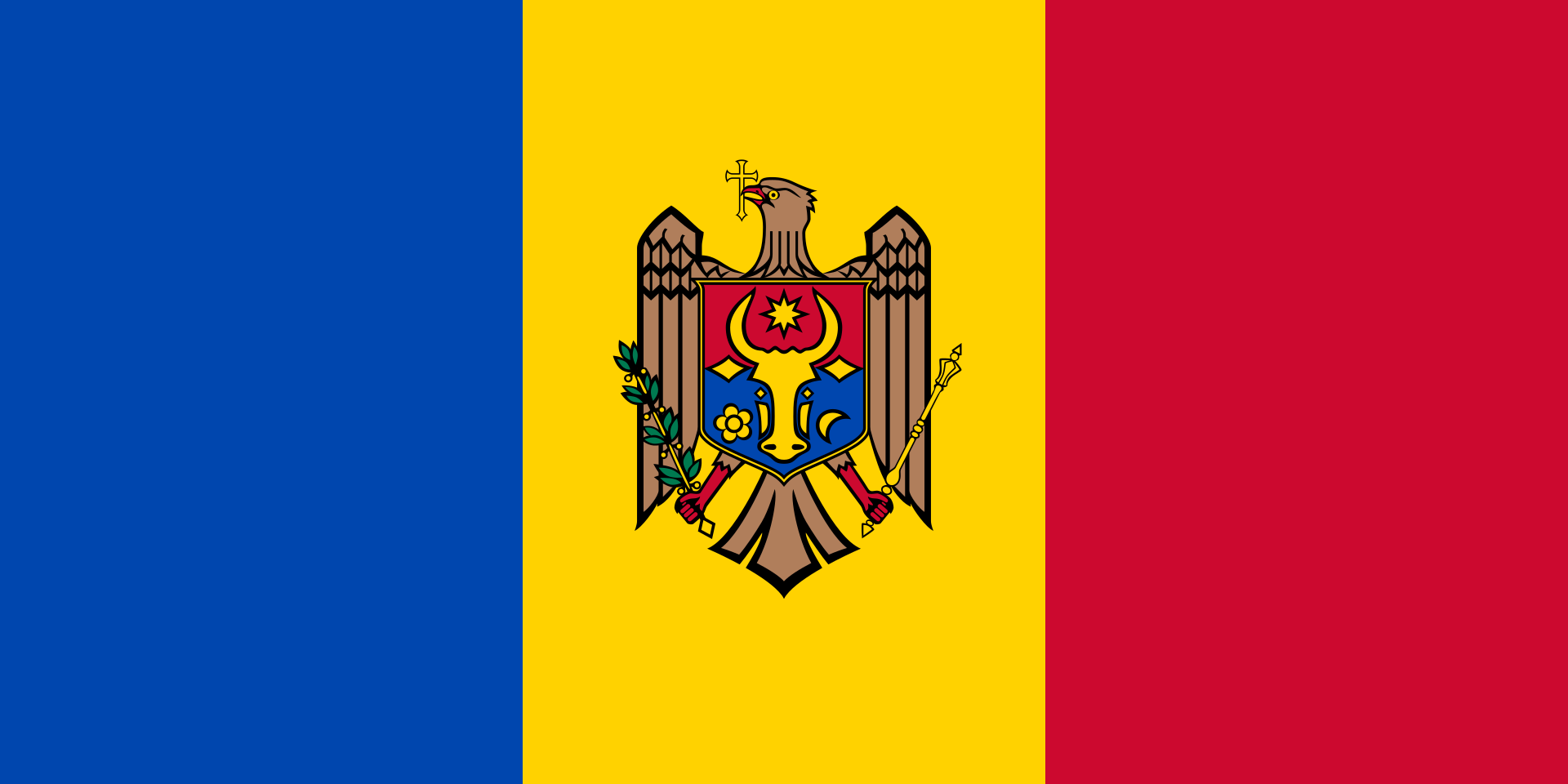
Moldavie
Also known as Republic of Moldova, Moldavia, Republica Moldova
pays d'Europe orientale, enclavé entre la Roumanie et l'Ukraine
AI overview
Moldova is a small, landlocked country in Eastern Europe bordered by Romania and Ukraine, with a population of about 2.4 million people and a capital in Chișinău. It matters partly because of its complex political situation, including the unrecognized breakaway region of Transnistria on its eastern border, and its position as a parliamentary democracy navigating relationships between its neighboring countries.
AI-generated from the Wikipedia summary — may contain errors.
Weather now
cached 27h ago19°overcast clouds
80% 5.2 m/s OpenWeatherMap
7-day forecast
via Open-Meteo
Country

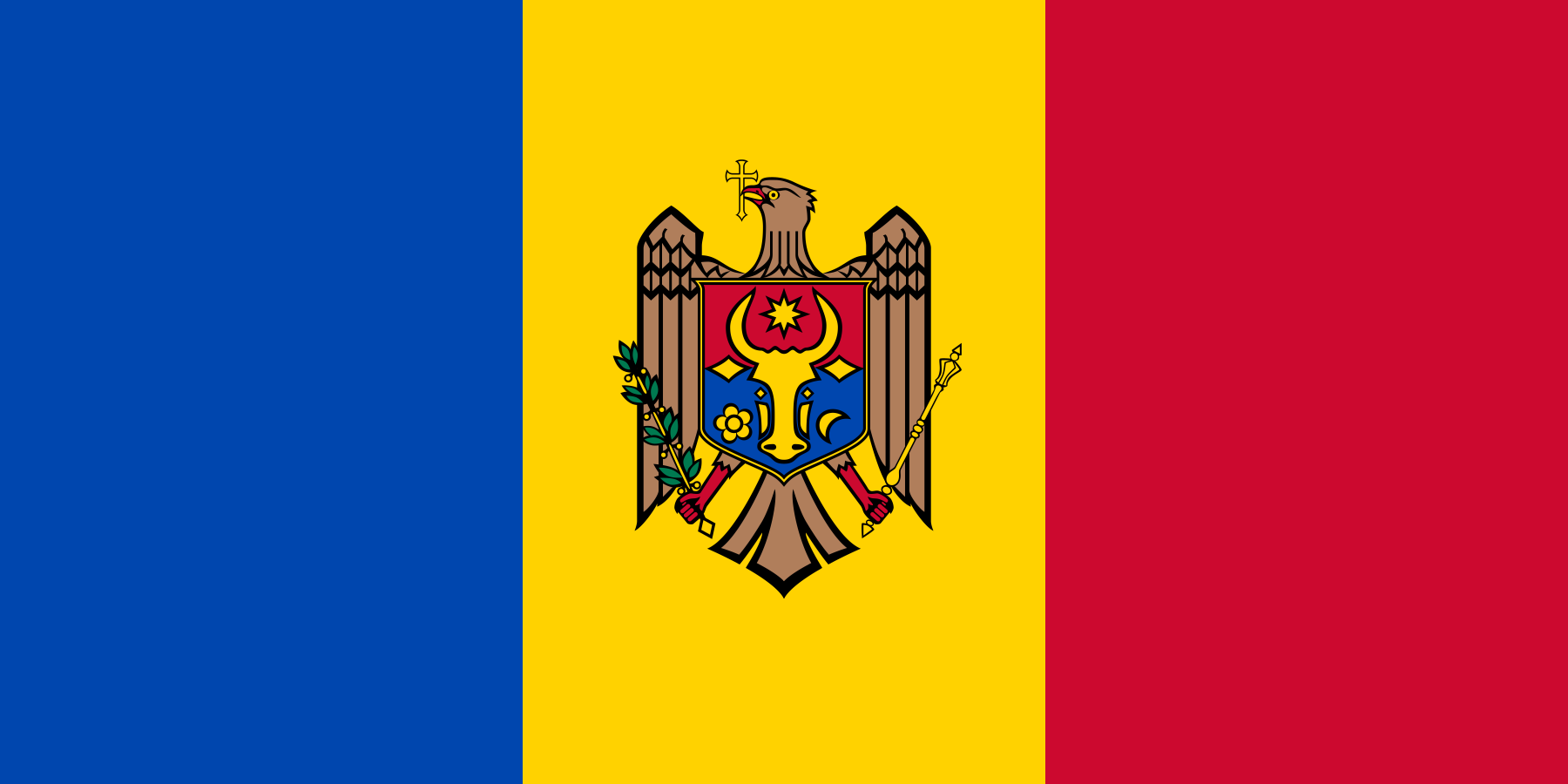
- Capital
- Chișinău
- Population
- 2,749,076
- Region
Travel guide
Understand
thumb|upright=0.8|A statue of Stephen the Great (1433–1504), the Prince of Moldavia, in Chișinău. One of the smallest states of the former USSR, Moldova has been part of two historical empires: the Ottoman Empire and the Russian Empire. For several centuries, the country was under Ottoman influence but that all changed during the 1800s when the Russians took control of it. In the years to follow, Moldova became a part of the Russian Empire and later on, the Soviet Union, before declaring independence in the 1990s. Its fertile soils led to Moldova being dubbed "the garden" of the Soviet Union.
Moldova is one of the least visited countries on the planet. You are likely to attract intrigued looks from locals curious of what you are doing in the country.
Since independence, Moldova has faced numerous difficulties, especially inter-ethnic conflict. Inter-ethnic tensions led to the creation of the proclaimed Transnistria Republic in eastern Moldova, which has its own government and currency but is not recognised by any UN member country. Economic links have been re-established between these two parts of Moldova despite the failure in political negotiations.
Similar to Switzerland, Moldova is committed to neutrality, and has decent relations with virtually every country in the world.
Despite Moldova's vast political and economic problems, Moldovans try to be happy and make the most of their situation.
Get in
thumb|375px|A map showing the visa requirements of Moldova.
Get around
thumb|300px|Trolleybus in Chișinău Moldova is small enough to be explored very quickly. For example, a long walk to Chișinău from Bolhrad − even though that sounds highly impractical − will take you about 34 hours.
The most reliable way of getting around the country is by bus. Buses can get you to most parts of the country. You can find information about long-distance bus services in Moldova on the Autogari website, for example. This site contains information on bus stations in Moldova, timetables and routes between cities.
Chișinău is the main transportation hub for the country. The three bus stations serve every city and town in Moldova. The fastest form of transport are small minibuses which seat around 15 people. Larger buses are also used and are marginally safer, because they travel at slower speeds.
Article · Français
La Moldavie (en roumain Moldova orientală par distinction de la Moldova occidentală appartenant à la Roumanie ; en russe Молдавия, Moldaviya), en forme longue république de Moldavie (roumain Republica Moldova, russe Республика Молдова, d'où la variante république de Moldova) est un pays d'Europe orientale, enclavé entre la Roumanie et l'Ukraine, englobant des parties des régions historiques de Bessarabie et de Podolie méridionale (dite Transnistrie). Ses paysages vallonnés comprennent des forêts, des terres cultivées, des zones humides et des vignobles. Sa capitale est Chișinău. La partie de l'actuel territoire moldave située sur la rive droite du Dniestr a fait partie de la principauté de Moldavie (tributaire de l'Empire ottoman à partir de 1538), du XIVe siècle à 1812, date à laquelle elle fut cédée à l'Empire russe. Celui-ci en fit son « gouvernement de Bessarabie » et y organisa une colonisation entraînant l'installation de nombreuses populations autres que les Moldaves, qui restèrent cependant majoritaires. Le XXe siècle est une période compliquée sur le plan des relations internationales. À la Révolution russe de 1917, la république démocratique moldave se forme et se déclare indépendante, puis en 1918 s'unit au royaume de Roumanie pour se protéger des bolchéviks, qui de leur côté fondent la république socialiste soviétique moldave (RSSM) en 1924 sur une petite portion du territoire moldave qu'ils contrôlent (Transnistrie). En 1940, en application du pacte germano-soviétique et sans que la Roumanie puisse s'y opposer, l'Union soviétique procède à l'occupation soviétique de la Bessarabie et de la Bucovine du Nord. L'URSS réorganise alors le territoire de la RSSM en lui donnant la Bessarabie mais en lui retirant une autre partie au profit de l'Ukraine. La dislocation de l'URSS provoque de nouveaux chocs : la Transnistrie fait sécession de la Moldavie et s'autoproclame indépendante sans reconnaissance internationale dès 1990, tandis que la RSSM déclare son indépendance vis-à-vis de l'Union soviétique en août 1991 et devient membre de la Communauté des États indépendants qui en est issue. Elle est admise à l'Organisation des Nations unies en mars 1992, mais la même année la guerre du Dniestr accentue la rupture avec la Transnistrie. Depuis 1994 la situation internationale est stable. La constitution actuelle, adoptée en 1994, en fait une république parlementaire neutre. Il existe un mouvement unioniste en Moldavie et Roumanie basé sur l'héritage historique, linguistique et culturel commun, mais également des raisons pour qu'il n'ait pas abouti, notamment la présence d'importantes minorités notamment slaves (un quart des habitants) et d'éléments de l'armée russe sur son territoire même (essentiellement en Transnistrie, mais même la Russie ne reconnait pas l'indépendance de ce territoire). Située aux limites des sphères d'influence de deux superpuissances à la fois partenaires et antagonistes, la Moldavie se trouve dans la zone d'influence russe et fait toujours partie de la CEI, mais aux frontières orientales de l'Union européenne et de l'OTAN : elle est aussi membre de l'Organisation pour la démocratie et le développement (GUAM), du partenariat pour la paix de l'OTAN depuis le 16 mars 1994, de l'Accord de libre-échange centre-européen et du Partenariat oriental de l'UE depuis 2009 et elle a un accord d'association avec l’UE depuis le 1er juillet 2016. Cette situation géopolitique et les tensions internes ne favorisent pas l'économie moldave. Enclavée, elle ne dispose plus de port depuis que la partie de la Bessarabie littorale de la mer noire a été rattachée à l'Ukraine en 1940. Elle n'a d'accès que symbolique sur le Danube, et la Transnistrie sécessionniste contrôle les transports sur le Dniestr ou vers l'Ukraine. Les voies de chemins de fer sont aux normes russes, incompatibles avec le réseau roumain qui est aux normes occidentales. La Moldavie a vu baisser sa production agricole (passant sous le seuil d'autosuffisance) et industrielle, même si le secteur des services s'est fortement développé. Elle souffre d'un fort exode rural et une expatriation importante de la population active qui explique son relativement bas taux de chômage. En 2022, elle est le pays le plus pauvre d'Europe en termes de PIB par habitant et a l'indice de développement humain le plus bas du continent.
Gallery (59)
On the map
6 mapped locations
Connections
Categories
1991 establishments in EuropeCountries and territories where Romanian is an official languageCountries in EuropeLandlocked countriesMember states of the Council of EuropeMember states of the Organisation internationale de la FrancophonieMember states of the United NationsMoldovaPost-Soviet statesRepublicsSource attributionStates and territories established in 1991