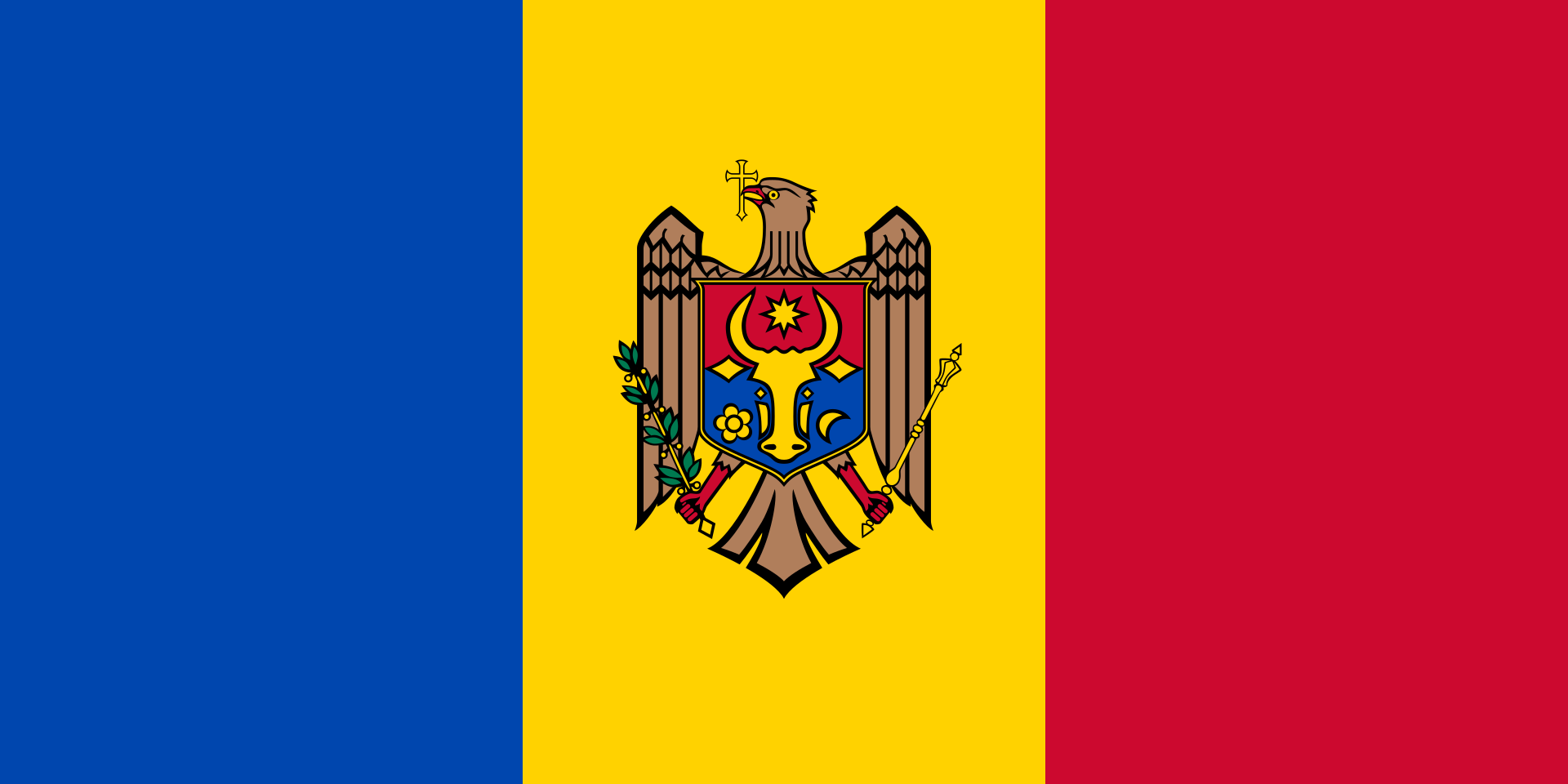
Moldávia
Also known as Republic of Moldova, Moldavia, Republica Moldova
país na Europa Oriental
AI overview
Moldova is a small, landlocked country in Eastern Europe bordered by Romania and Ukraine, with a population of about 2.4 million people and a capital in Chișinău. It matters partly because of its complex political situation, including the unrecognized breakaway region of Transnistria on its eastern border, and its position as a parliamentary democracy navigating relationships between its neighboring countries.
AI-generated from the Wikipedia summary — may contain errors.
Weather now
cached 27h ago19°overcast clouds
80% 5.2 m/s OpenWeatherMap
7-day forecast
via Open-Meteo
Country

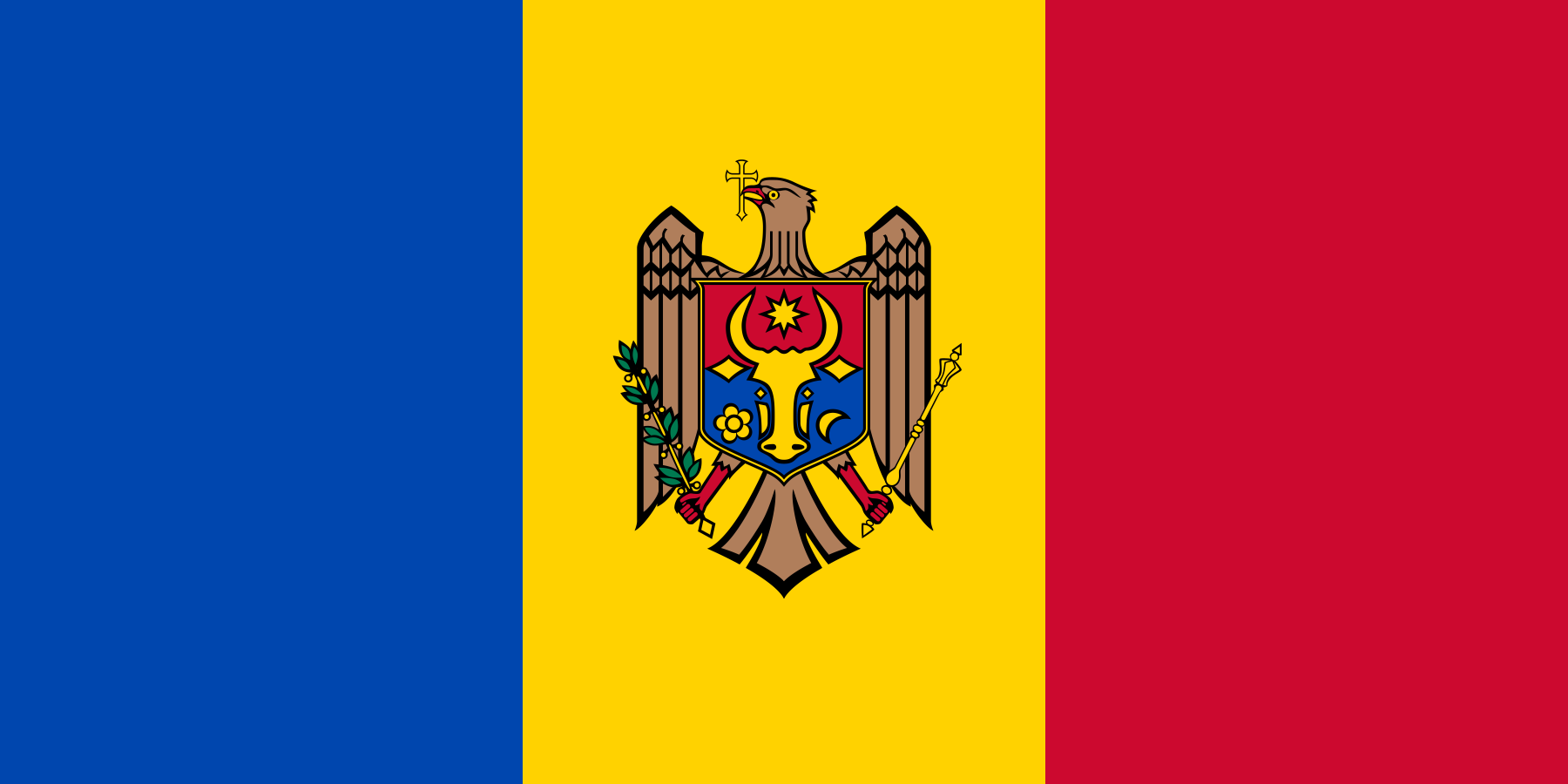
- Capital
- Chișinău
- Population
- 2,749,076
- Region
Travel guide
Understand
thumb|upright=0.8|A statue of Stephen the Great (1433–1504), the Prince of Moldavia, in Chișinău. One of the smallest states of the former USSR, Moldova has been part of two historical empires: the Ottoman Empire and the Russian Empire. For several centuries, the country was under Ottoman influence but that all changed during the 1800s when the Russians took control of it. In the years to follow, Moldova became a part of the Russian Empire and later on, the Soviet Union, before declaring independence in the 1990s. Its fertile soils led to Moldova being dubbed "the garden" of the Soviet Union.
Moldova is one of the least visited countries on the planet. You are likely to attract intrigued looks from locals curious of what you are doing in the country.
Since independence, Moldova has faced numerous difficulties, especially inter-ethnic conflict. Inter-ethnic tensions led to the creation of the proclaimed Transnistria Republic in eastern Moldova, which has its own government and currency but is not recognised by any UN member country. Economic links have been re-established between these two parts of Moldova despite the failure in political negotiations.
Similar to Switzerland, Moldova is committed to neutrality, and has decent relations with virtually every country in the world.
Despite Moldova's vast political and economic problems, Moldovans try to be happy and make the most of their situation.
Get in
thumb|375px|A map showing the visa requirements of Moldova.
Get around
thumb|300px|Trolleybus in Chișinău Moldova is small enough to be explored very quickly. For example, a long walk to Chișinău from Bolhrad − even though that sounds highly impractical − will take you about 34 hours.
The most reliable way of getting around the country is by bus. Buses can get you to most parts of the country. You can find information about long-distance bus services in Moldova on the Autogari website, for example. This site contains information on bus stations in Moldova, timetables and routes between cities.
Chișinău is the main transportation hub for the country. The three bus stations serve every city and town in Moldova. The fastest form of transport are small minibuses which seat around 15 people. Larger buses are also used and are marginally safer, because they travel at slower speeds.
Article · Português
A Moldávia ou Moldova, protocolarmente, República da Moldova, (em romeno: Republica Moldova; pronunciado: [reˈpublika molˈdova]) é um país sem costa marítima da Europa oriental, que faz fronteira com a Ucrânia e com a Roménia. Sua capital e maior cidade é Quixinau, (também grafado "Quichinau"; em romeno, Chișinău). Em 1991, durante o processo de dissolução da URSS, a então República Socialista Soviética da Moldávia declarou independência da União Soviética. Apenas uma região que pertencia à extinta República Socialista Soviética da Moldávia, recusou-se a integrar a nova "República da Moldávia": a região conhecida como Transnístria (uma pequena faixa territorial situada a leste do rio Dniestre) preferiu declarar sua própria independência, e de fato governa-se autonomamente desde a década de 1990, embora seja atualmente reconhecida por todos os países membros da ONU como parte integrante da Moldávia. Desde o colapso da União Soviética, o peso relativo do setor dos serviços na economia da Moldávia cresceu e começou a dominar o seu Produto Interno Bruto (hoje cerca de 62,5%) como resultado de um decréscimo do peso da sua indústria e agricultura. Contudo, o país ainda é o mais pobre da Europa e o país da região com o menor Índice de Desenvolvimento Humano (IDH). A Moldávia é uma república parlamentar com um presidente como chefe de Estado e um primeiro-ministro como chefe de governo. O país é membro das Nações Unidas, do Conselho da Europa, da Organização Mundial do Comércio (OMC), da Organização para a Segurança e Cooperação na Europa (OSCE), do GUAM — Organização para a Democracia e o Desenvolvimento Económico, da Comunidade dos Estados Independentes (CEI), da Organização de Cooperação Económica do Mar Negro (OCEMN), entre outras organizações internacionais. O país tenciona tornar-se membro da União Europeia, e já implementou o primeiro Plano de Ação trianual, no contexto da Política de Vizinhança Europeia (PEV).
Abstract from DBpedia / Wikipedia · CC BY-SA
Gallery (59)
On the map
6 mapped locations
Connections
Categories
1991 establishments in EuropeCountries and territories where Romanian is an official languageCountries in EuropeLandlocked countriesMember states of the Council of EuropeMember states of the Organisation internationale de la FrancophonieMember states of the United NationsMoldovaPost-Soviet statesRepublicsSource attributionStates and territories established in 1991