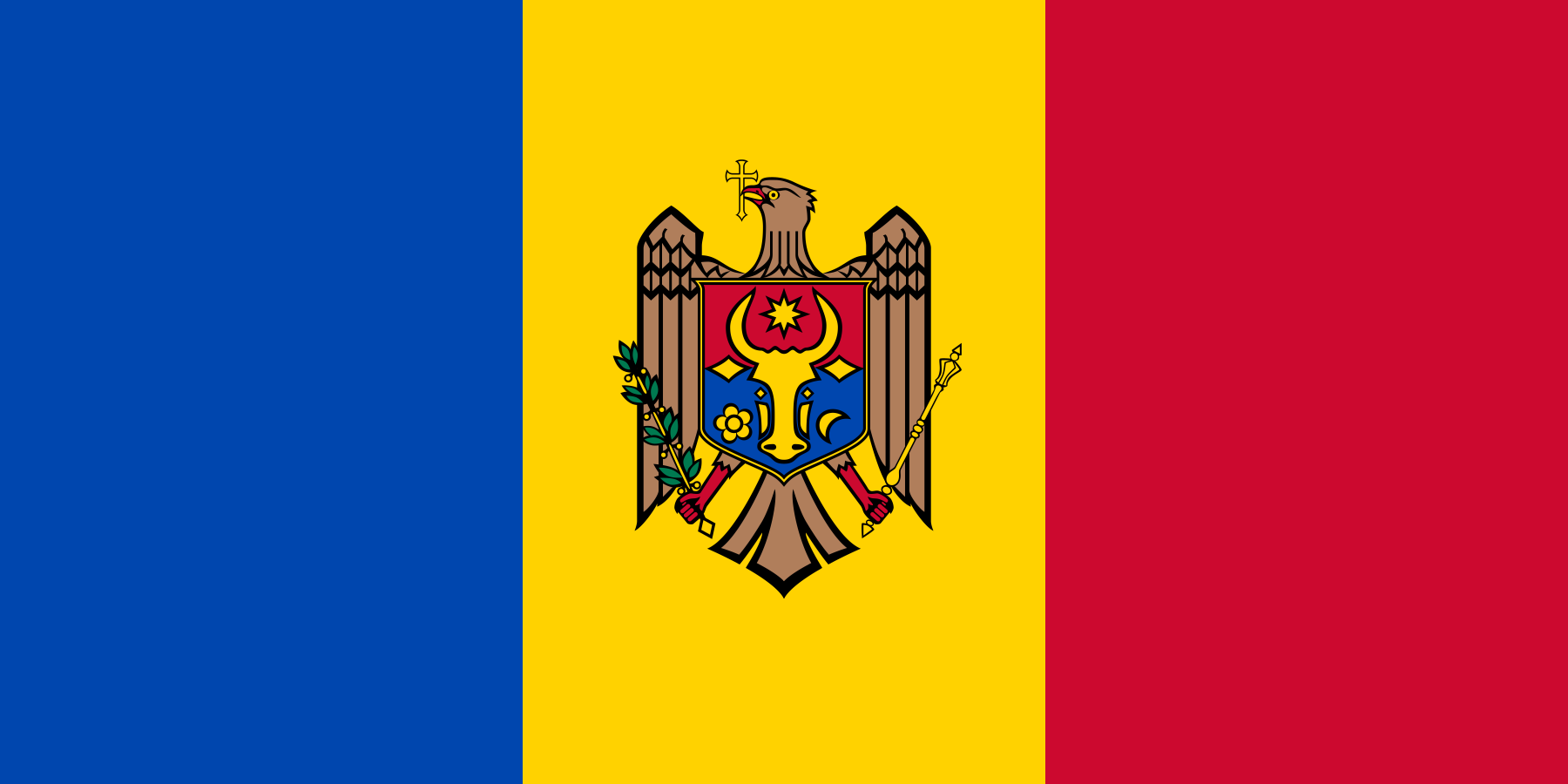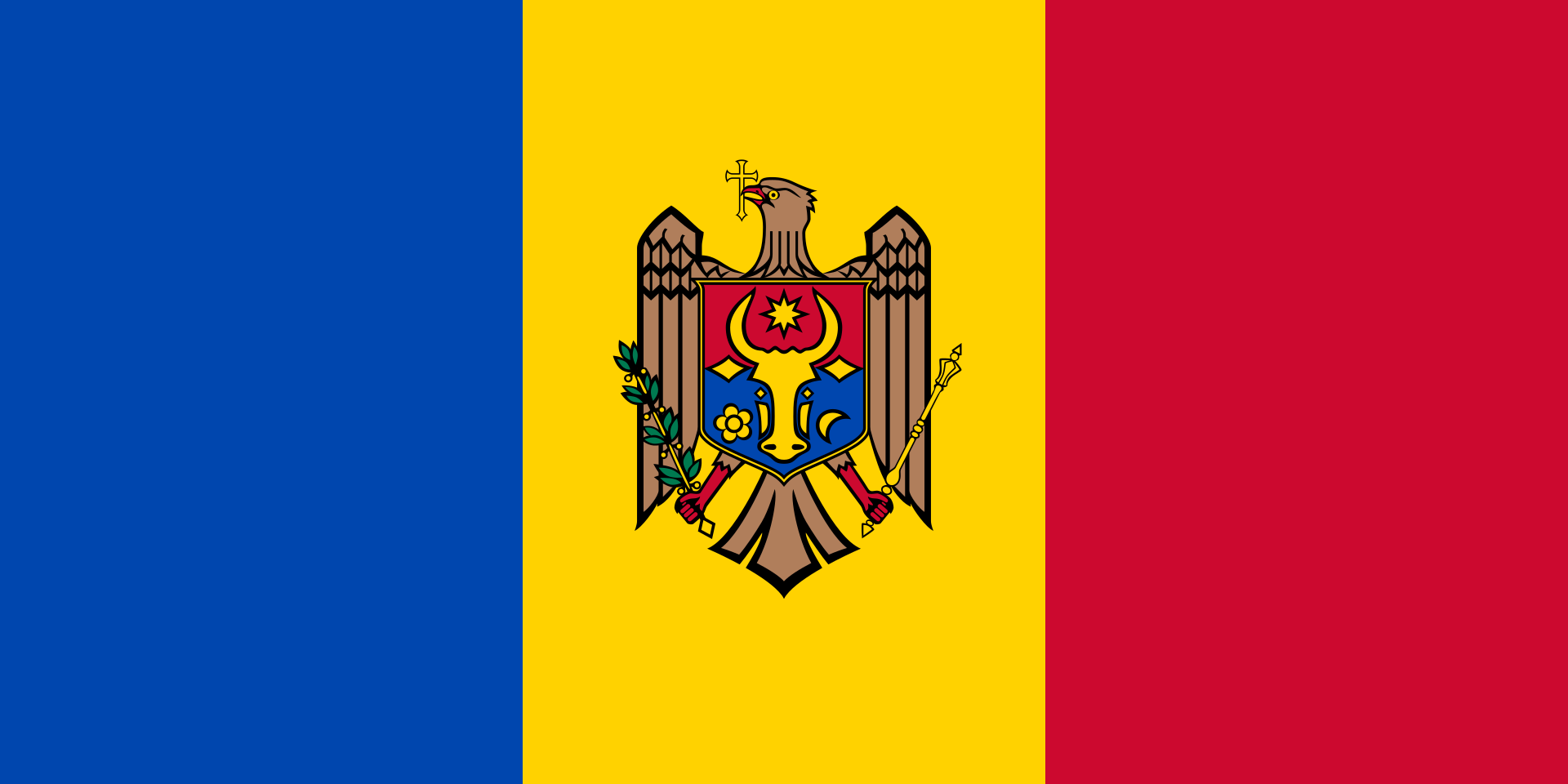
Also known as Republic of Moldova, Moldavia, Republica Moldova
東歐國家
Moldova is a small, landlocked country in Eastern Europe bordered by Romania and Ukraine, with a population of about 2.4 million people and a capital in Chișinău. It matters partly because of its complex political situation, including the unrecognized breakaway region of Transnistria on its eastern border, and its position as a parliamentary democracy navigating relationships between its neighboring countries.
AI-generated from the Wikipedia summary — may contain errors.
via Open-Meteo
thumb|upright=0.8|A statue of Stephen the Great (1433–1504), the Prince of Moldavia, in Chișinău. One of the smallest states of the former USSR, Moldova has been part of two historical empires: the Ottoman Empire and the Russian Empire. For several centuries, the country was under Ottoman influence but that all changed during the 1800s when the Russians took control of it. In the years to follow, Moldova became a part of the Russian Empire and later on, the Soviet Union, before declaring independence in the 1990s. Its fertile soils led to Moldova being dubbed "the garden" of the Soviet Union.
Moldova is one of the least visited countries on the planet. You are likely to attract intrigued looks from locals curious of what you are doing in the country.
Since independence, Moldova has faced numerous difficulties, especially inter-ethnic conflict. Inter-ethnic tensions led to the creation of the proclaimed Transnistria Republic in eastern Moldova, which has its own government and currency but is not recognised by any UN member country. Economic links have been re-established between these two parts of Moldova despite the failure in political negotiations.
Similar to Switzerland, Moldova is committed to neutrality, and has decent relations with virtually every country in the world.
Despite Moldova's vast political and economic problems, Moldovans try to be happy and make the most of their situation.
thumb|375px|A map showing the visa requirements of Moldova.
thumb|300px|Trolleybus in Chișinău Moldova is small enough to be explored very quickly. For example, a long walk to Chișinău from Bolhrad − even though that sounds highly impractical − will take you about 34 hours.
The most reliable way of getting around the country is by bus. Buses can get you to most parts of the country. You can find information about long-distance bus services in Moldova on the Autogari website, for example. This site contains information on bus stations in Moldova, timetables and routes between cities.
Chișinău is the main transportation hub for the country. The three bus stations serve every city and town in Moldova. The fastest form of transport are small minibuses which seat around 15 people. Larger buses are also used and are marginally safer, because they travel at slower speeds.
摩爾多瓦共和國(羅馬尼亞語:Republica Moldova),通稱摩爾多瓦(羅馬尼亞語:Moldova),是位於東歐的內陸國家,首都是基希涅夫。摩爾多瓦西鄰羅馬尼亞,北面、東面、南面毗鄰烏克蘭。 今天的摩爾多瓦,大部分領土屬於中世紀的摩爾達維亞公國。摩爾達維亞公國在14世紀立國後,自16世紀開始淪爲奧斯曼土耳其的保護國。19世紀,摩爾達維亞的比萨拉比亚地區又割讓給沙皇俄國。領有其餘領土的摩爾達維亞其後參與組建羅馬尼亞聯合公國。20世紀俄國發生革命後,割讓給俄國的比萨拉比亚先是獨立,後又併入羅馬尼亞。1940年,羅馬尼亞王國割了此地予蘇聯,蘇聯遂控制摩爾達維亞地區,組建摩爾達維亞蘇維埃社會主義共和國,爲蘇聯的第15個加盟共和國。1941年蘇德戰爭爆發,作為軸心國一方的羅馬尼亞亦出兵蘇聯,10月攻占敖德薩,並在纳粹德國南方集團軍幫助下奪回比萨拉比亚地區,但1944年蘇聯大規模反攻德國,红軍擊敗羅馬尼亞軍隊又再度佔領該地,恢復摩爾達維亞蘇維埃社會主義共和國建制。東欧劇變後,1991年,摩爾多瓦宣佈獨立,成立今天的摩爾多瓦共和國。摩爾多瓦獨立後因政治動盪、能源短缺等原因,經濟陷入衰退。1992年5月至7月,政府军在德涅斯特河沿岸战争战败,德左地區事實上获得獨立至今。 摩爾多瓦是一個農業國,工業基礎薄弱,國民經濟依賴農業、釀酒業等產業。摩爾多瓦至今仍是相當貧困的國家,以人均GDP論,2020年約4千餘美元,在歐洲僅勝過烏克蘭,在亞洲約相當於印尼水準。政治上,存在對反對派進行政治迫害的情況。摩爾多瓦國內亦面臨較嚴重的人口販賣問題。 1991年獨立後,摩爾多瓦先後加入聯合國、世界貿易組織(WTO),以及歐安組織(OSCE)、獨聯體等國際組織。摩爾多瓦目前是北約和平夥伴關係計劃成員,與歐盟是東部夥伴關係。摩爾多瓦正尋求的機會,但由於內部政局仍分裂成親俄與親歐盟兩派,且面臨德左共和國的實質分裂問題,入盟前景不樂觀。
Abstract from DBpedia / Wikipedia · CC BY-SA
6 mapped locations
Discovered by embedding cosine similarity (sentence-transformers MiniLM, 384-dim).
via REST Countries
via World Bank Open Data · CC BY 4.0
via Wikimedia Pageviews API
via Wikipedia infobox
via PubMed
via Wikidata · CC0
thumb|Speed limits in Moldova
In Chișinău there is a state run trolleybus system which includes many new vehicles. Fare is 6 lei; a conductor collects fares and issues tickets. There is also a 'bus service which operates with fewer routes.
thumb|300px|Soroca fortress thumb|300px|Mileștii Mici
Chișinău is a good place for gourmands. There are a lot of good places to eat all over Chișinău.
Cheap, tasty food that is very popular with the locals is served in most places. For better service and more diverse food, there are a lot of small restaurants and cafés. Good restaurants have prices comparable to those elsewhere in Europe. For a quick lunch, fast food and pizza shops are recommended; these can be found at nearly every corner. For groceries, there are small shops all over. Some are even in front of apartment blocks just a few steps away from the entrances. For harder-to-find items, go to the supermarkets. For fresh fruits and vegetables, markets are a great place to shop. Most of the products are local, but there are a lot of sellers who to sell imported stuff, mostly oranges, bananas and other tropical fruits and vegetables. Meat and meat products are best purchased from supermarkets or shops. The quality is much better than from the market, and the prices aren't much higher.
While in Moldova, make sure you try at least some of the traditional dishes: Mămăligă, plăcintă and sarmale are essential for a complete experience during your visit to Moldova. For the full experience these should be accompanied by homemade wine.
thumb|300px|Wine fountain at Mileștii Mici Moldova has a long tradition of local wine. The reds are especially popular throughout the country. Most Moldovan villagers grow their own grapes and press their own wine, and many standard rural households will press thousands of litres per year.
The nightlife of Chișinău is also quite spectacular compared to what could be expected. It is the host of many clubs and bars that are equal in every aspect to many other places throughout Eastern Europe.
Accommodation in Chișinău is surprisingly expensive and there is no shortage of €100 a night options. Most hotel prices are listed in euros but some are listed in US dollars.
Many smaller towns will have a Soviet relic hotel complete with service with a frown. Rates will be high for what you're getting. In many places it's possible to pay about €10 to stay in a local's house. This is an informal arrangement and can only be organized by talking to people upon arrival but it is well worth considering if you want to get out into the countryside.
Hostels. Hostelling is still in its infancy in Moldova, but there are a few nice hostels to be found in Chișinău. Amongst others Chișinău Hostel and Central Youth Hostel. Prices range from US$10–20.
Apartments. Many people in Chișinău rent out apartments. The location and quality can vary. Many are also not very modern. You may want to use a booking company as it may be hard to find people who speak English. Price €20–50.
thumb|300px|Mounted police in Chișinău Visitors to Moldova for business or romance should be aware of the potential risk of scams, particularly if first contact was made on the Internet. See International financial scams and Russian Internet dating schemes.
Corrupt police and border guards may try to extort bribe money but 'normal' crime rates are low. Locals are generally very friendly and will go to great lengths to provide hospitality to foreigners. You can expect a lengthy, and inevitably boozy, meal to be offered to you just in your honour.
Conservative dress must be worn at religious sites. Shorts are forbidden and women must cover their heads inside monasteries and churches.
While bribery and police corruption are still problems in Moldova, the situation is improving. It is still advised that tourists have the number of their embassy and the contact information of where they are staying. Foreigners are also required to have their passports on them at all times. There is however usually no one checking this in any normal setting.
Alcohol consumption can also be a problem. Running into drunks especially at night is common. Most are friendly; they often come off as aggressive and will invade your personal space. This can be scary the first couple of times. Politely walking away normally works. People coming from a country where less alcohol is consumed can find themselves becoming the drunks.
There are few natural hazards in the country. Landslides, mainly due to ero…
Very few healthcare facilities are on par with Western standards, and accessibility may be hindered if you're not proficient in Romanian and/or Russian.
In the event of a serious medical emergency, it is strongly recommended that you make every effort to seek medical care elsewhere. Neighbouring Romania may have better healthcare facilities than neighbouring Ukraine.
The US Embassy in Moldova maintains a list of facilities that provide services in English. Refer to for more information.
The heavy use of agricultural chemicals, including banned pesticides such as DDT, has contaminated soil and groundwater. If you are concerned, water for drinking, cooking and oral hygiene should be taken from a known safe source, as ordinary water treatment, including boiling, does not remove such chemical contamination.
Tourists are likely to attract stares from the locals. Do not be alarmed or surprised; this doesn't indicate hostility, but rather, curiosity. This may cause some to treat you as a "walking wallet" or someone who is "wealthy". If you feel like you are about to be scammed by someone, simply ignore them or tell them to go away. Don't feel the need to be polite with scammers; nobody should put up with such behavior.
Travel guide from Wikivoyage (CC BY-SA 4.0)
via Wikidata sitelinks · CC0