File:Oolong_tea_leaf.jpg · Wikimedia Commons · See Wikimedia Commons
Té oolong
Sign in to saveAlso known as olong, wulong tea, oolong tea, Oolong tea, blue tea
té chino tradicional
I appreciate your question, but I cannot write an accurate overview based solely on the context provided. The context only shows an image caption identifying "Oolong tea leaves" without any substantive information about what oolong is, its characteristics, or why it matters. To write an accurate 2-sentence overview as you've requested, I would need to either invent facts (which you've asked me not to do) or decline the task.
AI-generated from the Wikipedia summary — may contain errors.
Key facts
- Chinese.poj
- O͘-liông tê
- Chinese.title
- Oolong tea
- Chinese.pic
- Oolong (Chinese characters).svg
- Chinese.piccap
- "Oolong" in Traditional (top) and Simplified (bottom) Chinese characters
- Chinese.picupright
- 0.475
- Chinese.t
- 烏龍茶
- Chinese.s
- 乌龙茶
- Chinese.p
- wūlóng chá
- Chinese.bpmf
- ㄨ ㄌㄨㄥˊ ㄔㄚˊ
- Chinese.j
- wu1-lung4 caa4
- Chinese.y
- wū-lùhng chàah
- Chinese.l
- "Dark dragon tea"
via Wikipedia infobox
Nutrition · Open Food Facts
Typical values per 100 g · averaged across 14 products
- Energy
- 50 kcal
- Fat
- 0 g
- — of which saturates
- 0 g
- Carbohydrates
- 18.8 g
- — of which sugars
- 0 g
- Fibre
- 6.7 g
- Protein
- 3.8 g
- Salt
- 0.02 g
via Open Food Facts · ODbL
Wikidata facts
- Subclass of
- tea
- Image
- BZC Oolong tea leaf.jpg
Show 3 more facts
- Commons category
- Oolong
- topic's main category
- Category:Oolong tea
- Commons gallery
- Oolong
Sources (2)
via Wikidata · CC0
Article · Español
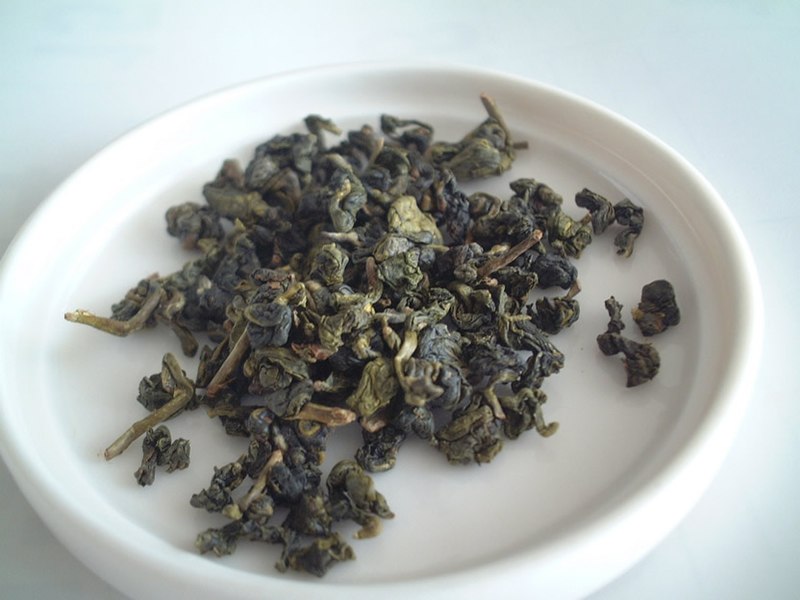
El oolong (Chino simplificado: 乌龙; Chino Tradicional: 烏龍; Pinyin: wūlóng; también conocido como té azul) es un té chino tradicional (Camellia sinensis) que queda entre el verde y el negro en oxidación, lo cual le da un característico tono azulado. Está entre los tipos de té más populares servidos en los restaurantes chinos típicos. En la cultura china del té, los tés oolong semioxidados se agrupan colectivamente como qīngchá (en chino, 清茶; literalmente, ‘té claro’). El oolong tiene un sabor más parecido al té verde que al negro: no tiene el aroma dulce y rosáceo del té negro ni las fuertes notas herbales que caracterizan al té verde. Suele cocerse de forma que quede fuerte, dejando en el amargor un regusto dulce. Diversas variedades de oolong, incluyendo las producidas en el monte Wuyi del norte de Fujian y en las montañas del centro de Taiwán, están entre los tés chinos más famosos. Las hojas de té oolong se de dos formas diferentes. Algunas variedades se enrollan en hojas largas y curvas, mientras otras se prensan a formas parecidas a bolas, de forma similar al Gunpowder. El primer método es el más antiguo.
Abstract from DBpedia / Wikipedia · CC BY-SA