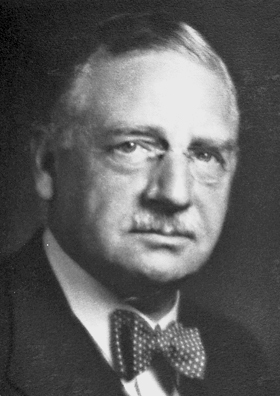
File:Otto_Loewi_nobel.jpg · Wikimedia Commons · See Wikimedia Commons
Otto Loewi was a Jewish-German pharmacologist who made important discoveries about how nerves communicate with each other and with muscles. His work helped establish the chemical basis of nerve signaling, which became fundamental to understanding how the nervous system functions.
AI-generated from the Wikipedia summary — may contain errors.
Person · Open Library
- Works
- 2
Top works
- Zur quantitativen Wirkung von Blausaure, Arsen und Phosphor auf das isolirte Froschherz ..
- From the workshop of discoveries
via Open Library + Wikidata
Nobel Prize
- The Nobel Prize in Physiology or Medicine1936
“for their discoveries relating to chemical transmission of nerve impulses”
Shared · 1/2 portion
Wikidata facts
- Instance of
- human
- Given name
- Otto
- Gender
- male
- Citizenship
- Austria
- Place of birth
- Frankfurt
- Place of death
- New York City
- Occupation
- physiologist
- Educated at
- University of Strasbourg
- Employer
- New York University
- Languages spoken
- English language
- Participant in
- Einsatzgruppen Trial
- Doctoral advisor
- Oswald Schmiedeberg
- Doctoral student
- Carl Ferdinand Cori
- Field of work
- pharmacology
- Image
- Otto Loewi nobel.jpg
- Work location
- Graz
Show 10 more facts
- member of
- Accademia Nazionale dei Lincei
- Commons category
- Otto Loewi
- date of birth
- 1873-06-03
- date of death
- 1961-12-25
- nominated for
- Nobel Prize in Physiology or Medicine
- name in native language
- Otto Loewi
- relative
- Guido Goldschmiedt
- P8168
- Yanina Wickmayer
- significant person
- Erwin Schulz
- interested in
- pharmacology
via Wikidata · CC0
~11 min read
Encyclopedic overview
Otto Loewi ( German: [ˈɔtoː ˈløːvi] ; 3 June 1873 – 25 December 1961) was a German-born pharmacologist and psychobiologist who discovered the role of acetylcholine as an endogenous neurotransmitter. For this discovery, he was awarded the Nobel Prize in Physiology or Medicine in 1936, which he shared with Sir Henry Dale, who was a lifelong friend that helped to inspire the neurotransmitter experiment. Loewi met Dale in 1902 when spending some months in Ernest Starling's laboratory at University College, London.
Biography
Excerpted from Wikipedia’s “Otto Loewi” article, available under the CC BY-SA 4.0 licence.