
File:Ūd_MET_DP340079.jpg · Wikimedia Commons · See Wikimedia Commons
Also known as outi, 'ud, Arab lute
The oud ( ; , ) is a Middle Eastern short-neck lute-type, pear-shaped, fretless stringed instrument (a chordophone in the Hornbostel–Sachs classification of instruments), usually with 11 strings grouped in six courses, but some models have five or seven courses, with 10 or 13 strings respectively.
The oud is a pear-shaped stringed instrument from the Middle East that has no frets and typically features 11 strings arranged in six groups, though some versions have different configurations. It's classified as a type of short-neck lute and is a fundamental instrument in Middle Eastern music traditions.
AI-generated from the Wikipedia summary — may contain errors.
Key facts
- Instrument.name
- Oud
- Instrument.image
- File:Ūd MET DP340079.jpg
- Instrument.image_capt
- Oud crafted by Emmanuel Venious in 1998
- Instrument.background
- string
- Instrument.classification
- String instruments Necked bowl lutes
- Instrument.hornbostel_sachs
- 321.321-6
- Instrument.hornbostel_sachs_desc
- Composite chordophone sounded with a plectrum
- Instrument.developed
- Islamic Golden Age
- Intangible heritage.ICH
- Crafting and playing the Oud
- Intangible heritage.Countries
- Iran and Syria
- Intangible heritage.ID
- 01867
- Intangible heritage.Year
- 2022
- Intangible heritage.Session
- 17th
- Intangible heritage.List
- Representative
via Wikipedia infobox
Described at
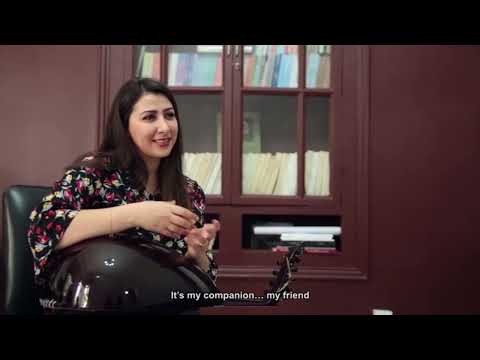
Crafting and playing the Oud - UNESCO Intangible Cultural Heritage
ich.unesco.org →The oud is a traditional, lute-type instrument played in Iran and Syria. The musician places the short-necked instrument on their leg, fretting with one hand and plucking the chords with the other. In both countries, the oud consists of a pear-shaped sound box made of walnut, rose, poplar, ebony or apricot wood. Crafting an oud takes up to twenty-five days, during which the wood is left to dry and harden and is then treated with water and steam for fifteen days to build its durability. Ouds are crafted in different sizes for different sized-bodies and decorated with wooden carvings and mosaic patterns. They typically have five twin strings, though a sixth string can be added. With its bass and baritone ranges, the instrument can produce melodic and harmonic tones. The oud is played solo or in ensembles and is accompanied by traditional songs and dance in a wide range of events. Its practice is transmitted through apprenticeships and in musical centres, colleges and universities in urban areas. Crafters are mostly men, although in recent years young women have developed an interest as well. 1. Oral traditions and expressions (384) 2. Performing arts (411) 3. Social practices, rituals and festive events (584) 4. Traditional craftsmanship (460)
Excerpt from a page describing this subject · 10,909 chars · not written by Vinony
Wikidata facts
Show 5 more facts
- different from
- UD
- Commons category
- Ouds
- Hornbostel-Sachs classification
- 321.321-6
- described by source
- Armenian Soviet Encyclopedia
- described at URL
- ich.unesco.org/es/RL/creacin-e-interpretacin-del-oud-01867
via Wikidata · CC0
~18 min read
Encyclopedic overview
17 sectionsContents
- Names and etymology
- History
- Musical instruments from pre-history
- Spread of oud to Europe
- Origins theory from religious and philosophical beliefs
- Central Asia
- Types
- Arabian oud, Turkish oud, and Persian barbat
- Tuning
- Zenne oud
- Oud arbi and oud ramal
- Oud kumethra
- See also
- Notes
- References
- Further reading
- External links
The oud ( ; , ) is a Middle Eastern short-neck lute-type, pear-shaped, fretless stringed instrument (a chordophone in the Hornbostel–Sachs classification of instruments), usually with 11 strings grouped in six courses, but some models have five or seven courses, with 10 or 13 strings respectively.
The oud is similar to other types of lute, and to Western lutes which developed out of the Medieval Islamic oud. Similar instruments have been used in the Middle East, some predating Islam, such as the barbat from Persia. Different versions of the oud are used in Arabia, Turkey, and other Middle Eastern and Balkan regions. The oud, as a fundamental difference with the western lute, has no frets and a smaller neck. It is the direct successor of the Persian barbat lute. The oldest surviving oud is thought to be in Brussels, at the Museum of Musical Instruments.
Excerpted from Wikipedia’s “oud” article, available under the CC BY-SA 4.0 licence.
Gallery (18)
Available in 63 languages
- Español
- Français
- Deutsch
- 中文
- 日本語
- Русский
- Português
- Italiano
- العربية
- हिन्दी
- Aramaic
- Armenian
- azb
- Azerbaijani
- Bahasa Indonesia
- Basque
- Belarusian
- Breton
Show 44 more
- Bulgarian
- Catalan
- Central Kurdish
- Croatian
- Czech
- Egyptian Arabic
- Esperanto
- Estonian
- Finnish
- Galician
- Greek
- Hebrew
- Hungarian
- hyw
- Interlingua
- Kurdish
- Ladino
- Latvian
- Lithuanian
- Macedonian
- Malay
- Mazanderani
- Nederlands
- Norwegian
- Norwegian Nynorsk
- Occitan
- Polski
- Punjabi
- Scots
- Serbian (Latin)
- simple
- Sinhala
- Slovak
- Somali
- Svenska
- Tajik
- Tiếng Việt
- Türkçe
- Ukrainian
- Uzbek
- Welsh
- zh_yue
- فارسی
- 한국어
via Wikidata sitelinks · CC0