File:Simple_Periodic_Table_Chart-blocks.svg · Wikimedia Commons · See Wikimedia Commons
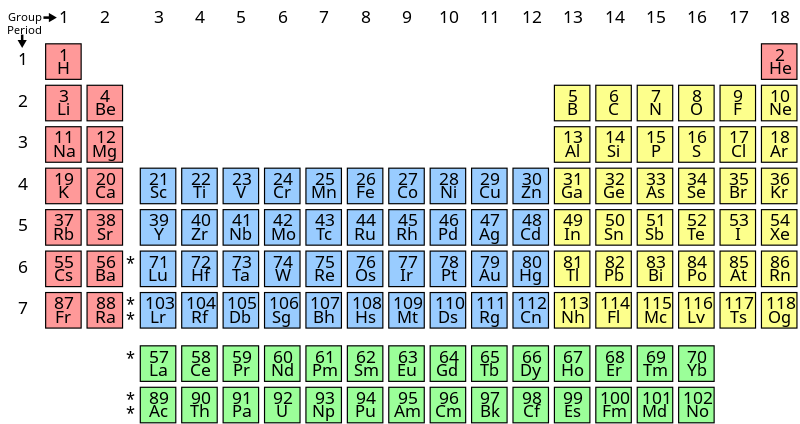
Period 3 is the third row of the periodic table, containing elements from sodium to argon. It matters because it includes some of the most common and useful elements we encounter, such as sodium, magnesium, aluminum, silicon, sulfur, and chlorine, which are essential to chemistry, industry, and everyday life.
AI-generated from the Wikipedia summary — may contain errors.
Wikidata facts
- Instance of
- period
- Has part
- chemical element
- Followed by
- period 4
- Follows
- period 2
Show 3 more facts
- Commons category
- Periodic table row 3
- topic's main category
- Category:Periodic table row 3
- on focus list of Wikimedia project
- Wikipedia:Vital articles/Level/4
Sources (1)
via Wikidata · CC0
~17 min read
Encyclopedic overview
Period 3 in the periodic table
A period 3 element is one of the chemical elements in the third row (or period) of the periodic table of the chemical elements. The periodic table is laid out in rows to illustrate recurring (periodic) trends in the chemical behavior of the elements as their atomic number increases: a new row is begun when chemical behavior begins to repeat, meaning that elements with similar behavior fall into the same vertical columns. The third period contains eight elements: sodium, magnesium, aluminium, silicon, phosphorus, sulfur, chlorine and argon. The first two, sodium and magnesium, are members of the s-block of the periodic table, while the others are members of the p-block. All of the period 3 elements occur in nature and have at least one stable isotope.
Excerpted from Wikipedia’s “period 3” article, available under the CC BY-SA 4.0 licence.